


The Iran crisis raises concerns about stagflation, expectations for European Central Bank interest rate hikes heat up, and the prospect of the Bank of England cutting rates becomes increasingly unlikely
The Iran crisis escalates, the Qatar gas field is interrupted, and European natural gas prices soar over 60%, severely impacting the European bond market. The interest rate hike expectations in the Eurozone have sharply increased, with traders estimating the probability of the European Central Bank raising rates this year has risen to 50%, up from the previous market pricing of about 30%. Meanwhile, the probability of the Bank of England cutting rates this month has plummeted from 80% to less than 20%. Bloomberg Economics warns that the shadow of stagflation is looming over Europe, putting central banks in a dilemma: raising rates to combat inflation may further hurt the already weak economic growth, while inaction risks unanchoring inflation expectations
The ongoing escalation of conflicts in the Middle East has triggered severe fluctuations in energy prices, leading to significant damage in the European bond market, as traders quickly reassess the monetary policy outlook of the European Central Bank and the Bank of England.
Since last Friday's close, European natural gas prices have surged over 60%, marking the most dramatic fluctuations since the 2022 energy crisis, sparked by production disruptions at Qatar, the world's largest liquefied natural gas export facility. In response, Eurozone bonds have plummeted, with the money market pricing the probability of a rate hike by the European Central Bank this year at 50%, up from about one-third previously. Meanwhile, UK government bonds have also been sold off, with traders completely retracting bets on a second rate cut by the Bank of England this year.
According to estimates from Bloomberg Economics, if the current rise in oil and gas prices continues, UK inflation is expected to be pushed up by about 0.4 percentage points over the next year, meaning the inflation rate at the end of the year will reach 2.4%, rather than the 2% previously anticipated by the Bank of England. The timeline for inflation returning to target may be delayed until 2027. This outlook has significantly reduced the likelihood of a rate cut by the Bank of England this month, with market pricing showing that the probability of a rate cut has dropped sharply from about 80% last Friday to around 25%.
Eurozone Bond Market Under Pressure, Rate Hike Expectations Revived
The Eurozone bond market experienced noticeable selling on Tuesday, underperforming U.S. Treasuries, which saw yields rise by only about 4 basis points during the same period. The decline was particularly pronounced in German short-term bonds, which are more sensitive to monetary policy, with the two-year German bond yield rising by as much as 8 basis points to 2.17%.
Europe is considered one of the most vulnerable regions in this round of energy shocks, primarily due to its almost complete reliance on imported oil and a similarly high dependence on natural gas imports. Compared to the United States, which is a net energy exporter, Europe is more exposed to energy risks, with its economic fundamentals facing more direct impacts.
Philip Lane, Chief Economist of the European Central Bank, warned that if the conflict in the Middle East continues to spread, it could trigger a "sharp surge" in energy-driven inflation while causing a dramatic decline in output, leading to stagflation. This warning highlights the policy dilemma facing the European Central Bank: raising rates to curb inflation could further harm growth, while maintaining an accommodative stance could allow inflation to spiral out of control.
Salman Ahmed, Head of Global Macro and Strategic Asset Allocation at Fidelity International, stated:
“European bonds are now alert, as liquefied natural gas supplies were disrupted yesterday, and the price transmission effects are immediately evident. In this war, bonds will not be your stabilizer.”
Expectations for Bank of England Rate Cuts Sharply Contract
The UK government bond market has also been severely impacted. The yield on 10-year UK government bonds rose by 10 basis points to 4.48% on Tuesday, about 25 basis points higher than last Friday's close; the two-year yield briefly rose by 13 basis points to 3.76%.
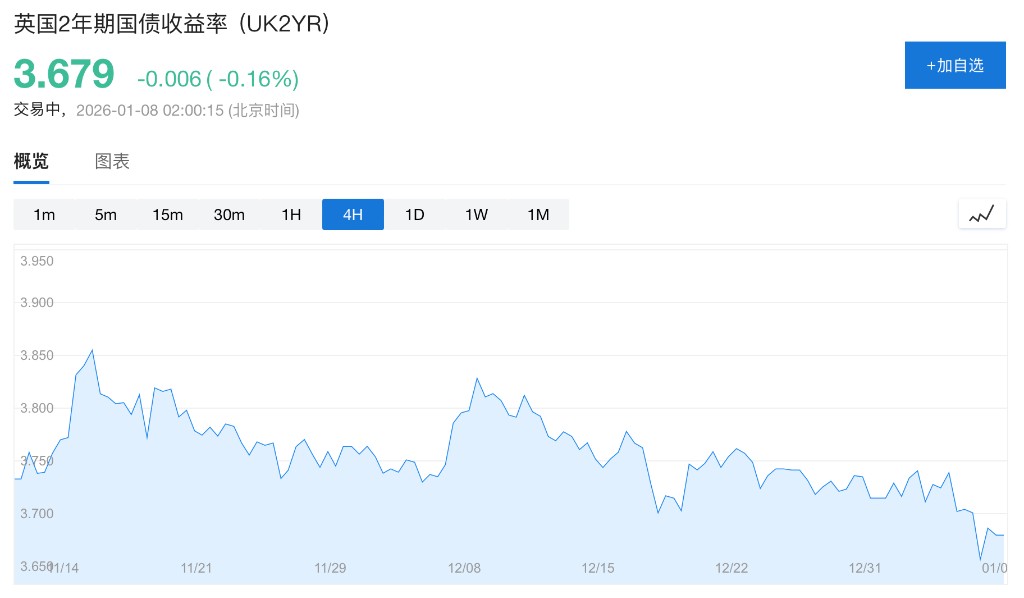 Just last Friday, the market viewed the Bank of England's second 25 basis point rate cut this year as a done deal. However, the rapid rise in energy prices combined with concerns that the Middle East conflict may drag on has forced traders to quickly revise their easing expectations. The probability of a rate cut this month has plummeted from about 80% last week to less than 20%, with expectations for a shift in monetary policy experiencing a dramatic reversal in just a few days.
Inflation Target May Be Missed Again
According to an analysis by Bloomberg Economics, the current surge in energy prices is impacting UK inflation through two channels: The price of oil in pounds is 23% higher than the benchmark used in the Bank of England's latest forecast from February, which is expected to raise inflation by an average of 0.2 percentage points over the next 12 months; meanwhile, the trajectory of gas prices indicates that utility bills under the energy price cap in July will rise by about 6%, contributing approximately 0.2 percentage points of inflation pressure.
Bloomberg Economics economists Ana Andrade and Dan Hanson pointed out that if the rise in energy prices continues, the rationale for easing this month will be significantly weakened, making it more likely that the Bank will hold steady. The two economists also warned that standard economic theory suggests central banks should remain cautious in response to one-off energy price shocks, but this logic may not hold in the current environment—lessons from post-pandemic inflation indicate that the anchoring of consumer inflation expectations is not as solid as central banks anticipate.
The ongoing rise in energy prices will also offset some of the effects of the package of measures announced by UK Chancellor Rachel Reeves last year. This plan was originally expected to lower inflation by about 0.5 percentage points through measures such as consumer energy bill subsidies, but the surge in energy prices is eroding this policy benefit
