The US stock market is "exceptionally calm." In the face of risks from Iran, is the market waiting or complacent?

The US stock market experienced a "strange calm" overnight, with indices rebounding sharply but trading volume shrinking. Goldman Sachs expressed confusion, stating, "We expected certain sectors to rise or fall, but the results were completely opposite," as technology stocks rose while defensive healthcare stocks declined. Market volatility was concentrated in soaring oil prices and other cross-assets. JP Morgan emphasized that although the Strait of Hormuz has never truly been closed in history, any disturbance is enough to instantly raise risk pricing. If the conflict lasts longer than expected, the market's current "complacency" will face reevaluation
Over the weekend, geopolitical conflicts in the Middle East escalated, yet the U.S. stock market displayed an unexpectedly "calm" demeanor.
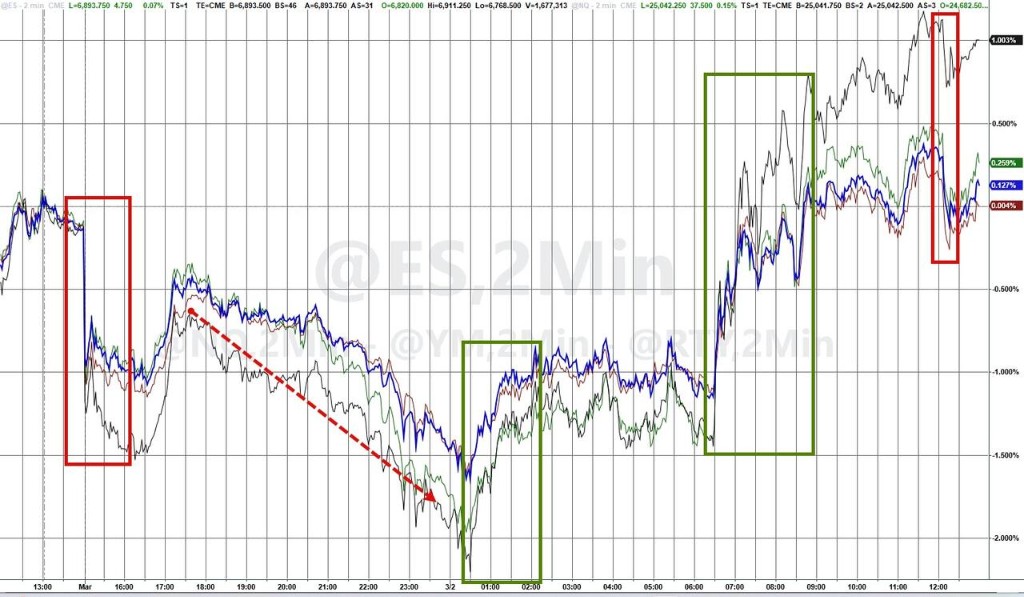
On March 2, the U.S. stock market initially reacted with a sell-off at the opening but quickly digested the situation: U.S. stocks rebounded over 1% from the early morning low, closing "almost unchanged."
Goldman Sachs' trading desk provided a more straightforward market sentiment: the market is downplaying geopolitical risk volatility, resulting in a large number of "incomprehensible reverse movements." The continuous feedback they received was: "We originally thought certain sectors would open higher or lower, but the results were completely opposite."
What is even more noteworthy for investors is the scale of trading: the market is unusually quiet. Trading volume has decreased, with Nasdaq 100 component stock trading volume tracking showing a decline of over 10%; investors are reluctant to make significant adjustments after the intraday rebound, and trading at the individual stock level is also restrained, "many people seem frozen."

Sectors "went the opposite way": Technology held up, while defensive sector healthcare did not
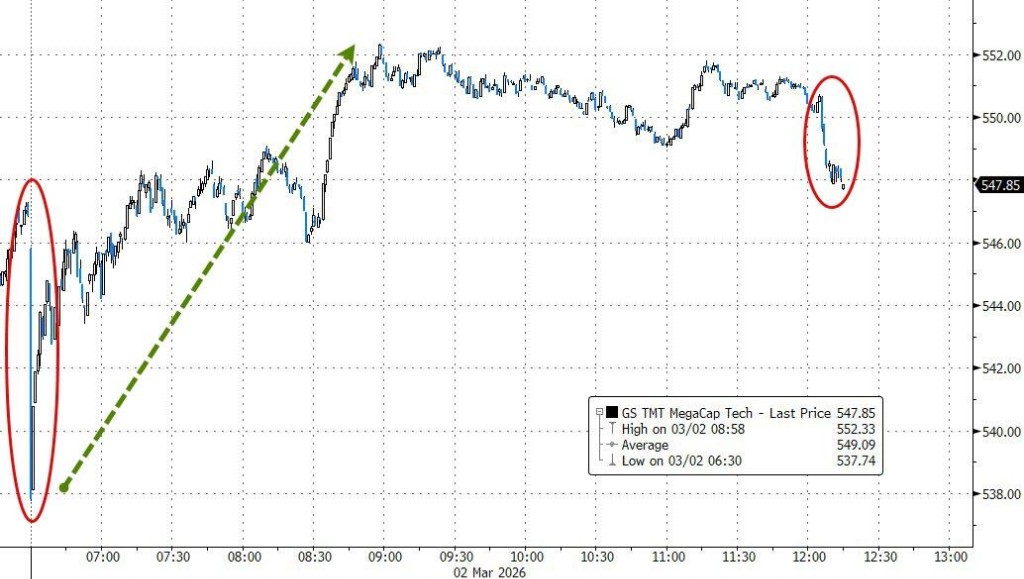
Goldman Sachs' trading department noted that despite the U.S. stock market rebounding over 1% from the early morning low, there were still many puzzling "reverse" movements in the market. The defensive healthcare sector, which was originally thought to be a safe haven for funds, experienced a significant drop, while technology and software stocks rebounded strongly, recovering their previous losses. This unusual flow of funds left many traders confused.
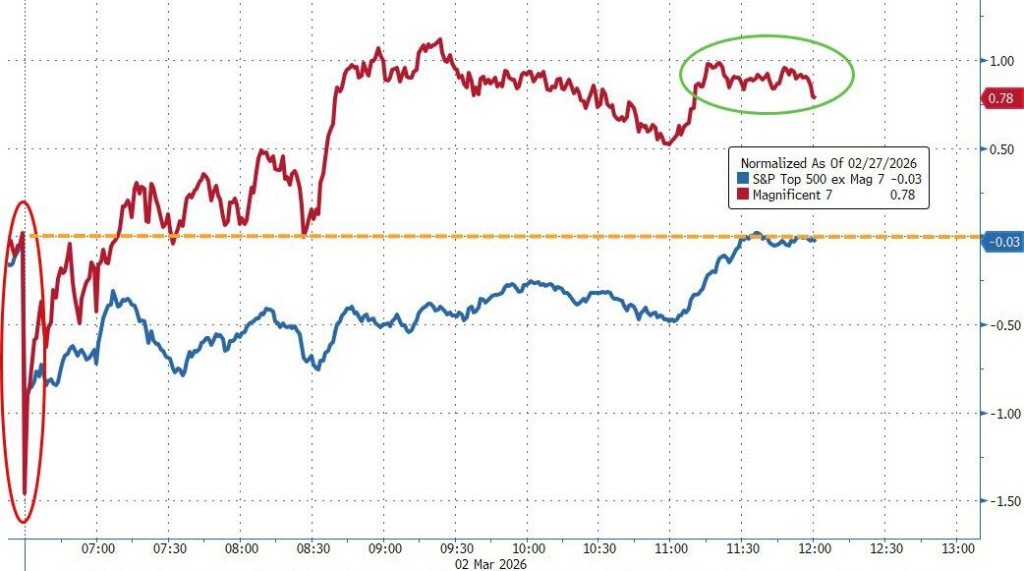
- The index-level rebound was driven by mega-cap technology stocks.
- The performance of the "Mag7" leaned more defensive, which is different from the common "source of funds" logic seen at the beginning of the year.
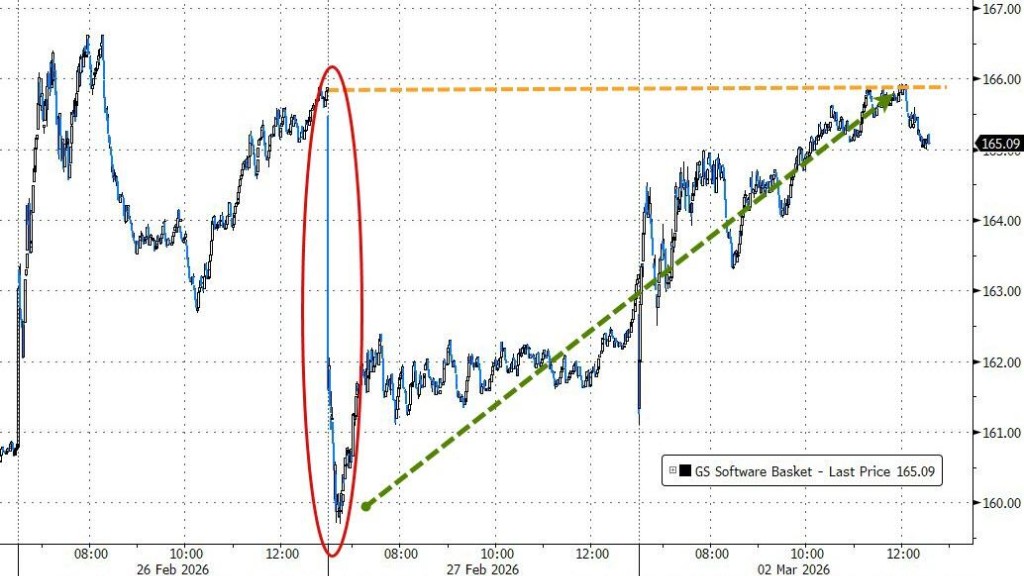
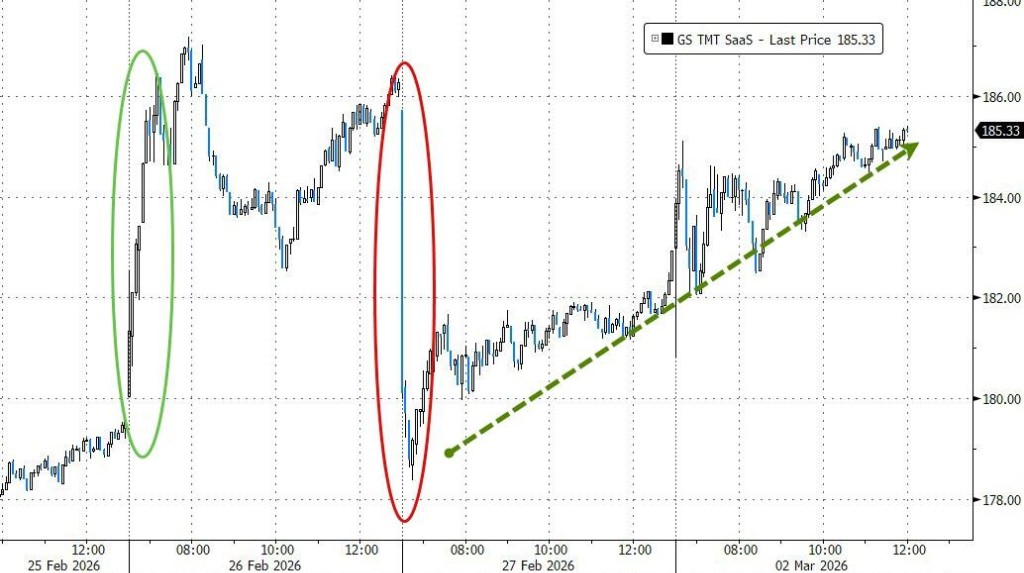
- Software stocks rebounded significantly, recovering all of last Friday's losses; SaaS also achieved gains that day, continuing the previous squeeze-style rebound.
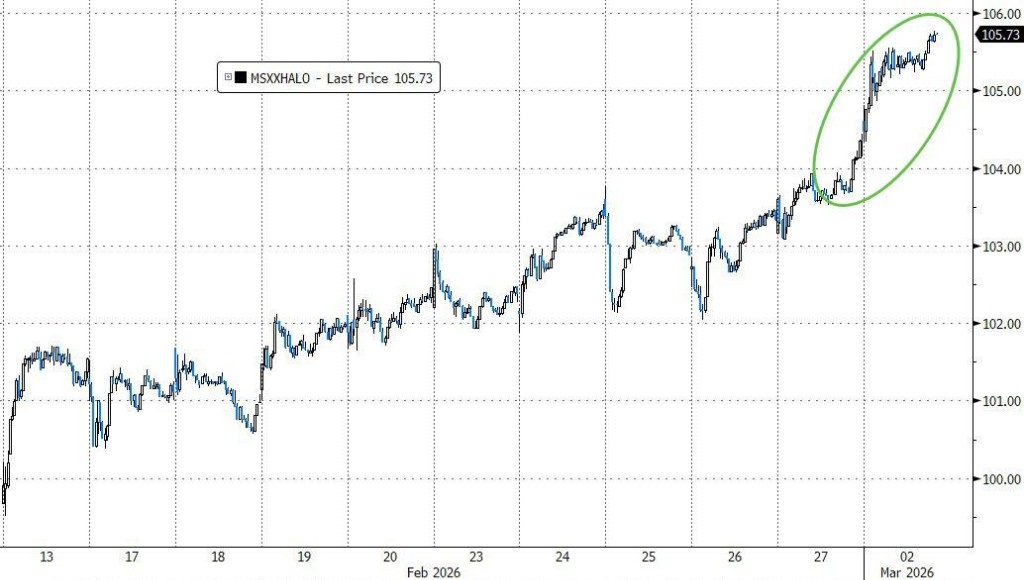
- Meanwhile, another seemingly unrelated trend emerged: despite the strength in technology/software, HALO stock also saw a significant increase that day.
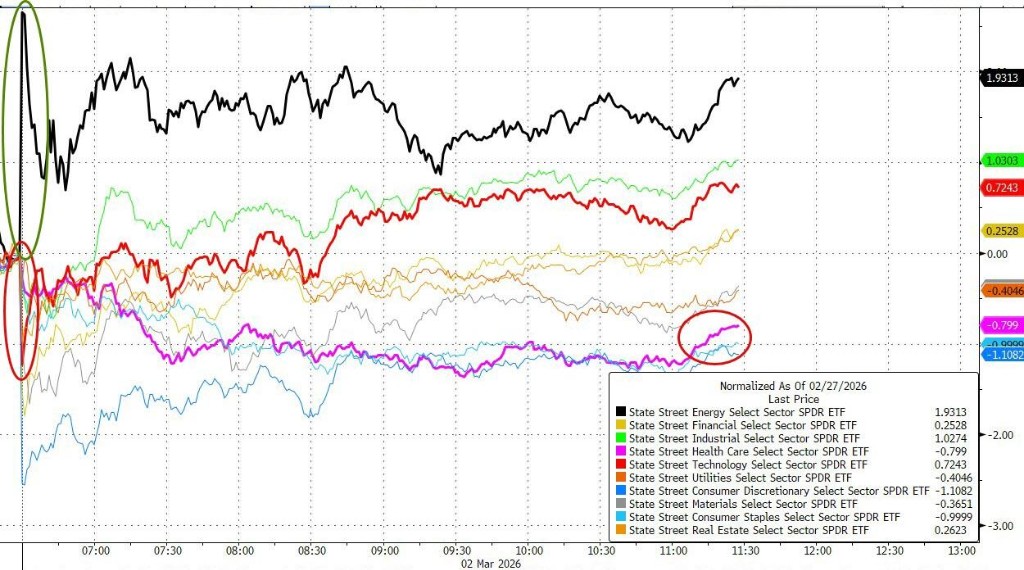
What is more striking is: on a trading day with rising geopolitical uncertainty, the healthcare sector has become a clear loser. Goldman Sachs specifically named it as the "most typical case of 'going the opposite way'"—when investors thought defensives would prevail, healthcare instead plummeted.
From the perspective of the S&P 500 sectors, energy became the strongest performing sector of the day (a direct reflection of rising oil prices), while the consumer sector (both essential and discretionary) was one of the areas with the deepest declines.

Risk premium first reflected in oil prices and freight rates, Brent crude rises 7%
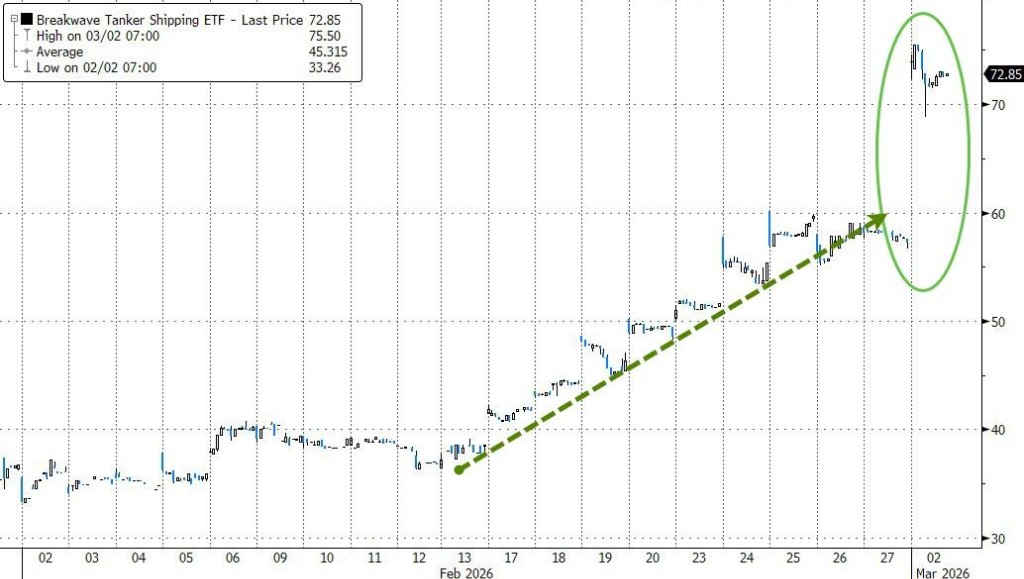
On this day, the most direct impact of geopolitical escalation on asset pricing was in energy: Brent crude for the near month rose about 7%, and U.S. Henry Hub natural gas rose 12%. Freight rates related to tankers also surged, with the Breakwave Tanker Shipping ETF (BWET) soaring, indicating that the shipping sector quickly adjusted its pricing for risk.

Chris Larkin from Morgan Stanley E Trade pointed out that the current "master switch" for the market remains oil prices:
"There are far more questions than answers right now, but if the energy situation stabilizes, it could lead to positive ripple effects; if concerns about long-term disruptions arise, the impact could be the opposite."
It is worth noting that oil prices are not on a one-way path to the top. Reports also mentioned that crude oil has significantly retreated below the intraday highs.
Bonds do not serve as a "safe haven" but rather price in inflation, with the 10-year yield briefly exceeding 4.06%
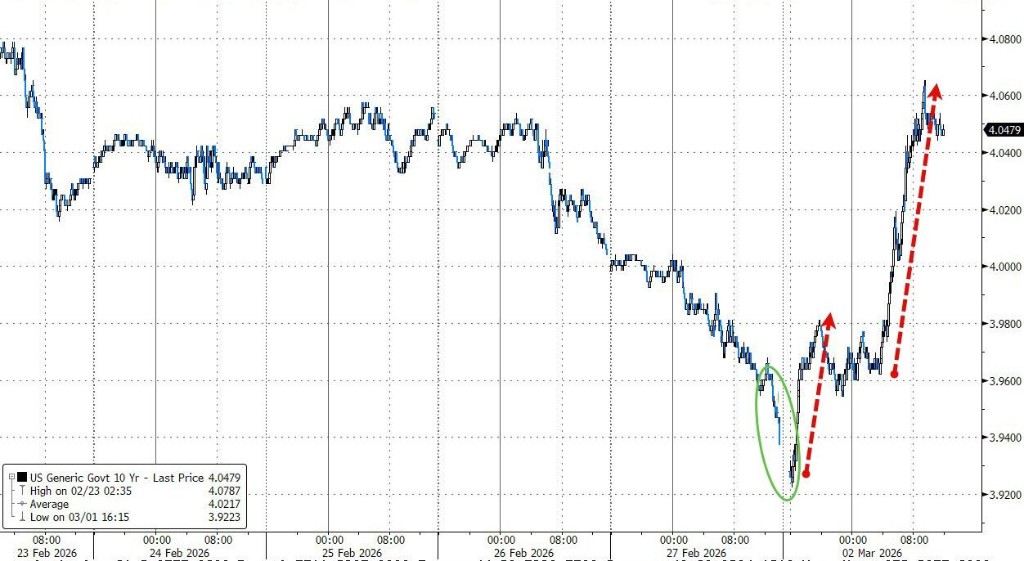
What surprised investors even more was the reaction of bonds: U.S. Treasuries briefly strengthened after the opening, then turned from gains to losses and expanded the decline, with yields rising by 9-12 basis points during the day. The 10-year yield rose from an opening low of about 3.92% to above 4.00%, reaching a high of over 4.06% during the day.

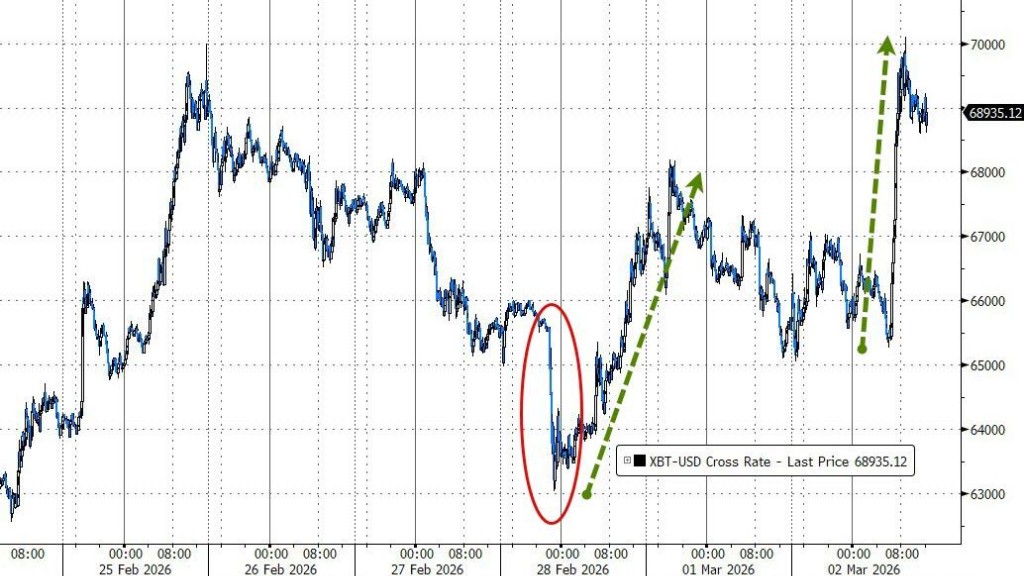
This reversal of "not seeking safety in bonds" is interpreted as traders being more willing to bet on the inflationary attributes brought about by conflict, rather than rushing into traditional safe havens; the rise in oil prices further increased the pressure on yields. Reports also noted that the "prices" component in the manufacturing survey data showed a shocking increase that intensified this pricing direction At the same time, despite the weakening of U.S. Treasuries, the U.S. dollar strengthened against major currencies, reaching a one-month high (especially against the euro), indicating that there are still signs of a "flight to quality" in the market. Bitcoin rebounded after a typical "sell first, buy later" pattern, rising back to $70,000.

JP Morgan: The key is not "what happens," but "how long it will last"
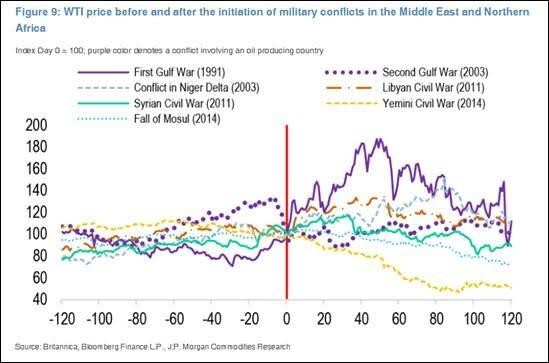
However, JP Morgan's commodities team emphasizes that when assessing the impact of geopolitical crises on oil prices, "timing" is the most tricky and critical factor.
On the question of "how conflicts transmit to asset prices," JP Morgan lists three key risks:
- Strait of Hormuz: If the strait is closed, it could push WTI crude oil above $100. Currently, it appears to be partially blocked, with no disruption to production facilities; meanwhile, the U.S. "seems to have destroyed at least 9 Iranian naval vessels." The latest news is that Iran has announced the closure of the Strait of Hormuz.
- Escalation of external military aid: Reuters mentioned the possibility of China providing hypersonic missiles to Iran, which would threaten U.S. naval forces (including aircraft carriers). JP Morgan believes that the more U.S. casualties there are (currently 3 dead in Kuwait), the more likely the situation will escalate into a "prolonged, full-scale war."
- Conflict spillover: Iran's existing missile range is about 2,000 kilometers (1,200 miles), which could extend the strike range to U.S. or allied commercial interests in Eastern/Central Europe or India.
JP Morgan's commodities team emphasizes that "the hardest variable is the pace": Trump stated that strikes could last up to 4 weeks, whereas he previously mentioned 4-5 days; he later stated, "We will not stop fighting until we achieve our goals."
According to CCTV News, U.S. President Trump stated in a video address on March 1 that the U.S. and Israel would continue military actions against Iran until all objectives are achieved. Iranian Foreign Minister Zarif stated that Iran would decide when and how to end this imposed war by the U.S. and Israel.
The Wall Street Journal mentioned that U.S. ammunition stocks are under pressure due to multi-front involvement, and the reluctance of regional allies to support ground warfare makes the current situation more like "surgical strikes," but the path may still change.
They believe there is a "downhill path" to ending military confrontations within a month: Trump is willing to engage in dialogue with Iran's interim government; Senator Lindsay Graham has softened his rhetoric from "regime change" to "removing threats." "Regime change" typically implies years of strikes and may require ground troops, and it remains unclear whether Congress will support a longer-term conflict.
Strait of Hormuz: Never truly closed in the past, but any disturbance is enough to raise risk pricing
JP Morgan provided a set of structural facts about the Strait of Hormuz to distinguish between "sentiment" and "sustainable disruptions":
- The narrowest point of the strait is only 21 miles, connecting the Persian Gulf to the Indian Ocean, carrying about 30% of global maritime crude oil and 20% of global LNG.
- The crude oil, refined oil, and LNG exports from countries such as Iran, Iraq, Kuwait, Bahrain, Qatar, Saudi Arabia, and the UAE all pass through here.
- Despite repeated threats, the Strait of Hormuz has never been closed in history, and crude oil has continued to flow even during major crises.
- During the "Tanker War" in 1980, a total of 259 tankers were attacked, but Gulf exports continued, and the impact on global oil prices was limited (partly due to increased use of land pipelines).
These facts point to the same trading logic: what the market truly needs time to answer is the severity and duration of the disruptions.
History shows: A sharp rise in oil prices does not necessarily drag down the stock market, but "persistence" determines the tail risk.
Statistics compiled from reports show that since 2000, WTI crude oil has experienced 22 instances of a single-day increase of 10% or more. The corresponding forward returns for the S&P 500 are not unilaterally pessimistic:
-
1 day: Average -0.24% (Median -0.01%)
-
1 week: Average +0.52% (Median +1.30%)
-
2 weeks: Average -0.35% (Median +1.75%)
-
1 month: Average +1.23% (Median +3.57%)

Goldman Sachs trader Dom Wilson's team also has a more "conditional" judgment: Oil price shocks are usually negative for stocks and credit, but only when the oil price disruptions are severe and persistent will they have substantial consequences for global growth. They expect that, in the context of strong positions and increases at the beginning of the year, cyclical sectors and crude oil importers are more likely to be pressured by position adjustments unless the situation is resolved quickly.
Putting these clues together, the current market seems to be making two layers of cuts:
- On the stock index level, it chooses to "see through" short-term shocks, continuing to focus on AI trading, the path of U.S. GDP, and corporate policy uncertainty;
- However, there is a rapid price increase in interest rates and energy, especially when the speed of rising yields overlaps with rising oil prices, the market seems to be trading "the re-ignition of inflation risks."
JP Morgan's further conclusion is that a significant portion of geopolitical risks may have already been priced into stocks (stock pricing has exceeded the assumption of futures strip levels), so they tend to maintain restraint on the initial exuberance of the stock market and suggest that risk assets may experience a downward phase of 1-2 weeks