


"Roaches are out," private credit issues combined with AI concerns hit, bank stock indices plummet by 6%
The U.S. banking sector experienced its worst decline of the year on Friday, with the KBW Bank Index dropping as much as 6% during the session, marking the largest single-day drop since the trading turmoil in April last year. Risks in the private credit sector have concentrated and exploded, with multiple funds facing liquidity issues, raising concerns about contagion following the collapse of a UK mortgage institution. Goldman Sachs and Zions Bancorp plummeted nearly 8%, while Apollo fell 9%
The banking sector in the United States experienced one of its worst single-day declines of the year on Friday, as the combined pressures of AI disruption concerns and private credit risks pushed financial stocks into a new wave of sell-offs.
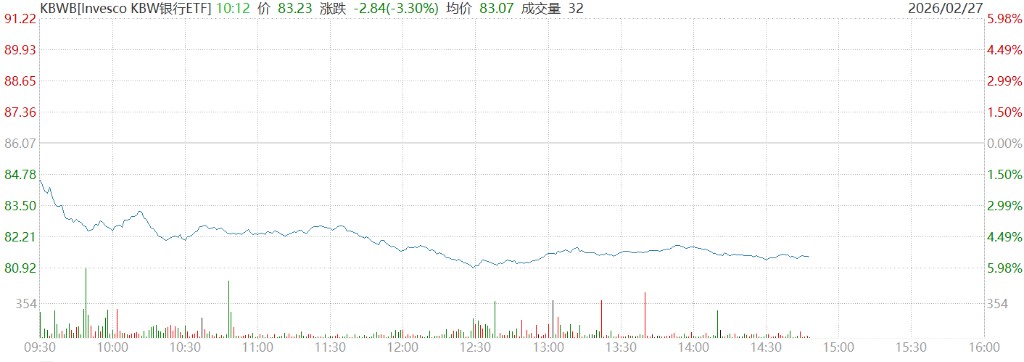
On February 27, during intraday trading, the KBW Bank Index fell by as much as 6%, with all 23 constituent stocks declining, each dropping more than 2.9%. The sector overall retreated to levels seen in early December last year, marking the largest single-day drop since the trading turmoil in April.
Previously, in the market turmoil triggered by AI, the investment-grade bond market had played a role as a safe haven. However, according to Bloomberg data, the global comparable investment-grade bond spread has widened by nearly 4 basis points this week, marking the largest weekly fluctuation since early November last year.
Wall Street Journal mentioned that Market Financial Solutions (MFS), a UK mortgage institution that obtained financing from several Wall Street firms, declared bankruptcy, and multiple private credit funds have experienced liquidity issues, significantly raising market concerns about default risks in the opaque private lending sector.
Wells Fargo analyst Mike Mayo described this situation in a research report using the "cockroach" metaphor previously issued by JPMorgan CEO Jamie Dimon, warning that the credit cycle has never truly disappeared.
Mike Mayo pointed out in the report that the growth rate of bank loans has consistently lagged behind GDP over the past decade, indicating that greater risks are actually concentrated in the unregulated shadow banking system.
AI Impact Spreads, Financial Sub-sectors Under Pressure
The current downturn in the financial sector can be traced back to the beginning of this month.
Wall Street Journal mentioned that wealth management-related stocks in the financial sector were the first to be hit, triggered by Altruist's launch of a tool that helps financial advisors personalize client strategies and automatically generate payroll and account reports.
Subsequently, an online platform launched a car insurance comparison application based on OpenAI's ChatGPT, leading to a sell-off in insurance brokerage stocks.
Last week, Anthropic released a new model specifically aimed at automating financial research and legal services, causing the most severe impact on related stocks. Yesterday, Block announced it would cut nearly half of its workforce, further intensifying market concerns that AI will broadly threaten the livelihoods of financial professionals.
Bloomberg Industry Research analyst Herman Chan stated:
Banks are entering a period of higher volatility filled with uncertainties, and the pace of AI adoption and disruption is still difficult to gauge. The decline in Treasury yields combined with the widening credit spread indicates a general market shift towards risk aversion Brian Finneran from Truist pointed out in a client report:
The market is selling off anything slightly related to credit this morning, with professional investors particularly focused on American Express, as the trend of white-collar unemployment has a more direct impact on its business.
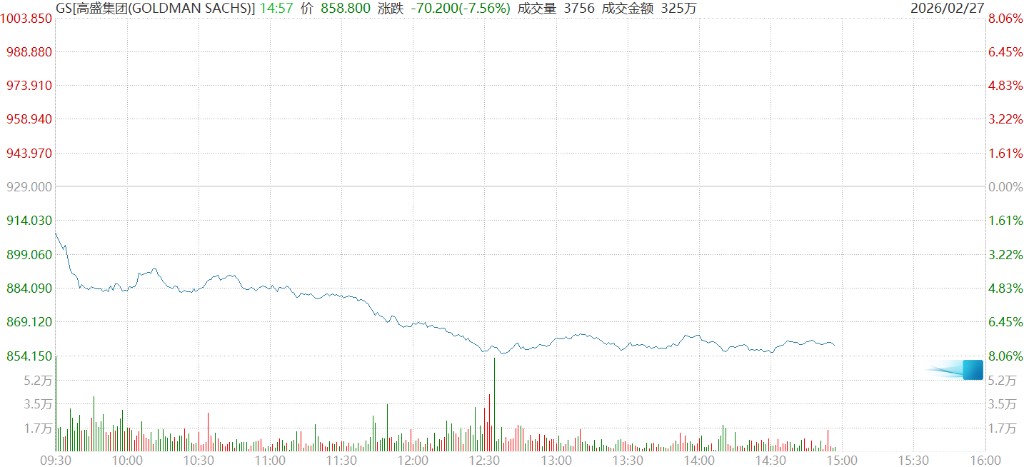
By the end of the U.S. stock market, Zions Bancorp and Goldman Sachs plummeted nearly 8%, while Wells Fargo, Citigroup, and Morgan Stanley all fell more than 6%. Synchrony Financial, American Express, and Capital One all saw declines of no less than 5%.
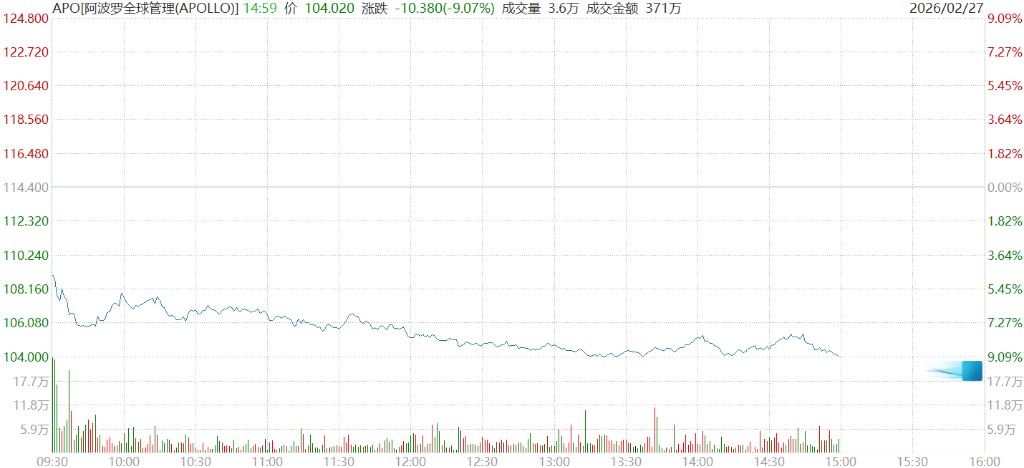
Alternative asset management firm Apollo Global Management dropped 9%, while KKR and Ares Management both fell more than 6%.
Concerns about Private Credit Emerge, "Cockroach Effect" Triggers Widespread Worries
Alongside the impact of AI, there are multiple risk signals erupting in the private credit sector.
Wall Street Journal mentioned that just months ago, JPMorgan CEO Jamie Dimon warned after a car loan institution's collapse that "when you see one cockroach, there may be more," implying systemic risks in the $1.7 trillion private credit market.
Since this month, MFS's creditors have warned of a $1.3 billion shortfall in loan collateral; BlackRock's private debt fund saw its stock plummet after significantly cutting dividends, dragging down other business development company (BDC) stocks.
Private credit management firm Invico Capital is formulating a plan to address large investor redemption requests for one of its funds; Blue Owl Capital suspended redemptions for one fund last week and began selling off some assets to pay investors, with its stock experiencing a historic drop this month.
According to Bloomberg, the collapse of London mortgage institution Market Financial Solutions has impacted firms like Apollo Group and Jefferies. Miller Tabak's chief market strategist Matt Maley stated:
Investors are beginning to worry that this negative sentiment will spread. Even if this situation does not escalate, the increasingly severe issues in the credit market still pose risks of losses for financial companies
