Facing enterprise software giants: OpenAI seeks "disruption," Anthropic chooses "symbiosis"

Wallstreetcn
2026.02.25 03:17
portai
I'm PortAI, I can summarize articles.

OpenAI clearly listed giants such as Salesforce and Workday as alternative targets at the investor meeting, boldly declaring its intention to disrupt; Anthropic, on the other hand, emphasized collaboration with existing software through Claude Cowork, focusing on "replacing human labor rather than replacing software," which triggered a general rebound in enterprise software stocks

OpenAI and Anthropic are taking drastically different strategic stances in the enterprise software market—one boldly declaring its intent to disrupt, while the other deliberately emphasizes partnerships. Analysts believe this divergence is reshaping market expectations regarding the impact of AI on the traditional software industry.

On February 24, Anthropic released details about new features of its Claude Cowork AI software, showing how enterprises can access and call data stored in enterprise applications like DocuSign, LegalZoom, and Salesforce through this tool.

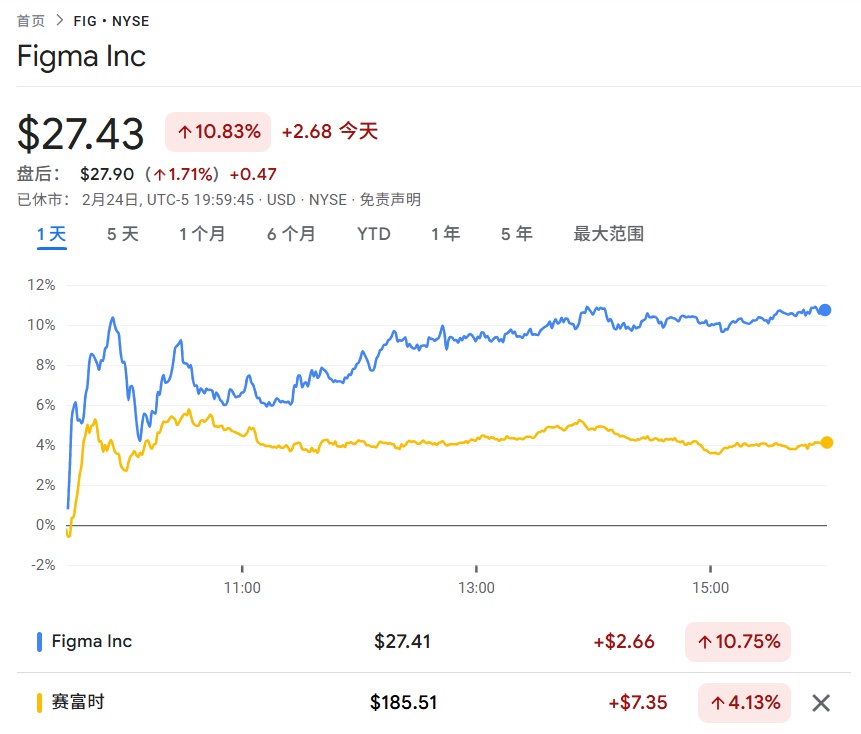
Following the announcement, enterprise software stocks, which had previously been under pressure due to AI disruption expectations, generally rebounded—Figma's stock rose by 10%, ServiceNow increased by 1.4%, and Salesforce climbed by 4%. The positive market reaction indicates that Anthropic's actual positioning is not as aggressive as some investors had previously feared.

Meanwhile, OpenAI made it clear at an investor meeting last week that its AI agents and future products will have the capability to replace software from tech companies like Salesforce, Workday, Adobe, and Atlassian, and presented investors with revenue data from these enterprise software companies, contrasting it with OpenAI's own revenue projections for 2030.

Analysts point out that this private statement starkly contrasts with Anthropic's public stance, further intensifying the defensive posture within the enterprise software industry.

Anthropic bets on "replacing labor" rather than "replacing software"

Tech media outlet The Information reported that when releasing the new features of Claude Cowork, Anthropic deliberately focused the narrative on replacing labor rather than replacing software tools. The logic is:

New AI tools will continue to call upon existing enterprise software, and companies will still need to pay for these software, meaning the revenue sources for software vendors will not disappear.

At the launch event, Anthropic specifically invited its Chief Economist Peter McCrory to attend. McCrory stated that the impact of AI on the labor market will be "extremely uneven"—high-skilled employees will leverage AI to enhance productivity, while low-skilled employees engaged in basic data entry face the risk of being replaced.

PitchBook Data analyst Derek Hernandez further pointed out that the Claude features aimed at the financial services sector could put pressure on jobs in that industry, "the positions affected are those in investment banking, equity research, especially entry-level positions among white-collar jobs."Reports indicate that it is noteworthy that employees at Anthropic are still using various traditional enterprise application software. This detail, while not completely alleviating the concerns of software vendors—after all, their business models rely on a large scale of enterprise users—does convey a market signal that is distinctly different from that of OpenAI.

OpenAI Shows Its "Disruption Card" to Investors

In contrast, OpenAI's ambitions in the enterprise software market are more overt.

According to reports, OpenAI explicitly listed enterprise software giants such as Salesforce, Workday, Adobe, and Atlassian as potential substitutes during last week's investor meeting, showcasing the revenue scale of these companies compared to OpenAI's own revenue forecast for 2030, aiming to convey its market space imagination to investors.

OpenAI also disclosed a calculation to investors:

Ordinary employees using ChatGPT save an average of about 50 minutes of work time per day, equivalent to approximately $50 saved per person per day. The subscription price for enterprise ChatGPT starts at only $25 per employee per month, leading OpenAI to believe that it has currently captured only a tiny portion of the value it creates. This calculation partially references estimates from OpenAI shareholder Ark Invest.

Reports suggest that these private statements corroborate the general interpretation from last month when OpenAI launched its new "Frontier" AI product—OpenAI is attempting to position its technology as the upper entry point for enterprise applications, gradually influencing companies' procurement decisions regarding software and AI by controlling the way enterprise data is accessed.

Traditional Software Vendors Build Defenses, Customer Behavior is Quietly Changing

In the face of the encroaching AI labs, traditional enterprise software vendors are actively building defenses.

Companies like ServiceNow and Microsoft are emphasizing to customers that their software is superior in reliability and compliance compared to experimental products from AI labs. HubSpot is considering charging extra fees to customers who wish to access their system's data through AI agents.

However, whether traditional software vendors can truly block the penetration of AI agents remains uncertain. The core design logic of AI agents is to take over users' computers and manually operate various applications.

Analysts point out that the most powerful moat for traditional enterprise software vendors currently lies in their long-accumulated global data compliance and privacy regulatory experience—capabilities that experimental AI products are unlikely to replicate in the short term.

Although most enterprise customers have not yet genuinely attempted to replace existing enterprise software with AI, AI agents are changing the way employees interact with software and are producing substantial cost substitution effects in specific scenarios.

According to reports, a cybersecurity executive stated that by integrating AI agents, he avoided over $100,000 in annual subscription fees for CrowdStrike products. This CrowdStrike product was originally used to automate the management of employee accounts, including flagging suspicious logins and identifying and locking dormant accounts of suspected departing employees.**

This executive has turned to the AI agent provided by the startup Torq—an agent powered by OpenAI and Anthropic models, which directly interfaces with the raw login data collected by the enterprise through Microsoft software, achieving equivalent functionality at a lower cost.

Reports indicate that this case reveals the potential impact path of AI on the enterprise software market: even if companies do not completely abandon existing software for the time being, AI agents may render some software products "dispensable" in the eyes of employees, gradually establishing AI itself as a core tool for work. CrowdStrike has stated that the company has allowed AI agents to access its software so that customers can use both in conjunction