


Is Trump "overconfident" or "putting on a show" regarding Iran and oil prices?

Bloomberg columnist Javier Blas stated that the White House should not conclude that future military actions will not impact the energy market solely based on last year's bombing of Iran not causing a spike in oil prices. Although U.S. Energy Secretary Jennifer Granholm attributed the stability of oil prices to the "energy dominance agenda" and record production, market resilience does not equate to immunity. If the U.S. misjudges Iran's retaliatory threshold using oil as a weapon, energy facilities in the Middle East could become actual targets in the next conflict
There is a warning on Wall Street: "Past performance does not predict future results." This principle is equally relevant to the White House. Bloomberg columnist Javier Blas states that the Trump administration seems to believe that since last year's airstrikes on Iranian nuclear facilities did not lead to a significant rise in oil prices, similar actions in the future will not trigger severe fluctuations in the energy market.
U.S. Energy Secretary Chris Wright stated in an interview on Wednesday that the rapid decline in oil prices after a brief rise last June proves the effectiveness of the "Trump energy-dominance agenda." This statement reflects a core position of the White House: Oil supply should not be an obstacle to U.S. military action. According to CCTV Finance, sources indicate that the U.S. military is prepared for "military strikes against Iran as early as this weekend," but President Trump has not made a final decision.
However, this optimism based on historical experience may underestimate the intensity of current geopolitical risks. In recent months, Iran has continuously signaled through military exercises that oil will become a core bargaining chip in retaliation for any attacks. The country produces nearly 5 million barrels of crude oil and other petroleum daily, accounting for nearly 5% of global supply.
If the U.S. misjudges the risk threshold that Iran can accept, mistakenly believing that it will not retaliate fiercely, then oil facilities in the Middle East could become actual targets of attack. Using past conflicts to predict future outcomes may lead decision-makers to overlook some more dangerous but yet-to-happen possibilities.
Sources of Confidence in the White House
Energy Secretary Wright's optimistic assessment of oil price risks is primarily based on the historical experience of the "12-day war" in June 2025. At that time, U.S. military bombings of Iranian nuclear facilities resulted in only brief fluctuations in oil prices.
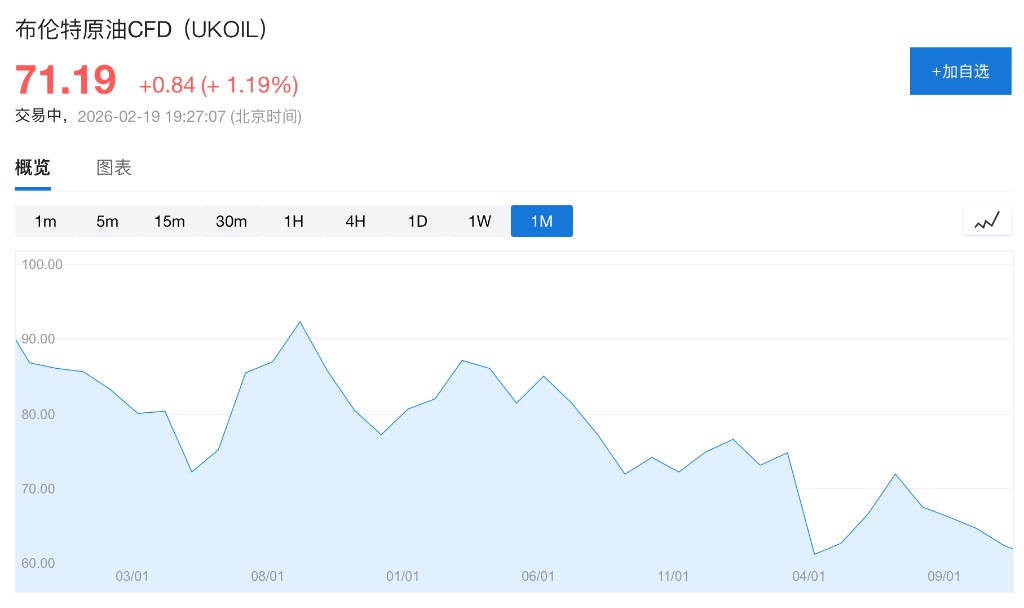
Wright attributes this outcome to two main factors: record U.S. shale oil production and the diplomatic ties rebuilt between the White House and Gulf oil-producing countries like Saudi Arabia and the UAE. Compared to the Nixon to George W. Bush era, the current U.S. energy landscape provides a broader strategic buffer.
Recent data seems to support this judgment: during various geopolitical crises, such as the assassination of Soleimani in 2020, the missile exchanges between Israel and Iran in 2024, and the bombing of nuclear facilities in 2025, oil prices were hardly impacted. For some traders, shorting crude oil during missile exchanges even became a profitable strategy.
Why "War Premium" Has Shrunk
The so-called "war premium" refers to the risk premium injected into the energy market by Middle Eastern conflicts, which has been continuously shrinking in recent years due to multiple structural factors.
First, the supply base has been strengthened. U.S. oil production is at a historical high and continues to rise, providing a strategic buffer for the global market. Second, the policy support is clear. Washington has shown a posture of "whatever it takes" to curb supply disruptions, including using strategic oil reserves and other means to stabilize expectations Thirdly, the resilience of oil-producing countries is beyond expectations. In 2019, the Saudi Abqaiq and Khurais oil fields were attacked, causing a supply drop of about 50%, but the shutdown lasted only a few days, far shorter than the market's expected months, greatly correcting traders' perception of supply vulnerability.
Market mechanisms are evolving in sync. The liquidity of the oil options market has significantly increased, allowing traders to purchase insurance at reasonable costs without having to rush to bet and drive up prices when conflicts erupt. The proliferation of commercial satellite imagery has also made battlefield dynamics nearly visible in real-time, greatly weakening the "fog of war" that disrupts pricing.
These combined factors have made the current market's resilience to the spillover effects of the U.S.-Iran conflict far exceed that of the past.
The White House may fall into a false sense of security
As an oil company executive, Wright's deep insights into the oil market make it unlikely for him to truly confuse the boundaries between resilience and immunity. Therefore, his recent statements may be interpreted as part of the psychological warfare between the U.S. and Iran, attempting to send a signal to Tehran: the White House is not afraid of oil weapons, even if there are private concerns.
However, if this information war miscommunicates and leads decision-makers to be persuaded by an optimistic narrative, the consequences could be more troublesome. By continuously validating their own assumptions in interpreting historical conflicts, U.S. officials may slide into a critical alternative scenario blind spot
