


Software stocks face the largest short-selling wave since 2010, Goldman Sachs exclaims: the market has "nowhere to hide"!

The most intense short-selling wave in a decade sweeps through U.S. software stocks, with Morgan Stanley data showing that the scale of short positions has reached a new high since 2010, causing the market to fall into a panic of "sell first, ask questions later." Concerns about AI replacing white-collar workers have triggered industry turmoil, with defensive sectors accelerating their outperformance, while the seven tech giants (Mag 7) also show signs of decline. Goldman Sachs trading chief Callahan stated that many stocks in the tech/growth sector are showing signs of being oversold, raising discussions about which stocks are excessively undervalued
U.S. software stocks are facing the most intense short-selling attack in over a decade. According to Morgan Stanley data, the single-day short-selling volume in the software and SaaS sectors on Wednesday and Thursday reached one of the highest levels since 2010, following a brief short-covering rebound that quickly faltered. Goldman Sachs' trading desk described the market as exhibiting a "sell first, ask questions later" panic sentiment.
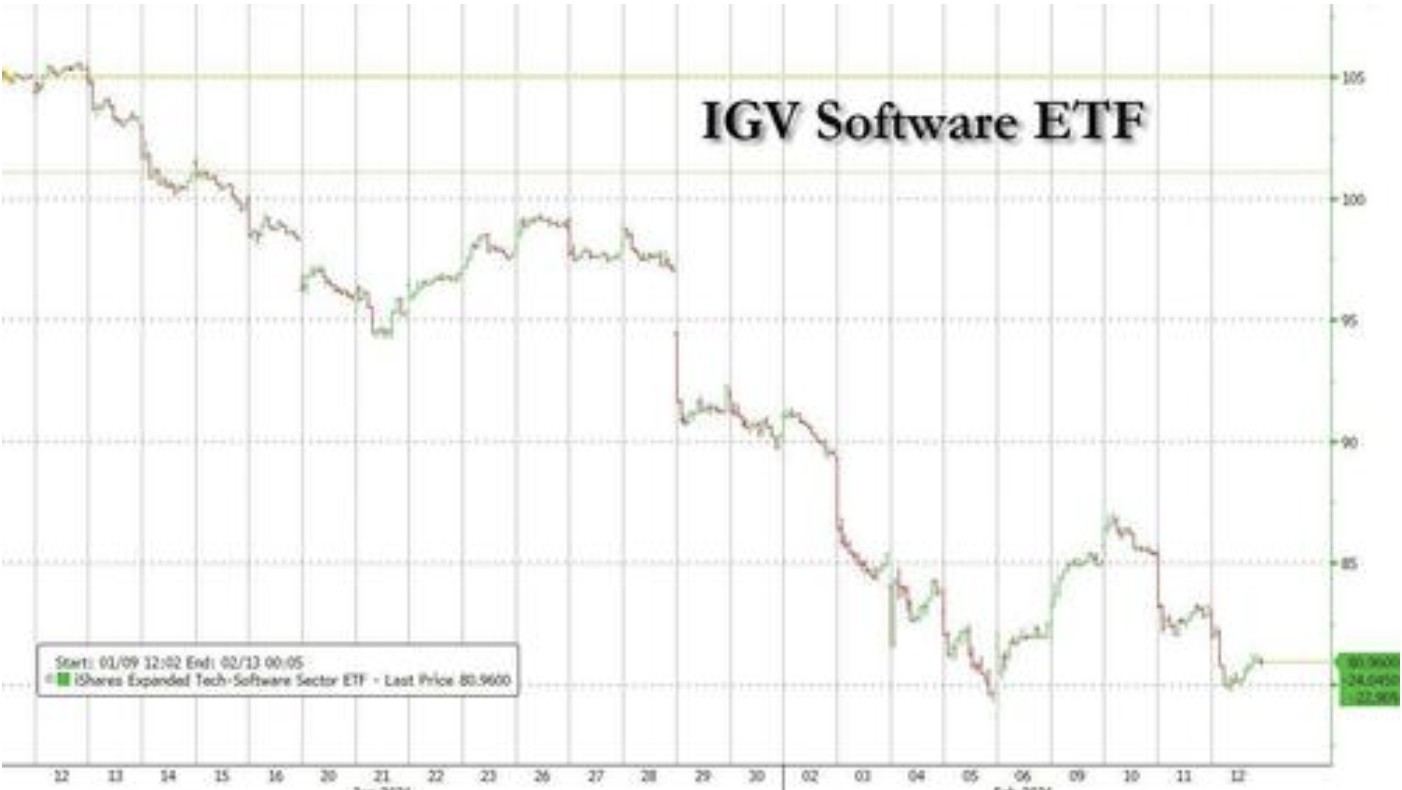
Hedge funds quickly resumed short-selling strategies after a brief covering. Morgan Stanley's report indicated that the new short positions added from Wednesday to Thursday were just slightly below the historical peak on January 29, with new shorts in the software sector even exceeding the levels at the end of January. Infrastructure software stocks, which had previously seen significant short-covering, are again under heavy short-selling pressure.
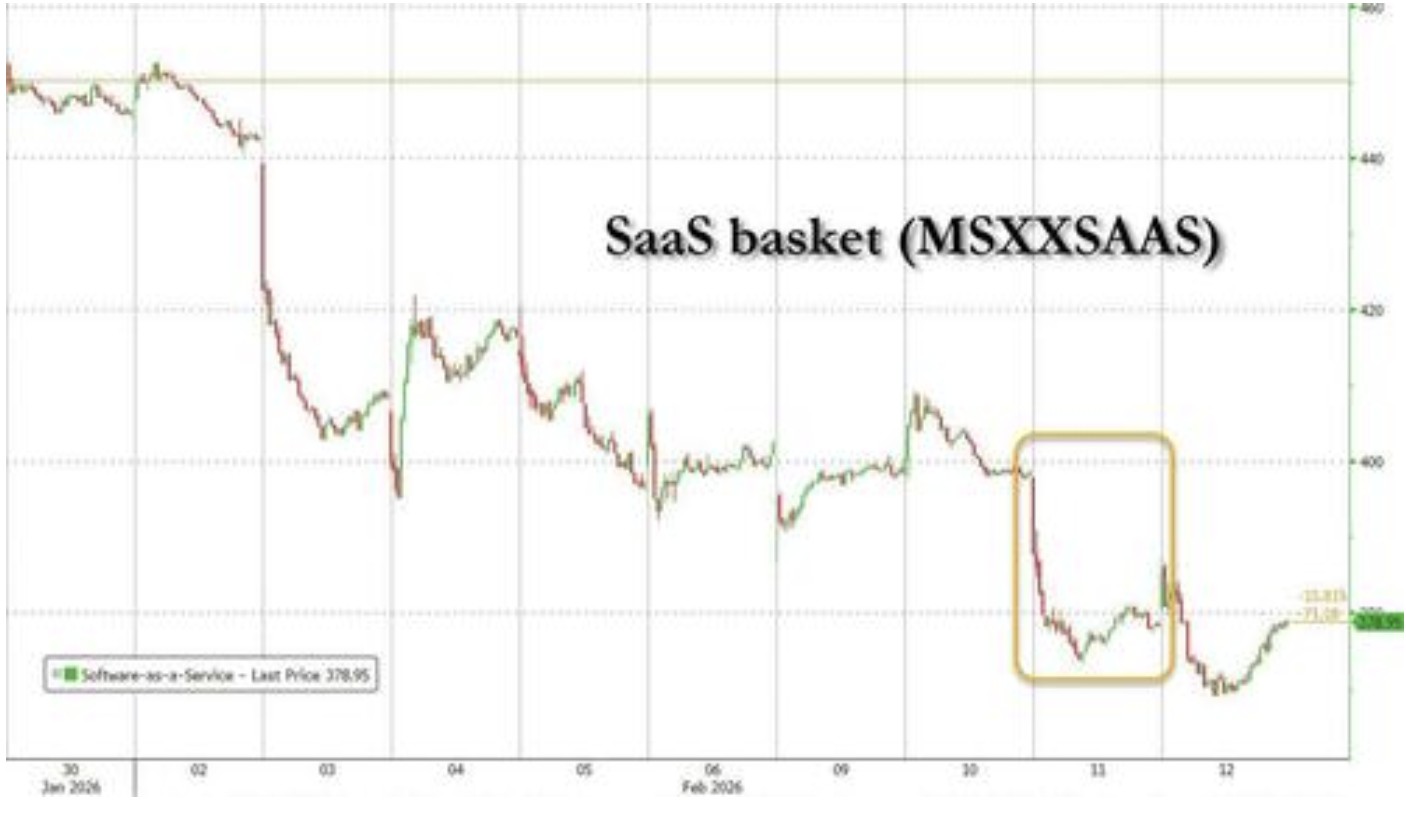
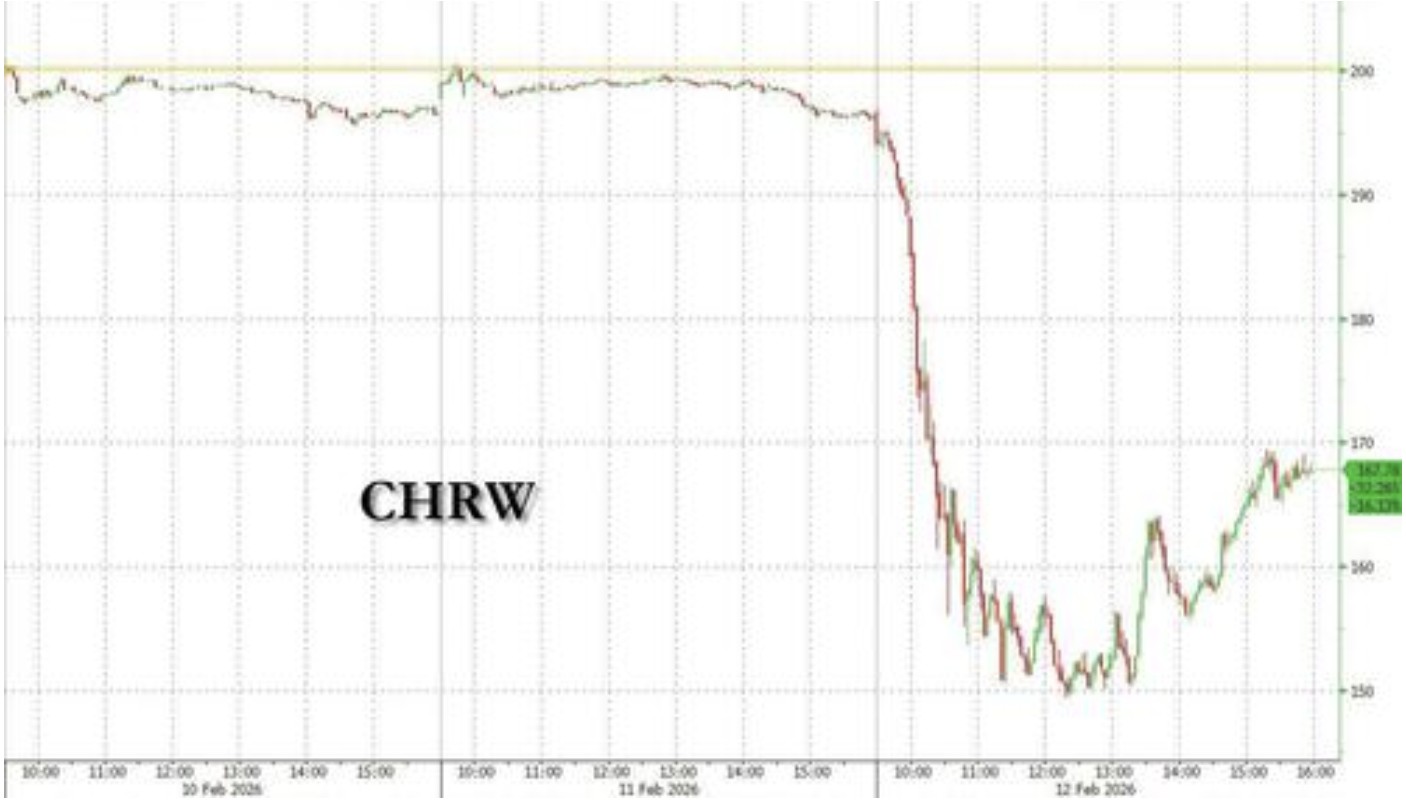
Concerns about AI replacing human jobs are spreading to more sub-industries. Market sentiment was impacted by comments from Microsoft's AI division CEO regarding "most white-collar jobs will be replaced by AI within 12 months," leading transportation and logistics company CH Robinson to plummet by 8 standard deviations due to potential reductions in labor demand from AI chatbots. The S&P 500 index fell approximately 1.55% overnight, marking the second-largest decline in three months.
Defensive sectors are accelerating their outperformance over cyclical stocks, with Goldman Sachs' pair trading of cyclical versus defensive stocks recording the worst two-day performance since "Liberation Day," with a cumulative decline of over 350 basis points. The yield on the 10-year U.S. Treasury bond approached a three-month low near 4.08%, and the VIX index closed above the 20 mark, indicating a rise in market risk aversion.
Goldman Sachs' head of technology trading, Callahan, stated that this is one of the most turbulent trading environments he has ever seen, as the Russell Technology Index fell back to its 200-day moving average, with many stocks in the tech/growth sector showing signs of being oversold, raising discussions about which stocks are excessively undervalued.
Morgan Stanley: Historic Short-Selling Wave Returns
In a report titled "Hedge Funds Resume Short Selling, Software Stocks See Largest Single-Day Increase in Short Selling Since 2010," Morgan Stanley pointed out that hedge funds turned to aggressive short selling on Wednesday and Thursday, reversing the recent trend of short covering in U.S. stocks. The new short positions were highly concentrated in the software sector, with the total volume ranking among the top five for single-day historical records since 2010.
The software and SaaS sectors have become the focus of short selling, with new short positions exceeding the levels at the end of January. Infrastructure software stocks, which had previously faced significant short covering, have not been spared and are again facing heavy short-selling pressure. In contrast, the reduction in long positions has been limited, resulting in overall net selling pressure still being significantly lighter than the events at the end of January. **
Morgan Stanley data shows that last week set a record for the largest single-stock short position in history. Although there was a fierce short covering on Friday and early this week, its duration was far below expectations, and the market quickly shifted from a "dead cat bounce" rebound to a new round of selling.
Goldman Sachs: A Market with Nowhere to Hide
Goldman Sachs' trading desk wrote in its closing summary, "There is nowhere to hide today; the market is filled with a 'sell first, ask questions later' sentiment." The pace of selling accelerated towards the end of the session, and aside from concerns about AI spreading to more sub-industries, there was no clear catalyst.
Some traders attributed the sell-off to a report from the Financial Times stating that the CEO of Microsoft's AI division indicated "most white-collar jobs will be replaced by AI within 12 months," as "model programming capabilities have surpassed human abilities."
Transportation logistics company CH Robinson became another pain point, with its stock price experiencing an 8 standard deviation drop, leading to market debates about whether the company would be a loser due to AI chatbots matching freight and increasing efficiency (reducing labor demand).
Another Goldman Sachs trader previously pointed out, "The volatility has severely impacted market sentiment, and no one is willing to step in to buy the dip (see CBRE, which despite solid performance still reversed and fell during the session)."
Indices Plummet, Tech Stocks Face Collective Sell-off
The S&P 500 index fell about 1.55% overnight, marking the second worst performance in the past three months. Goldman Sachs' cyclical versus defensive stock pair trades recorded their worst two-day performance since "liberation day," with a cumulative drop of over 350 basis points, indicating increasing signs of market risk aversion.
The yield on the 10-year U.S. Treasury bond dropped to around a three-month low of approximately 4.08%, with defensive sectors performing strongly; Verizon has risen for 16 days out of the past 18 trading days. The VIX index closed above 20 again.
The market has become extremely sensitive and anxious about the potential "composite," disruptive, and diffuse impacts of AI. Meanwhile, large tech AI spenders and computing companies are also seeing declines in valuation—Amazon has fallen for 8 consecutive days, with 11 declines in 12 days, Google has dropped 7 times in 8 days, and NVIDIA and Broadcom have remained flat since last summer.
Defensive stocks continue to break out (Verizon, AT&T, Johnson & Johnson, Walmart, etc.); the "AI infrastructure" theme shows divergence (Compute vs EMS vs Memory); growth stocks in software, internet, and payments are experiencing highly correlated sell-offs (SaaS, fintech, e-commerce, advertising, gaming, marketplace, etc.).
Is the Valuation Adjustment Excessive?
Goldman Sachs' head of tech trading, Callahan, stated that this is one of the most turbulent trading environments he has ever seen. From his perspective, during this earnings season and market backdrop, stock price changes are more about the narrative of the AI ecosystem (updates on large language models, blogs, snippets of commentary, etc.) rather than the earnings reports themselves.
The market quickly priced in perceived technological changes, but now it needs to discuss whether the market is "too ahead" in certain areas (i.e., stock price movements are faster than business changes). Callahan cited comments from the earnings calls of two companies as examples (Tyler Technologies and Take-Two Interactive have not returned to pre-earnings report levels): Tyler Technologies stated in the earnings call:
"There is a lot of market noise, but in the public sector, technology alone cannot win. For over 25 years, Tyler has guided clients through wave after wave of transformation, and our approach has remained consistent... Clients do not want additional tools that add complexity. What they want is practical AI that is deeply integrated into existing systems, governed appropriately, and solves real problems in a reliable and trustworthy manner."
Take-Two Interactive responded to questions related to Google's Genie:
"To be honest, I'm a bit confused. The video game industry has been built on machine learning and artificial intelligence since its inception. We create games using technology in computers. Since the emergence of generative AI issues 18 months ago, I have been enthusiastic about the future... This is just a small part of our work. If this product, this tool is realized, it will make part of our work better and more efficient."
Callahan noted that as the Russell Technology Index fell back to the 200-day moving average, many stocks in the tech/growth sector are showing signs of being oversold, making it worth discussing which stocks are undervalued.
As a reference, large tech stocks (i.e., Mag 7) have lagged the market by about 7.5 percentage points over the past few months, marking a significant pullback that is not driven by "market events" (previous pullbacks in the 10%-12% range occurred during market events).
Callahan is watching whether Mag 7 can stabilize, as a potential anchor for tech stock stability (catalysts include NVIDIA/Broadcom earnings, earnings season, GTC conference, etc.).
