Asian stock markets fell before the Spring Festival, while South Korean stocks rose 0.9% against the trend. Gold rebounded slightly, and the market is focused on U.S. inflation data

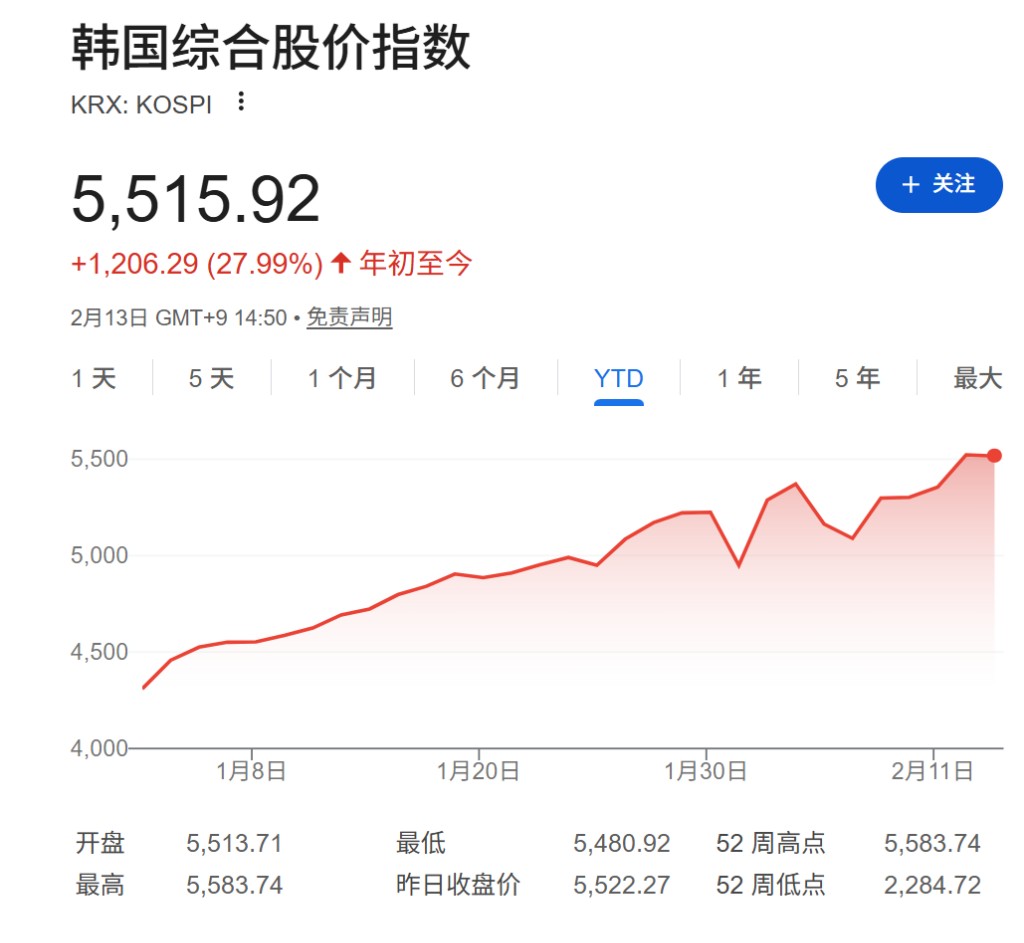
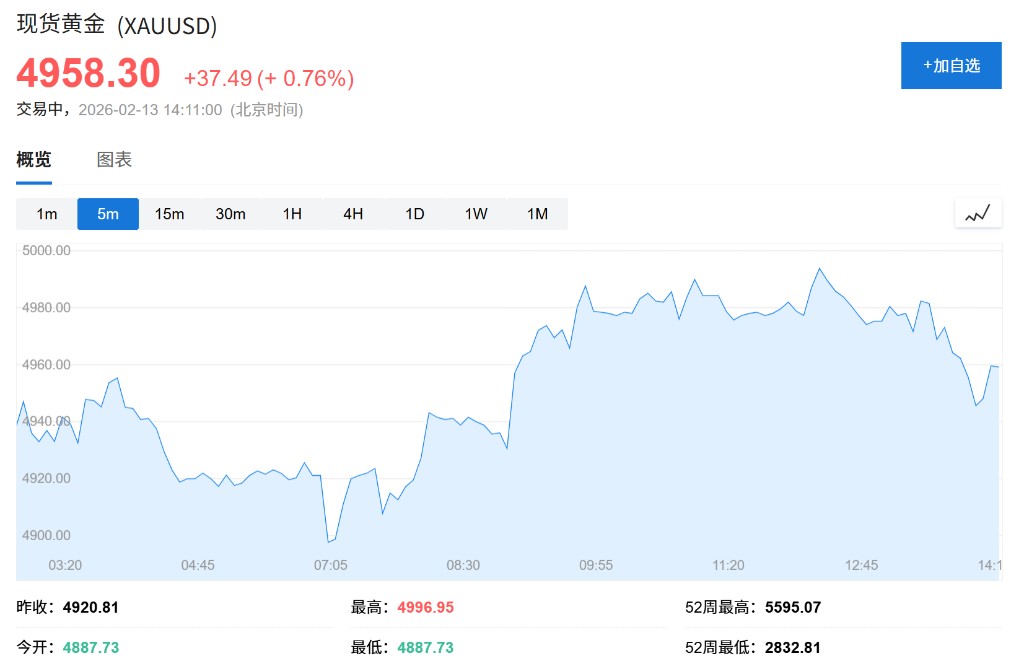
Asian stock markets fell back from record highs on Friday, as investors locked in profits and reduced positions ahead of the Chinese New Year. The MSCI Asia-Pacific Index dropped 0.9%, while the South Korean Kospi Index rose 0.9% against the trend. Gold increased by 0.7% to above approximately $4,950 per ounce, and the intraday gain for spot silver expanded to 3%, reporting $77.46 per ounce. The yield on the U.S. 10-year Treasury rose by 1 basis point to 4.11%, partially recovering the gains driven by risk aversion on Thursday
Asian stock markets retreated from record highs on Friday as investors locked in profits and reduced positions ahead of the Chinese New Year, while gold and silver recovered some of their losses. With U.S. inflation data set to be released, market expectations for the Federal Reserve to cut interest rates have been pushed back to July, and the impact of AI-related anxiety in U.S. stocks on Asian markets has been relatively limited.
The MSCI Asia-Pacific Index fell 0.9% on Friday, marking its first decline in six trading days, with two-thirds of its constituents down. The South Korean Kospi Index rose 0.9% against the trend, showing resilience after U.S. tech stocks fell due to AI-related concerns. Applied Materials surged 13% in after-hours trading, boosted by optimistic sales forecasts, indicating that the cross-asset sell-off may be easing.
Gold rose 0.7% to above approximately $4,950 per ounce, while spot silver's intraday gains expanded to 3%, trading at $77.46 per ounce. Bitcoin rebounded after four consecutive days of decline. The yield on the U.S. 10-year Treasury rose by 1 basis point to 4.11%, partially recovering the gains driven by risk aversion on Thursday.
Market focus has shifted to the U.S. inflation data for January to be released on Friday. The market expects the core Consumer Price Index (CPI) to grow by 2.5% year-on-year. Traders continue to believe that a rate cut by the Federal Reserve in March is highly unlikely, with a July cut fully priced in. Benjamin Wiltshire of Citigroup warned that the market is overly optimistic about the U.S. inflation outlook, stating, "We are still in a structurally high inflation environment."
- The South Korean Kospi Index rose 0.9%, while India's Nifty and Sensex indices fell by 1%.
- The Australian S&P/ASX 200 Index closed down 1.4% at 8,917.6 points.
- The yield on the U.S. 10-year Treasury rose by 2 basis points to 4.11%.
- The price of Japan's 2-year Treasury erased its losses, with the yield turning down by 0.5 basis points to 1.295%.
- The yen fell by 0.3% to $153.21.
- Gold rose 0.7% to above approximately $4,950 per ounce, while spot silver's intraday gains expanded to 3%, trading at $77.46 per ounce.
- Bitcoin rose by 0.8% to $66,335.45.
- West Texas Intermediate crude oil fell by 0.2% to $62.74 per barrel.
Profit-Taking Dominates Before the Holiday
The MSCI Asia-Pacific Index has risen about 12% so far this year, while the S&P 500 Index erased all its gains for the year on Thursday and is currently down 0.2%. Asian tech stocks have performed strongly, with the MSCI related sector index up 22%. The South Korean Kospi Index, representing AI investments, has risen 32% this year, making it the best-performing stock market globally.

"Asia has performed well this year, but I am concerned about the correlation with global markets and tactical pullbacks," said Nick Ferres, Chief Investment Officer at Vantage Point Asset Management in Singapore The yield premium on Asian investment-grade US dollar bonds widened by about 2 basis points on Friday. Credit traders believe that if this trend continues, it will be the largest increase since October last year, consistent with the widening spread of similar US bonds.
AI Shockwave Relatively Controllable in Asia
The sharp fluctuations in the US market reflect the high risks brought by the AI boom and the unpredictable chain reactions across industries, regions, and asset classes, highlighting the emergence of what is termed "AI panic trading." "The way software stocks are trading now is reminiscent of bank stocks in 2008," said Nick Ferres, referring to the global financial crisis.
However, compared to the volatility in the US triggered by AI, the impact on Asian markets has been relatively limited so far. Tomo Kinoshita, a global market strategist at Invesco Japan, stated, "Nevertheless, as AI applications are expected to advance over time, a situation similar to that in the US is likely to emerge in Asia eventually."
Julia Wang from Nomura noted that the market is in uncharted territory regarding AI technology, which means "there could still be a lot of volatility in the future." The strong performance of Applied Materials after hours indicates that concerns related to AI may show signs of easing.
Inflation Data Influences Rate Cut Expectations
The US inflation data for January became a key event for traders on Friday. The core CPI is expected to grow by 2.5% year-on-year, excluding food and energy prices. This data received additional attention after Wednesday's employment figures showed a strong US economy, prompting traders to reduce bets on a rate cut by the Federal Reserve, with the money market pushing back rate cut expectations from June to July.
Benjamin Wiltshire from Citigroup stated that the market is overly optimistic about the US inflation outlook, making bets on rising price pressures appear attractive. He pointed out that investors may be underestimating the resilience of US consumers, and market expectations for inflation may be slightly adjusted upward. Traders continue to believe that the likelihood of a rate cut at the Fed's March meeting is extremely low. US Treasury bonds strengthened on Thursday due to risk aversion in the New York market, but on Friday, they retraced some of their gains.
In commodities, oil prices fell for the first time this year for two consecutive weeks, influenced by broader market risk aversion. Gold has been highly volatile since it suddenly sold off below $5,000 on Thursday, with algorithmic traders seemingly amplifying the decline of this precious metal.

Goldman Sachs upgraded its rating on Japanese stocks, expecting that political stability will provide a boost. This adds another positive factor for Asian markets, although investors remain cautious in the short term.
Continuously updating