


Concerns about AI are spreading, and commercial real estate stocks continue to decline, plummeting 20% in two days

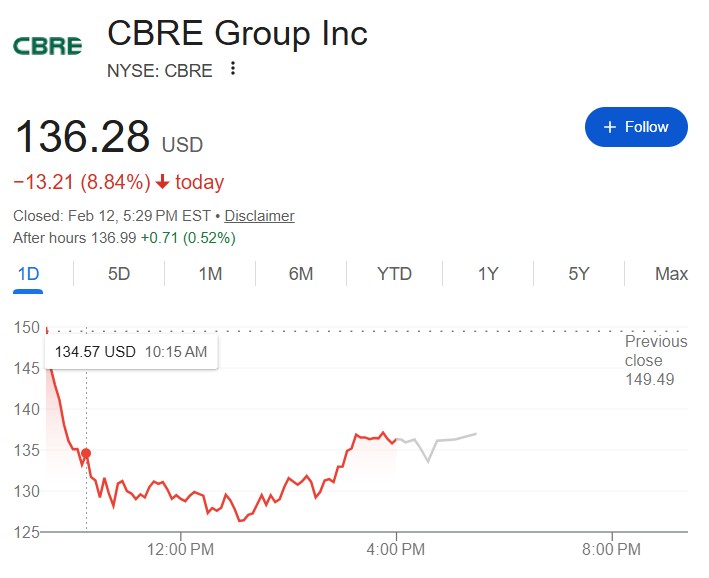
On Thursday, CBRE Group fell again by 8.8%, with a cumulative decline of 20% over two days, marking its worst performance since 2020. The office real estate index dropped by 4.2%. Investors are concerned that the widespread adoption of AI tools will reduce the demand for office space. Analysts point out that the market is digesting expectations of job losses in office roles due to AI, but warn that some of the sell-off is an overreaction, and investors have yet to establish a rational framework for assessing the long-term impact of AI
The commercial real estate sector continued to suffer heavy losses on Thursday, as investors worried that the widespread application of artificial intelligence tools would weaken demand for office space. This round of selling began on Wednesday in a small range of sectors and is now spreading to a larger scope.
On Thursday, CBRE Group fell again by 8.8%, with a cumulative decline of 20% over two days, marking its worst performance since 2020. Other major commercial real estate companies also suffered heavy blows, with Jones Lang LaSalle down 7.6% and Cushman & Wakefield plummeting 12%.
The index tracking office real estate companies fell 4.2% on Thursday. Major declining stocks in this index included SL Green Realty, Cousins Properties, Kilroy Realty, and BXP. Bloomberg Intelligence analyst Jeffrey Langbaum stated:
Concerns about the increase in AI applications leading to reduced demand for office space are not new. However, after yesterday's wave of selling by brokers, we are seeing panic spread to actual office space providers.
Path of AI Panic Spread
Investor concerns about AI disrupting business models significantly intensified after the startup Anthropic launched new tools, leading to substantial sell-offs in multiple sectors of the stock market over the past few weeks, starting with software manufacturers and then spreading to private credit companies, insurance firms, wealth management institutions, real estate service companies, and logistics enterprises.
Jefferies analyst Joe Dickstein noted that the market is digesting expectations of large-scale job losses in office positions due to AI.
Sean Dunlop from Morningstar pointed out that the financial services industry is currently in a chaotic state of "ready, fire, aim," as widespread concerns about AI disruption lead investors to react violently even to slight earnings misses.
Analysts and investors warn that recent sharp sell-offs reflect traders' knee-jerk reactions, which may have overestimated the actual risks. This indicates that the market is still in a digestion phase in the face of AI impacts, with increased volatility in investor sentiment and no rational assessment framework for the long-term effects of AI yet established
