


A "sweetness crisis" triggered by weight loss "miracle drugs": sugar prices have halved, and even Magnum ice cream is struggling to sell!

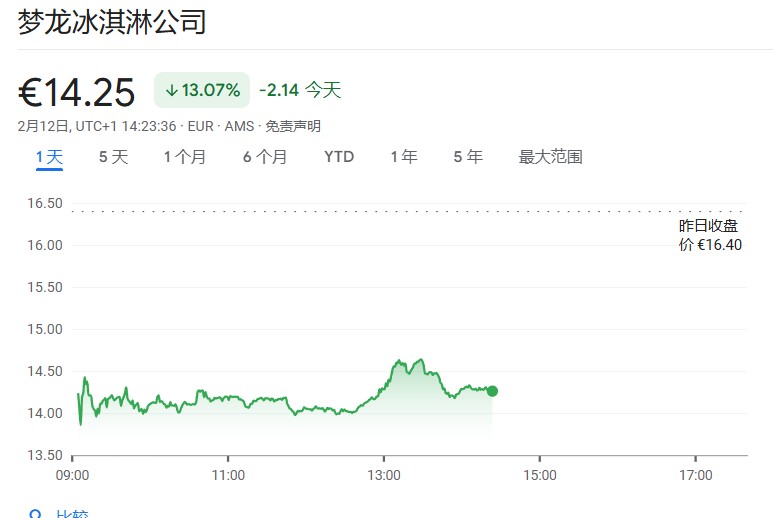
GLP-1 class weight loss drugs are reshaping the demand structure for sugars and proteins by altering dietary behaviors, and this is quickly transmitting to the futures and stock markets. New York raw sugar futures have fallen below 14 cents, hitting a new low since 2020, and have been halved from the peak at the end of 2023. The world's largest ice cream company, Magnum, saw its stock price plummet after sales fell short of expectations, raising concerns about structural risks in categories such as ice cream
GLP-1 weight loss drugs are shifting consumer preferences from "sweet" to "protein," and this change is rapidly transmitting to the valuations of commodity and consumer goods companies: sugar demand is being repriced, protein-related raw materials are strengthening, and high-sugar categories are facing structural pressure.
New York raw sugar futures fell below 14 cents per pound on Wednesday, reaching the lowest level since October 2020, having halved from the peak at the end of 2023. Traders believe that the slowdown in consumption in wealthy economies like the United States is greater than previously predicted, while the demand growth in emerging markets is also below expectations.
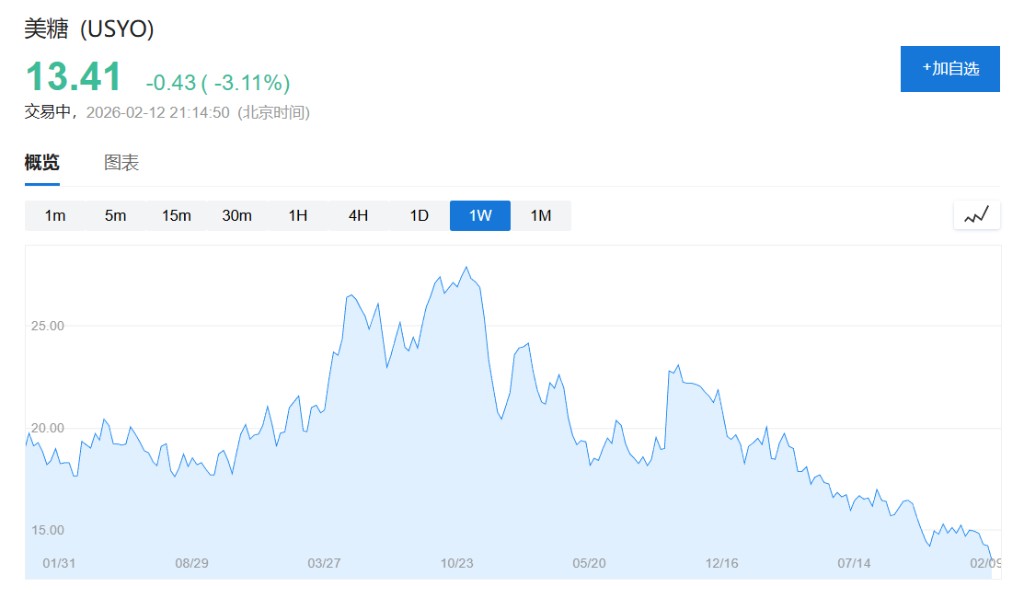
The market is linking changes in demand to GLP-1 injection-type weight loss drugs. These drugs activate receptors that make people feel fuller, thereby reducing cravings for sweetness. Representative products include Novo Nordisk's Wegovy and Ozempic, as well as Eli Lilly's Mounjaro and Zepbound. The U.S. Department of Agriculture has lowered its sugar usage forecast for 2026 by 23,000 tons to 12.3 million tons in its supply and demand outlook report released in December 2025, citing a decline in human consumption.
This shift in demand is also evident in the stock market. The world's largest ice cream company, Unilever, saw its stock price plummet after disclosing sales that fell short of expectations, prompting investors to reassess the long-term impact of GLP-1 on high-sugar categories. Meanwhile, prices for protein raw materials like whey have strengthened under the influence of health trends and GLP-1, forcing food companies to accelerate adjustments in formulas and product structures.
Sugar prices fall below 14 cents, demand slowdown becomes the main variable
The direct trigger for the decline in raw sugar prices is the "faster than expected" cooling on the consumption side. According to the Financial Times, Gurdev Gill from broker Marex stated that the speed of the decline in sugar consumption has caught the industry off guard, with the clearest signals coming from Mexico and the United States, while European demand data also poses challenges for sugar prices.
The consensus among traders is that the slowdown in demand from wealthy economies, combined with lower-than-expected growth in emerging markets, has led to a rapid decline in sugar prices even though supply and demand have not significantly imbalanced.
Stephen Geldart, head of analysis at Czarnikow, noted that GLP-1 has become quite popular in certain areas of the United States, which may be one reason for the downward revision of sugar consumption forecasts. The key is that sugar demand is highly sensitive to behavioral changes, as consumption is highly concentrated.
He pointed out that about the top 20% of consumers contribute approximately 65% of the sales of products like cookies and ice cream. If these "super users" start using GLP-1 drugs, sales may experience a "non-linear" decline, further amplifying the impact on sugar demand. This also explains why futures prices can react disproportionately when there are marginal changes on the demand side
Short-term Supply Difficult to Contract, Sugar Short Positions Near Five-Year High
The price decline has not immediately led to a contraction in supply. Reports indicate that global sugar production has remained stable at around 180 million tons per year in recent years, with Brazil and India maintaining high output, and no major producing regions signaling significant production cuts.
Geldart stated that production and consumption have generally been balanced in recent years, without significant inventory accumulation, but futures prices have halved over the past two years, and the market has been slow to react to consumption issues in key markets.
Gill added that sugarcane planting requires heavy upfront investment and has a long cycle, while many farmers are supported by the government and are insensitive to global prices, making it difficult for supply to quickly respond to low prices. With changes in fundamental expectations, short positions have significantly increased since the end of last year and are currently close to a five-year high, with Geldart describing market sentiment as "extremely bearish."
Ice Cream Sector Under Pressure First, Magnum Plummets and Unilever Guidance Triggers Repricing
Structural concerns have impacted related stocks. Magnum disclosed its first performance report since its spin-off on Thursday: fourth-quarter sales fell by 3%, significantly below analysts' forecast of a 0.5% increase. Jefferies analyst David Hayes believes this will "reignite" market concerns about the structural risks that GLP-1 poses to the ice cream category.
As a result, Magnum's stock price in Amsterdam briefly fell by over 14%. The company expects revenue of €7.9 billion in 2025, flat year-on-year, with organic sales growth of 4.2%, and anticipates organic sales growth of 3% to 5% this year.
Its annual net profit fell by 48% to €307 million, mainly affected by spin-off and restructuring costs, while operating profit declined by 21% to €599 million. CEO Peter ter Kulve previously downplayed risks, stating that the product portfolio includes low-calorie and high-protein options and offers portion-controlled products like Magnum Bonbons.
The spin-off entity Unilever was also affected. Its stock price fell by 1.4% in London on Thursday, with the company expecting its underlying sales growth to be at the lower end of the 4% to 6% range in 2026, and at least 2% sales growth. Bernstein analyst Callum Elliott pointed out that management had previously mentioned a mid-term goal of achieving 5% growth, but this "acceleration" seems to have been postponed until after 2026.
Unilever CEO Fernando Fernandez stated that the company will be "simpler, sharper, and faster" after the spin-off, focusing resources on faster-growing businesses; the company's annual underlying sales growth was 3.5%, with beauty and health and personal care growing by 4.3% and 4.7%, respectively, while the food business grew by 2.5%.
Protein Raw Materials Strengthen Against the Trend, Whey Prices Near Record Highs
In contrast to sugar, the protein chain is strong. John Lancaster of StoneX stated that whey demand has "significantly increased," with prices for high-protein whey products used in protein powders and energy bars having "risen sharply" over the past year and a half, with Europe and the United States "almost at record highs." Driving factors include the overlap of GLP-1 and broader health trends. Clinicians warn that without dietary and lifestyle adjustments, a significant portion of the weight loss attributed to GLP-1 may come from muscle rather than fat, prompting doctors and nutritionists to recommend increased protein intake, further boosting the demand for whey concentrates and isolates. Data from Worldpanel by Numerator shows that sales of cottage cheese in the UK increased by 50% year-on-year in January.
Additionally, the first tablet form of GLP-1 was approved in December, which the market views as a potential way to lower usage thresholds and expand penetration rates. Agricultural commodity expert Kona Haque believes that as prices decrease and adoption widens, the impact "will become increasingly significant."
