


Hermès' fourth-quarter revenue grew by 9.8%, exceeding expectations, with a strong performance in the U.S. market driving results against the trend | Earnings Report Insights

In the winter of luxury goods, Hermès demonstrates "steady running against the wind." In terms of regions, the Americas market surged by 12.1%, exceeding expectations, indicating that American consumers' purchasing power for top luxury goods remains strong. In terms of products, the leather goods department achieved organic growth of 14.6%, with core items in high demand. Benefiting from the loyalty of ultra-high-net-worth clients, the company's annual operating profit margin climbed to 41%, while also announcing a price increase of 5%-6% in 2026
Hermès, against the backdrop of a general cooling in the luxury goods industry, benefits from an ultra-high-net-worth clientele (less sensitive to inflation and macro fluctuations) and a longer order backlog, once again delivers a "steady yet strong" performance.
On February 12, the French luxury giant Hermès released its fourth-quarter and full-year financial report for 2025, with fourth-quarter revenue growing by 9.8% at constant exchange rates, not only continuing a stable growth rate but also exceeding the consensus expectation of analysts compiled by Visible Alpha (8.4%).
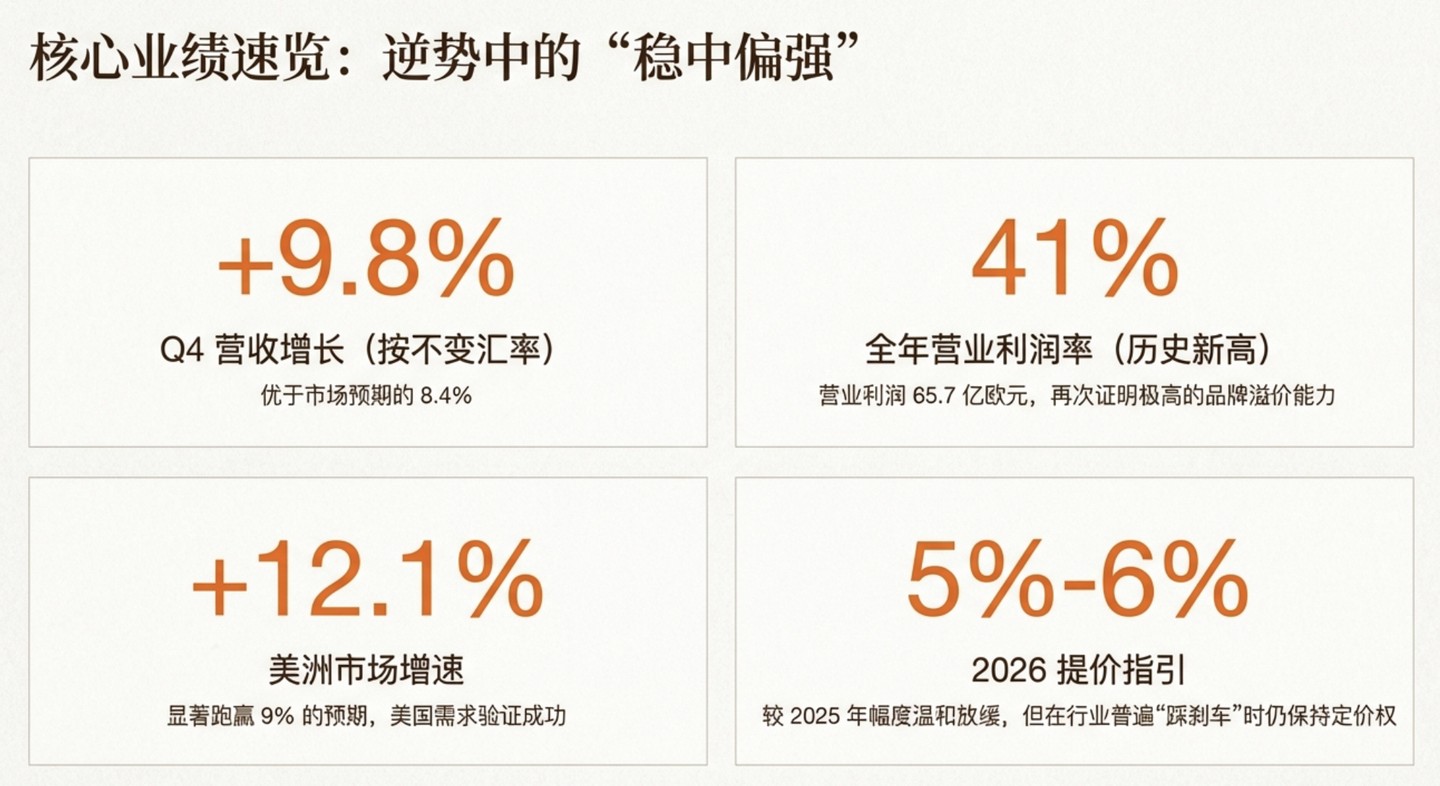
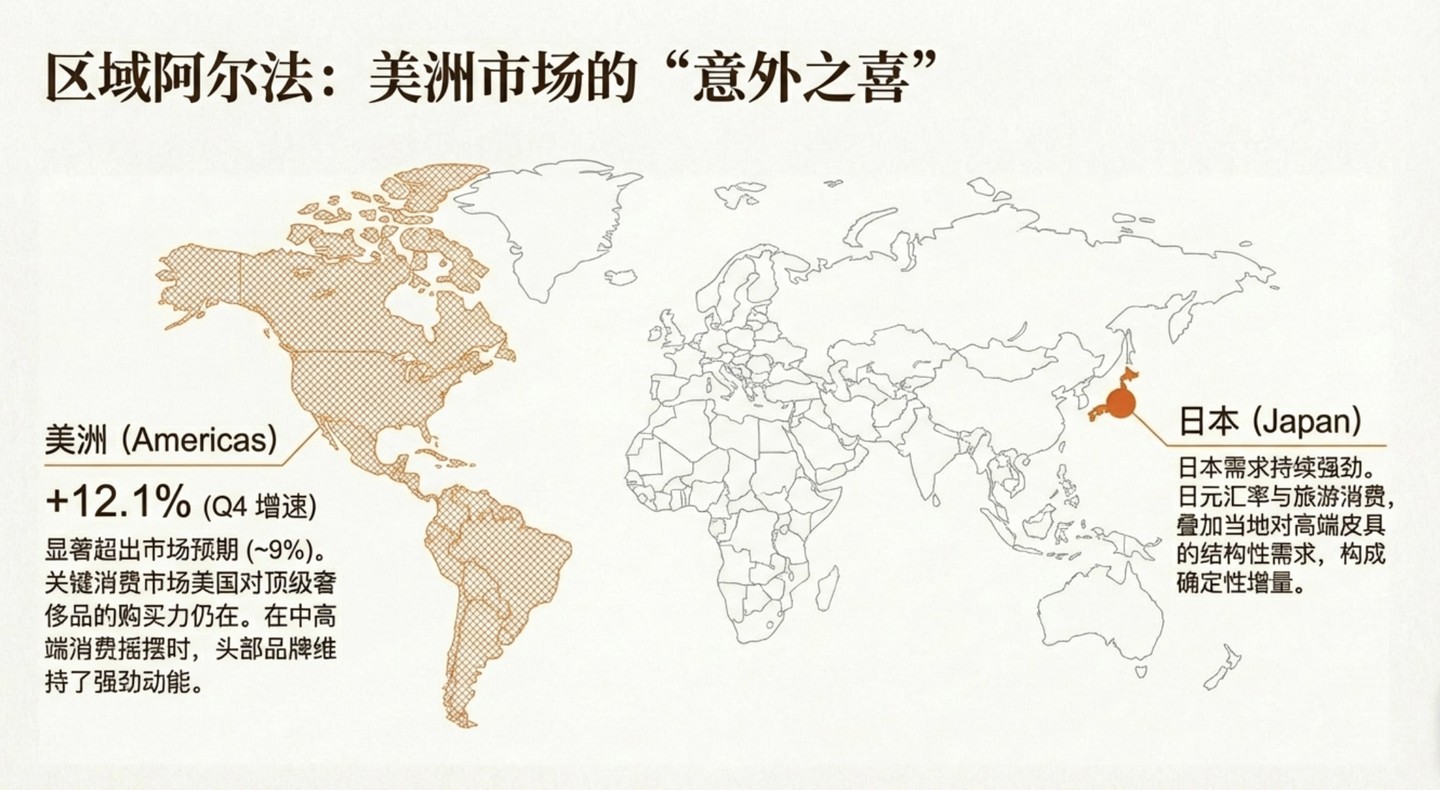
In terms of regional performance, the Americas (mainly the United States) became the biggest highlight, with fourth-quarter sales growing by 12.1% at constant exchange rates, significantly exceeding the market's expectation of about 9% growth; demand in Japan was also strong, continuing to support the group's resilient growth globally.
In terms of product structure, the leather goods and saddlery department (covering core categories such as Birkin and Kelly) contributed a 14.6% organic growth in profit, once again outpacing the group's average growth rate, demonstrating that the "scarce supply + strong brand power" business model is more defensive during a slowdown cycle.
Profitability also continued to rise: the company's full-year operating profit reached €6.57 billion (approximately $7.79 billion), with an operating profit margin of 41%, slightly above the market expectation of 40%. At the same time, Hermès announced a dividend of €18 per share. Management stated they would enter 2026 "with confidence," but the price increase this year is expected to drop to 5%-6%, lower than the 6%-7% in 2025.
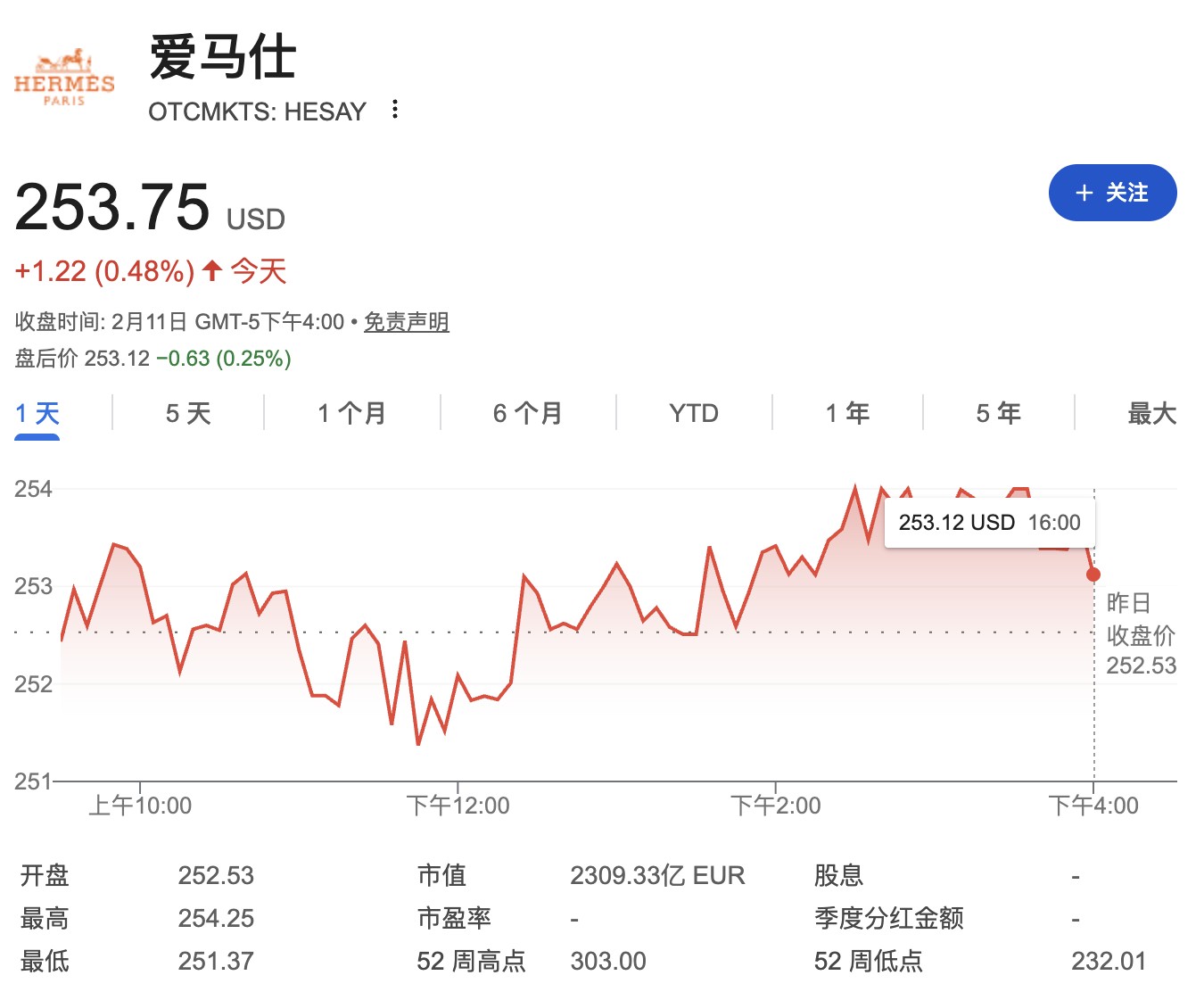
Revenue Side: 9.8% Growth in Q4 at Constant Exchange Rates, Continuing to "Run Steadily Against the Wind"
The core information from this financial report is: in an environment where peers generally face weakening demand and shrinking pricing power, Hermès still managed to achieve nearly double-digit growth in the fourth quarter and exceeded expectations.
Reuters pointed out that the company benefits from an ultra-high-net-worth clientele (less sensitive to inflation and macro fluctuations) and a longer order backlog, which significantly enhances its resilience during the industry's slowdown compared to most luxury brands.
With a full-year operating profit of €6.57 billion and a profit margin of 41%, slightly above the market expectation of 40%, compared to most luxury brands facing pressure from discounts, channel adjustments, and marketing investments, Hermès' profit margin exceeding expectations seems more like a natural result of its business model (scarce supply, strong brand power, and a high-end product structure).
Previously, Kering Group announced on Tuesday that its fourth-quarter sales amounted to €3.9 billion, a year-on-year decline of 3% after currency adjustments, with flagship brand Gucci's sales dropping by 10%, marking the tenth consecutive quarter of decline But better than the market's expected 12% decline.
Regional Performance: Americas 12.1% Exceeds Expectations, U.S. Demand Reconfirmed
The 12.1% sales growth in the Americas was an "unexpected surprise" in the financial report, not only exceeding consensus expectations but also indicating that purchasing power for top luxury goods remains strong in the key consumer market of the United States. For investors, the significance of this data lies in: when mid-to-high-end consumption fluctuates, whether leading brands can maintain momentum in the U.S. often determines the lower limit of annual growth.
Additionally, the strong performance in the Japanese market was also highlighted by management and reports. The yen, tourism consumption, and the local structural demand for high-end leather goods and accessories remain one of Hermès' relatively certain sources of incremental growth in recent years.
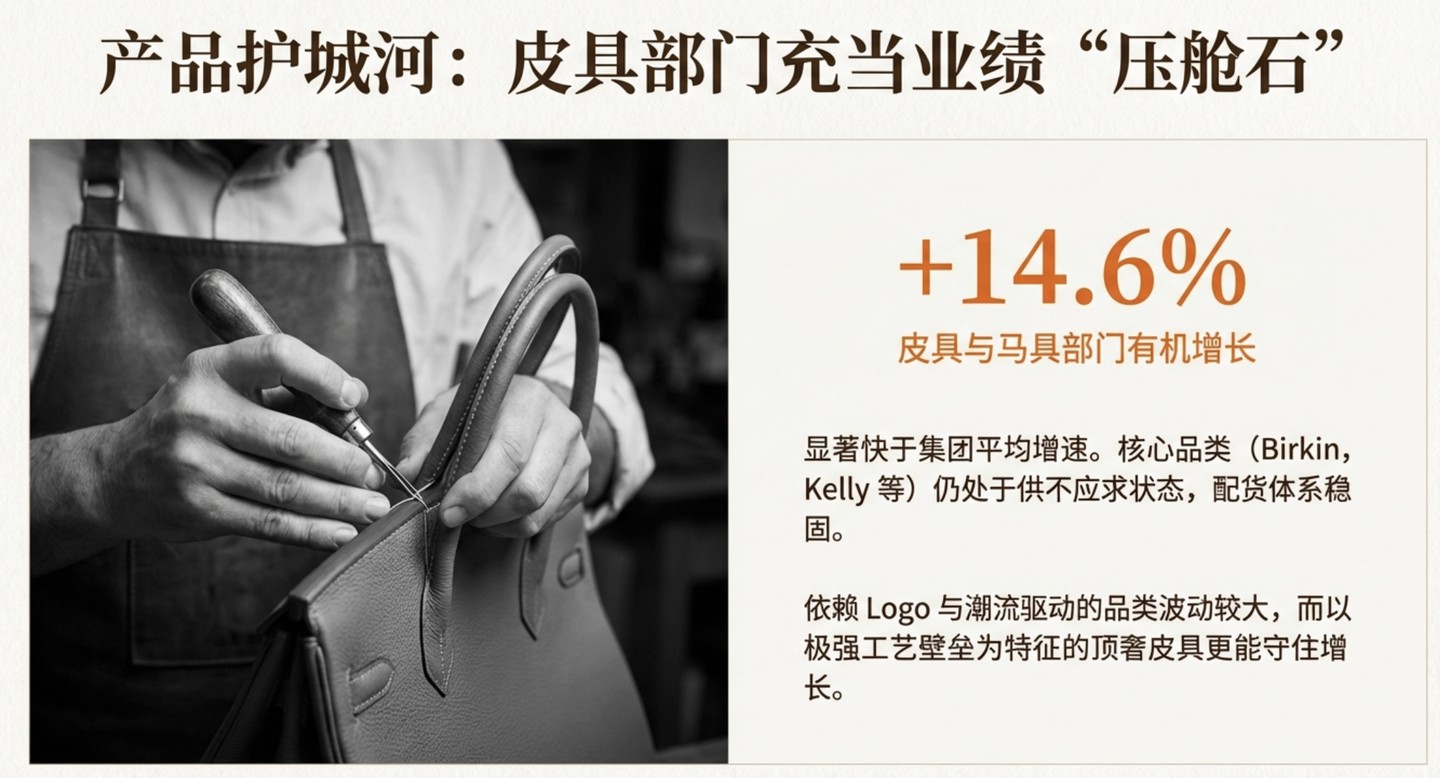
Category Structure: Leather Goods Department 14.6% Organic Growth, Core Engine Remains Steady
The leather goods and equestrian department is the profit "ballast" for Hermès and the category where brand scarcity and pricing power are most concentrated. This quarter, the department achieved an organic growth of 14.6%, significantly outpacing the overall group, indicating that core items such as high-end bags remain in short supply, with pricing and distribution systems still stable.
At the industry level, this also explains why Hermès can better navigate cycles: when demand weakens, categories reliant on logos and trends are more prone to fluctuations, while top luxury leather goods characterized by strong craftsmanship barriers and controlled production rhythms are more likely to maintain growth and profit margins.
Pricing Strategy: Price Increases Slow to 5%-6% in 2026, but "Price" Remains a Key Variable
CEO Axel Dumas stated, this year's price increase is expected to be around 5%-6%, a slowdown from 6%-7% in 2025, partly attributed to exchange rate changes.
The luxury goods industry has generally relied on price increases in recent years to offset costs and maintain growth, but as demand cools, many brands have "hit the brakes." Although Hermès is also slowing its pace of price increases, it still maintains a relatively clear annual pricing plan, reflecting its confidence in customer tolerance and brand premium.
JP Morgan analysts also pointed out that Hermès' price increase execution this year will be one of the key factors affecting growth prospects: under the premise of relatively controlled supply, price remains the core lever for the company's revenue and profit elasticity.
What the Market Will Look For Next: U.S. Momentum, Price Increase Realization, and Supply Rhythm
Looking ahead to 2026, the market focus will be on three points:
-
Whether the high growth in the Americas can continue, especially under the marginal changes in the U.S. macroeconomic and high-end consumption landscape.
-
The implementation effects of the 5%-6% price increase in different regions and categories, and whether it will disrupt sales and waiting lists
-
Against the backdrop of a long order backlog, how does Hermès balance production expansion with scarcity management to continue transforming the "supply rhythm" into long-term pricing power?
