


Citigroup warns: The British Pound's "most vulnerable moment" is in May, as political turmoil and interest rate cut expectations put it under dual pressure

Citigroup strategist Daniel Tobon stated that the uncertainty in the UK political situation and expectations for interest rate cuts by the central bank will resonate over the next two months, posing significant downward pressure on the British pound. He mentioned that the real short-selling window will open just before the local elections in early May, and the convergence of the two major themes in April and May will trigger a "greater reaction" from the pound. He expects the Bank of England to cut rates in April, followed by cuts in July and November, with a pace exceeding market pricing
Citigroup strategists warn that the biggest test facing the British pound will come in the next two months. At that time, the uncertainty in the UK political landscape and expectations for interest rate cuts by the Bank of England will resonate, posing significant downward pressure on the pound.
The bank's strategist Daniel Tobon stated that although the market has "initially sensed" these two major risks over the past week, the real window for downside risk will open just before the local elections in early May. Polls indicate that the party of Prime Minister Starmer may face pressure, and his leadership has been shaken, with political uncertainty likely to intensify.
Meanwhile, the Bank of England is expected to restart interest rate cuts in the coming months. Last week, the bank decided to keep interest rates unchanged by a surprisingly narrow margin, but the market generally believes that the easing cycle has not yet ended.
Intertwined Political and Monetary Policy Risks
Citigroup strategist Daniel Tobon pointed out that political uncertainty and monetary policy easing are the two core logics for shorting the pound at present, and these two themes will intersect between April and May, when the pound will experience "greater reactions." He stated:
"It is still too early to seriously bet on these scenarios; April and May are the moments when these themes converge, and that is the window we want to participate in."
This week, the pound rebounded against the US dollar and regained some ground against the euro. The previous decline was triggered by the resignation of a senior member of Starmer's team, bringing political uncertainty back to the forefront. Given that the pound's gains this year have mainly come from passive support due to a weaker dollar, many institutions believe that expressing exposure to UK risks through euro against pound is currently a more efficient trading method.
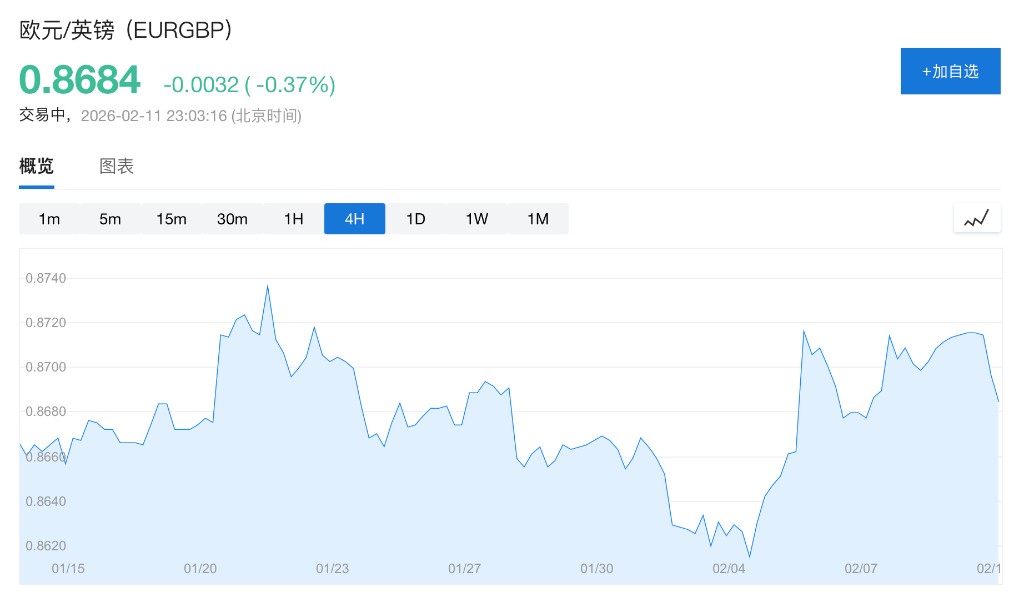
Rising Expectations for Interest Rate Cuts
Signals from the options market indicate that starting in March, selling pressure on euro against pound will gradually increase, as the market is positioning itself in advance for the Bank of England's interest rate cuts. Citigroup strategist Daniel Tobon expects that the next rate cut could occur as early as April, with subsequent cuts in July and November, indicating a pace of easing that clearly exceeds current market pricing.
However, he also noted that the final results of the local elections will be clear by that time. He stated:
"What could really trigger volatility is the weeks leading up to the elections."
Citigroup's bearish stance on the pound is more aggressive than the market consensus. Its target for the pound against the euro to drop to 88 pence by the end of June aligns with the median in Bloomberg's survey, but it further predicts a drop to 90 pence by the end of September, reflecting ongoing pessimism about the pound's mid-term trajectory
