


Quota reduction of 70%! The world's largest nickel mine faces production limits in Indonesia, causing a surge in London nickel prices

The Indonesian government has significantly reduced the annual production quota of the world's largest nickel mine, Weda Bay Nickel, to 12 million tons, a sharp decline of 71% compared to 2025. This production restriction directly led to a more than 2.6% increase in nickel prices during trading. As a major nickel-producing country, Indonesia is attempting to reverse the sluggish nickel prices caused by capacity expansion through proactive control of key mineral supplies
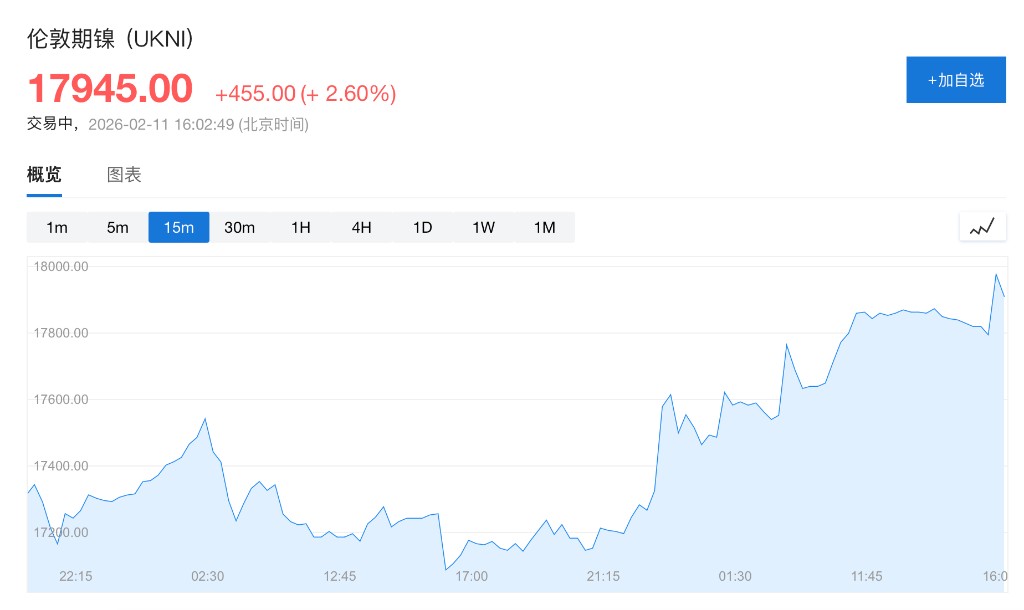
On February 11th during the European trading session, nickel prices on the London Metal Exchange (LME) surged in the short term, with an intraday increase of 2.6%. The market movement was directly triggered by the Indonesian government's significant quota reduction for the world's largest nickel mine, Weda Bay Nickel (PT Weda Bay Nickel).
According to media reports citing informed sources, Weda Bay Nickel's ore production quota for this year will plummet from 42 million tons in 2025 to 12 million tons, a decrease of 71%, far exceeding market expectations. The mine is located on Halmahera Island in North Maluku Province and is jointly owned by France's Eramet SA and Indonesia's PT Aneka Tambang. This substantial quota reduction will directly impact its original plan to expand production to over 60 million tons, thereby affecting the supply of related industrial parks that rely on this mine.
A spokesperson for Indonesia's Ministry of Energy and Mineral Resources stated that the relevant quotas are still under evaluation. This production restriction is expected to have a significant impact on the global nickel supply structure.
Indonesia Intensifies Supply-Side Control
As the world's largest nickel producer, Indonesia is actively regulating supply to stabilize its market prices. The significant reduction of quotas for Weda Bay Nickel is the latest measure taken by the Indonesian government to boost persistently pressured nickel prices. In recent years, due to the continuous expansion of domestic production capacity in Indonesia, global nickel prices have remained low for an extended period. The tightening of supply for key mines aims to provide substantial support for prices.
As the world's largest single nickel mine, changes in Weda Bay Nickel's output have a significant impact on global supply. The quota reduction from 42 million tons to 12 million tons means that the mine's annual output will shrink significantly, and this adjustment could notably alter the supply-demand landscape of the global nickel market, especially against the backdrop of growing demand in sectors such as electric vehicle batteries.
This move also poses a direct impact on the mine's own operations and expansion plans. The company had previously planned to increase its annual output to over 60 million tons to support the smelting capacity of surrounding industrial parks. Now, with the quota drastically reduced, the company and its shareholders will be forced to reassess their investment and production strategies
