


Anthropic's Latest 2026 Trend Report: The Unstoppable Programming Revolution of Humanity

The "2026 Agent Coding Trends Report" released by Anthropic points out that in the future, programmers will no longer simply write code but will transition to the role of directing AI assistants. The report emphasizes that software development is undergoing a significant transformation since the invention of graphical interfaces, allowing anyone to become a developer, with non-technical personnel also able to participate in application development. Future software engineers will become architects and decision-makers, with AI taking on more coding tasks
Anthropic has just released a bombshell 18-page report: "2026 Agent Coding Trends Report." The conclusion is explosive: programmers no longer write code; they have become "commanders." Individual AI assistants have evolved into autonomous agent legions that can spend days building complete systems, even allowing those in legal and marketing—who know nothing about coding—to create applications themselves. Software development is experiencing the biggest earthquake since the invention of the graphical interface.
In the AI circle of 2026, if anyone is shining the brightest, it is definitely Anthropic.
Just now, Anthropic threw out an 18-page heavyweight report: "2026 Agent Coding Trends Report."
The core conclusion of this report can be summarized in one sentence: Anyone can become a developer.
The rules of the game for programming/software development have completely changed!
Note, it is not that "every programmer has become stronger," but rather that "non-technical personnel can also develop."
This means that the software development industry is undergoing the biggest paradigm shift since DOS and the invention of the graphical interface.
Below is an in-depth interpretation of all 8 major trends in the report, packed with valuable insights, leaving nothing out.
Preface
This 18-page report is extremely information-dense!
Anthropic did not sugarcoat it or tell stories; it used its own internal research data, real customer cases, and a calm judgment of industry trends.
The core signal is very clear: programmers will not disappear, but programmers who "only write code" will disappear.
The future software engineer will be an orchestrator, architect, and decision-maker. They will no longer write code line by line but will command an AI legion while maintaining the unique human judgment and "taste." The more profound impact lies in the answer to the question "who is a developer," which will be completely rewritten.
This is the true core conclusion of Anthropic's report.
It is not that AI replaces humans, but that everyone becomes a developer.
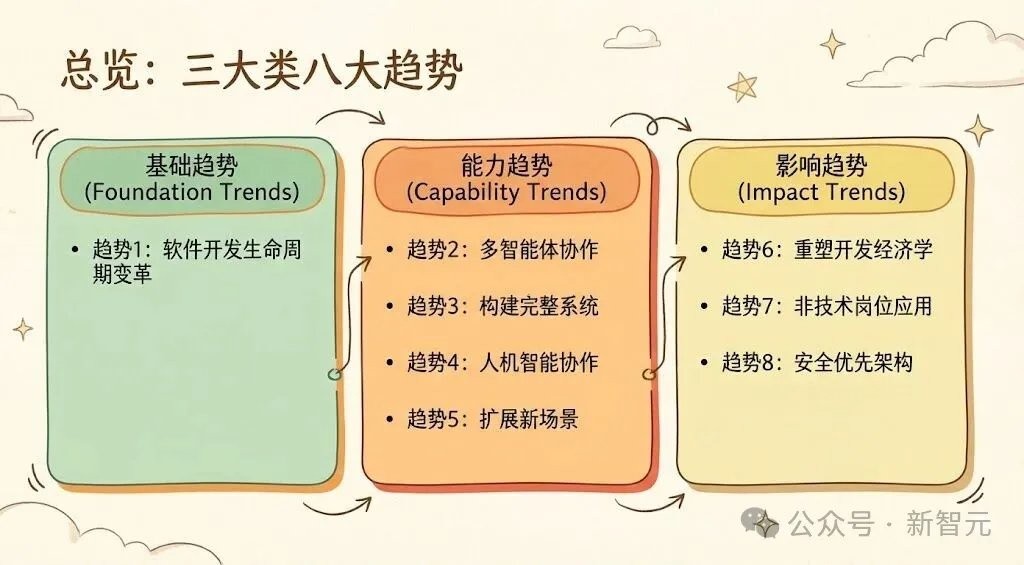
Trend One The software development lifecycle is undergoing dramatic changes
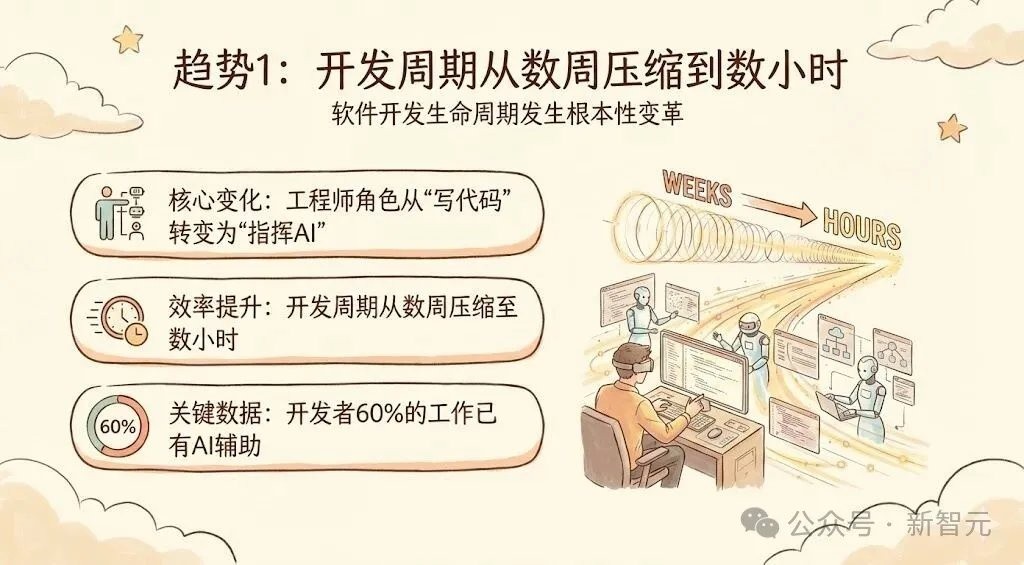
This is the first "foundational" trend proposed in the report.
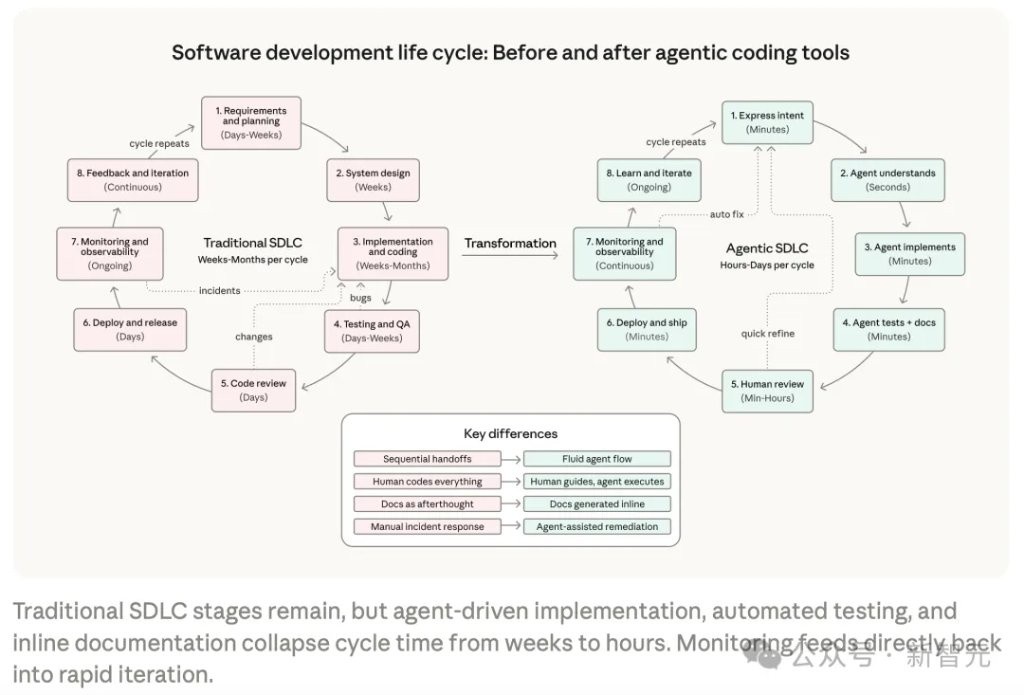 Anthropic believes that by 2025, AI coding agents will have transformed from experimental tools into production systems capable of delivering real functions to actual customers.
By 2026, the changes will far exceed the scope of "tool upgrades."
Three core predictions:
1. Upgraded abstraction layers.
From machine code to assembly, from C to Python, each layer of abstraction is narrowing the gap between human thought and machine execution. Now, the latest layer of abstraction is the natural language dialogue between humans and AI. The "tactical work" of coding (writing, debugging, maintaining) is handed over to AI, allowing engineers to focus on architecture, system design, and strategic decisions about "what to do."
2. Major transformation of the engineer's role.
Creating software no longer equates to writing code. Now, software engineers are increasingly becoming the role of "orchestrating agents to write code"—evaluating the outputs of agents, providing strategic direction, and ensuring that the system addresses the right problems.
3. Compressed onboarding cycles.
Traditionally, it takes weeks or even months for newcomers to get up to speed with a codebase. Now, just a few hours is sufficient.
This point is illustrated by an astonishing case—
Augment Code (a startup developing AI tools) had a corporate client that completed a project using Claude, which their CTO originally estimated would take 4 to 8 months. Ultimately, it only took two weeks.
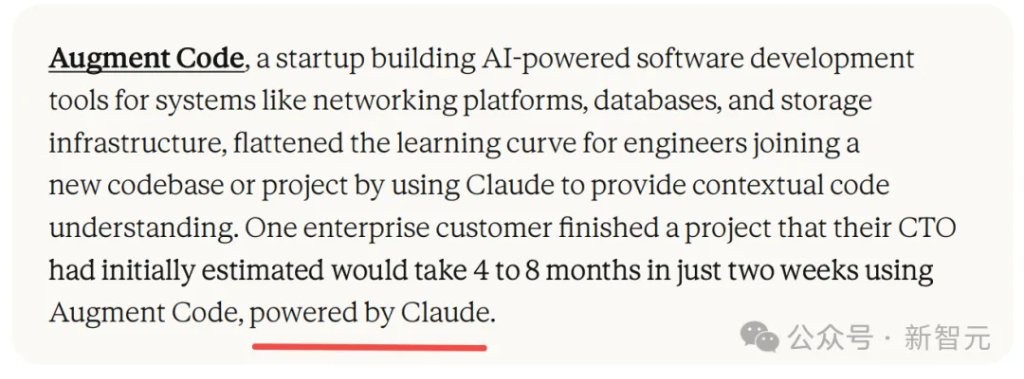
Two weeks vs. eight months.
This is not "efficiency improvement," this is "dimensionality reduction."
A more critical piece of data comes from Anthropic's own social impact research team:
Developers use AI in about 60% of their work, but the tasks they can "fully delegate" to AI only account for 0-20%.
This figure shatters many illusions.
AI is not replacing you; it is "collaborating" with you. It is your permanent partner, but to use it effectively requires careful prompt setting, active supervision, and judgment verification—especially in high-risk tasks.
The report refers to this as the "collaboration paradox": AI involvement is high, but complete autonomy is low.
Understanding this paradox is key to understanding the entire report.
Trend Two: Individual agents evolve into "agent legions."
This is the first major trend at the capability level.
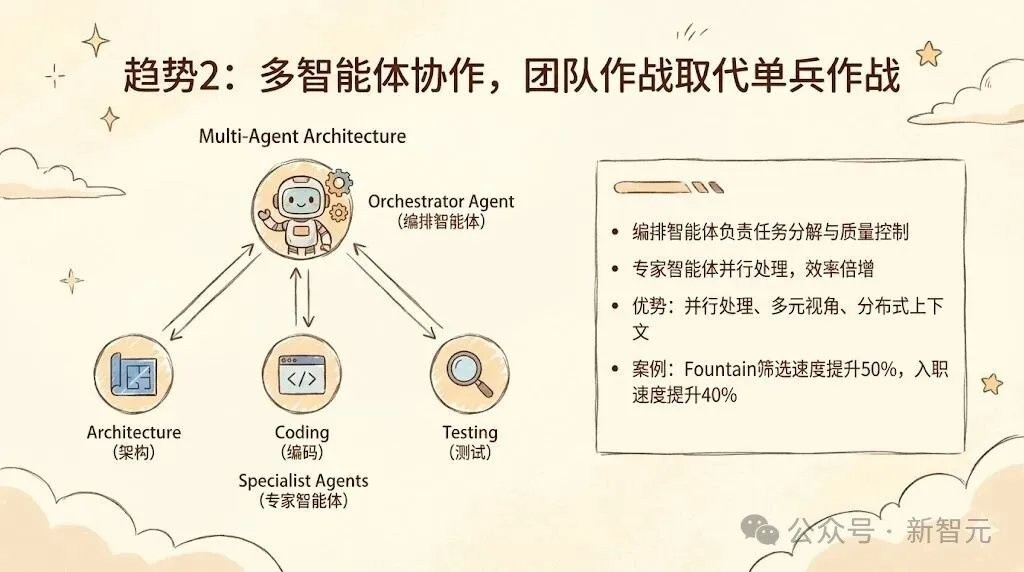
In 2025, a single agent operates solo.
In 2026, Anthropic predicts that multiple agents will form coordinated teams to tackle complex tasks that a single agent cannot handle Multi-Agent Systems Replace Single-Agent Workflows.
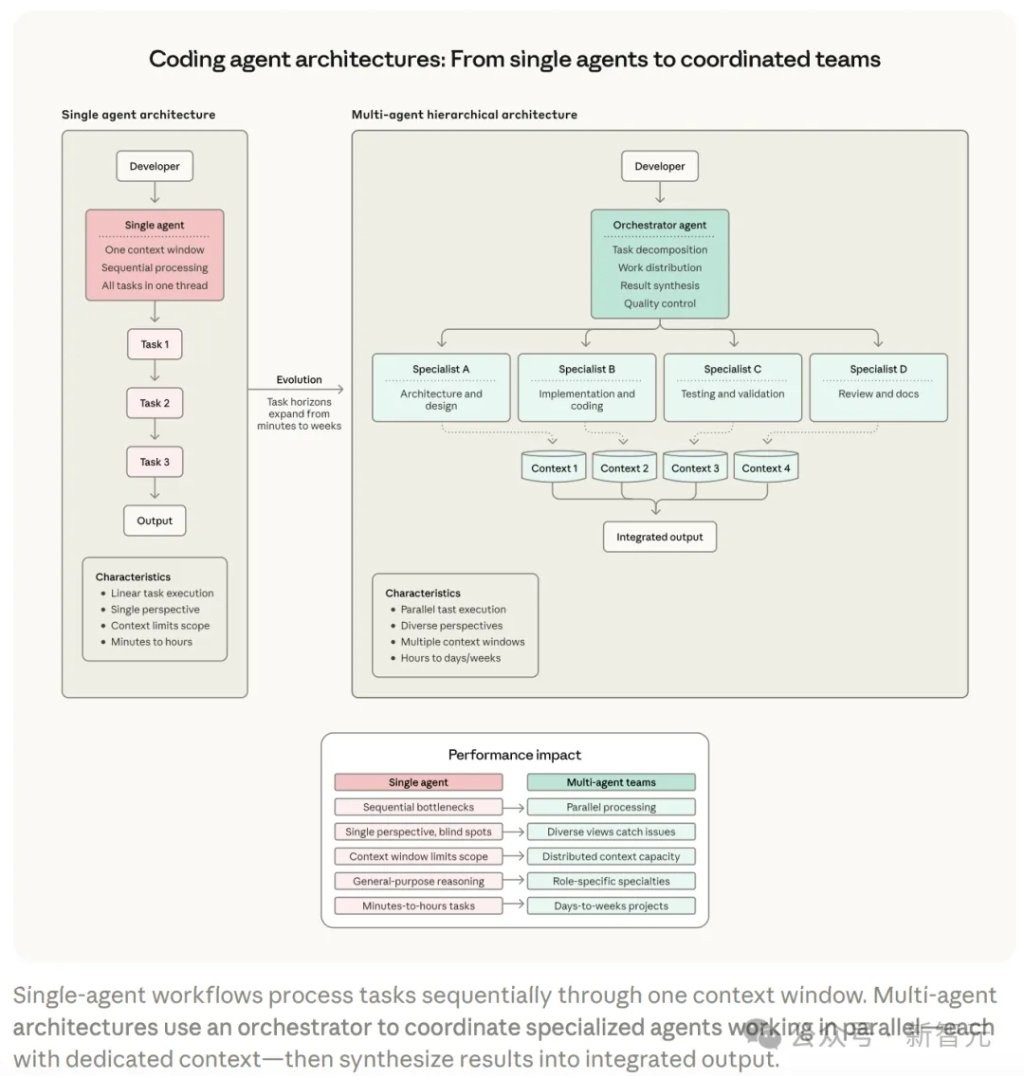
How to understand this?
Single-Agent Model: A single context window that processes tasks sequentially.
Multi-Agent Architecture: A "conductor" coordinates multiple "expert agents" working in parallel—each agent has its own dedicated context—and then aggregates the output.
It's like an orchestra: the conductor doesn't need to play every instrument personally but must ensure that each instrument produces the correct sound at the right time.
The case studies in the report are also impressive—
Fountain (a frontline workforce management platform) implemented hierarchical multi-agent orchestration using Claude. Their Fountain Copilot acts as the central orchestration agent, directing specialized sub-agents responsible for candidate screening, automated document generation, and sentiment analysis. The result: screening speed increased by 50%, onboarding speed improved by 40%, and candidate conversion rates doubled. A logistics client reduced the comprehensive recruitment cycle for a new distribution center from over a week to under 72 hours.
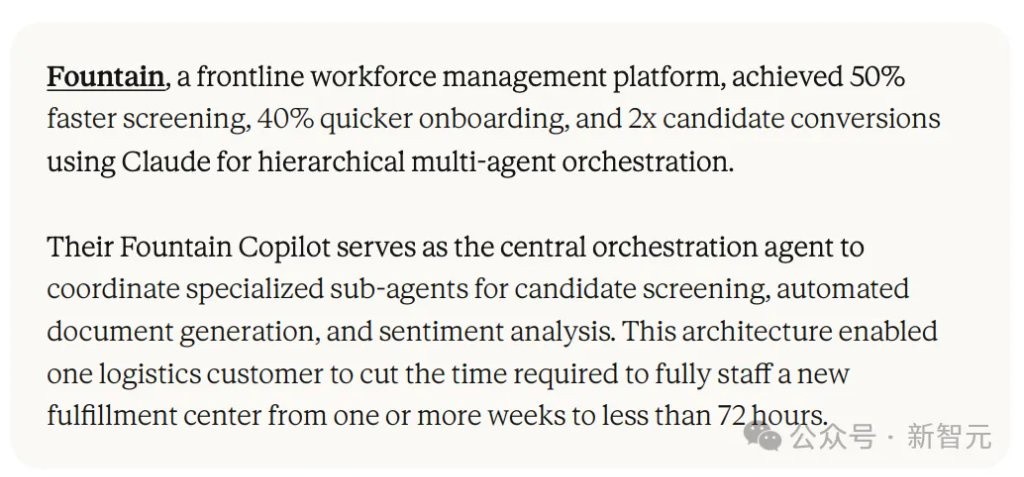
From a week to three days.
This is the power of multi-agent orchestration.
Trend Three: Long-Running Agents Can Independently Build Complete Systems
If Trend Two is an "expansion in space" (multiple agents working in parallel), then Trend Three is a "breakthrough in time."
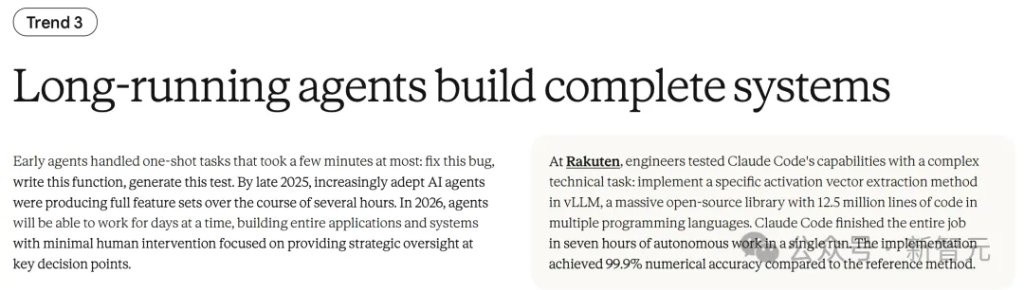
Early AI agents could only handle tasks for a few minutes: fixing a bug, writing a function, generating a test.
By the end of 2025, increasingly capable AI agents will be able to work for several hours, producing complete sets of functions.
By 2026, agents will be able to work continuously for several days.
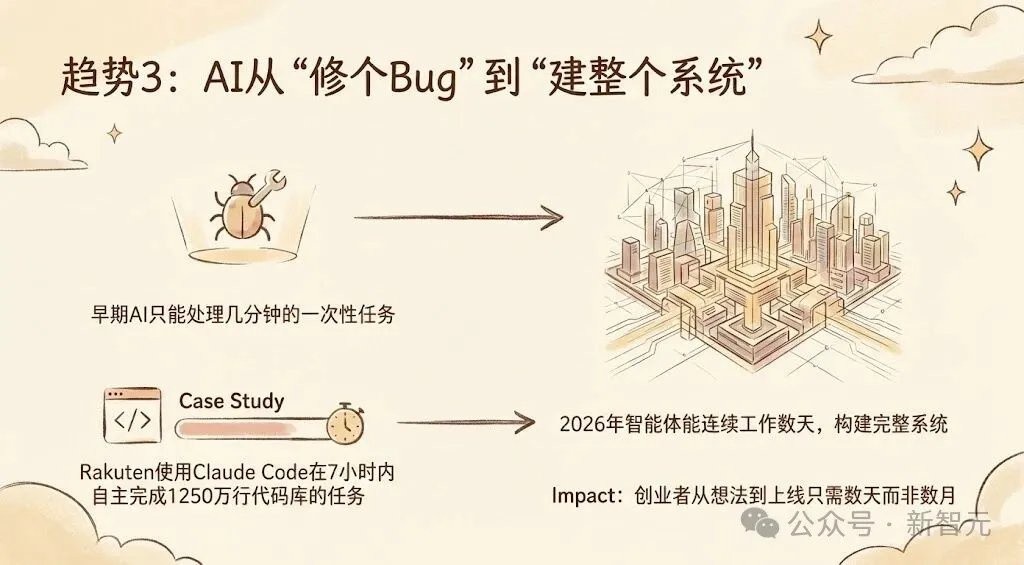
From one-time tasks to building complete applications and systems. Humans only need to provide strategic oversight at key decision points.
Four Core Predictions:
- Task time spans will expand from minutes to days or even weeks. Agents will work autonomously for longer periods, periodically undergoing human checkpoints.
- Agents will be able to handle "messy situations" in software development. They will plan, iterate, refine, adapt to new discoveries, recover from failures, and maintain coherence across dozens of work sessions
-
Previously unfeasible projects have become feasible. Years of accumulated technical debt can be systematically eliminated by intelligent agents one by one.
-
Entrepreneurs can shorten the time from idea to application launch from months to days.
Engineers at Rakuten tested a highly challenging task using Claude Code: implementing a specific activation vector extraction method in vLLM (a massive open-source library with 12.5 million lines of code and multiple programming languages). Claude Code completed the entire task in a single run after 7 hours of autonomous work. The achieved numerical accuracy reached 99.9% of the reference method.
7 hours, 12.5 million lines of code, 99.9% accuracy.
This is no longer "assistance."
This is AI truly "working."
Trend Four Human supervision achieves scalability through "intelligent collaboration"
This trend may not sound as explosive as the previous ones, but it could be the most important one.
Because it addresses a core anxiety: If intelligent agents become stronger, what use is there for humans?
Anthropic's answer is clear: humans are not removed; rather, attention is redistributed.
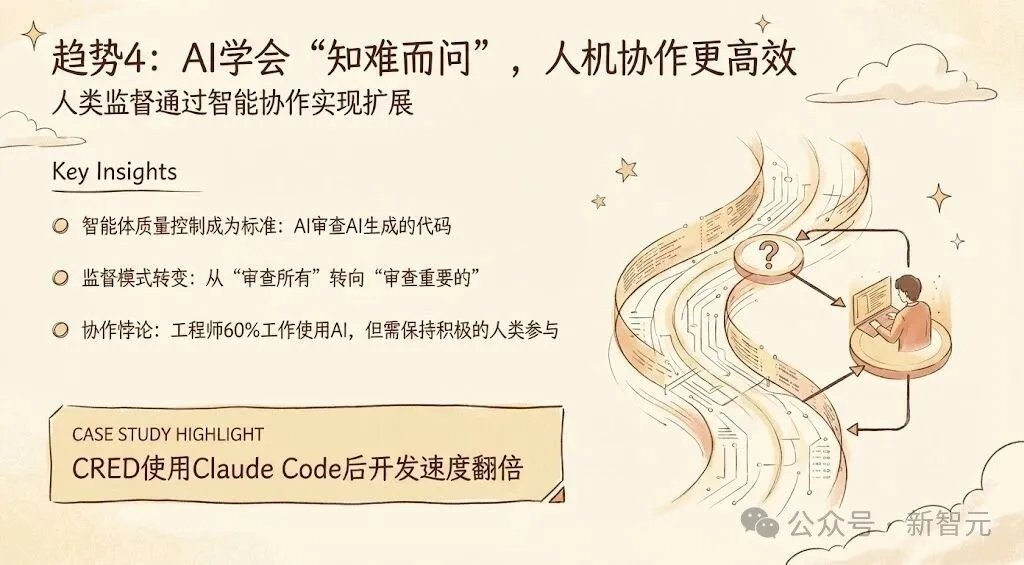
Three core predictions:
-
Quality control by intelligent agents becomes standard. Using AI to review AI-generated code: analyzing security vulnerabilities, architectural consistency, and quality issues: these workloads far exceed human processing capabilities.
-
Intelligent agents learn to "ask for help." Not every task is tackled head-on; instead, they identify scenarios requiring human judgment, mark uncertain areas, and escalate decisions with business impact.
-
Humans shift from "reviewing everything" to "reviewing key points." Establish intelligent systems to handle routine validations, seeking human input only in truly novel situations, boundary cases, and strategic decisions.
A key finding from internal research at Anthropic:
Engineers use AI in about 60% of their work, but the proportion of tasks that can be "fully delegated" is extremely small.
This "paradox" precisely illustrates the issue: effective AI collaboration requires active human participation.
The report quotes an engineer's original words—
"I mainly use AI in situations where I know what the answer should be or what it should look like. I developed this ability through 'trial and error' in software engineering."
In other words: the more experienced you are, the greater the benefit AI provides you.
Novices using AI merely accelerate their mistakes.
Veterans using AI are "adding wings to a tiger."
Trend Five Intelligent agent coding expands to new fields and new users
The earliest AI coding agents were used to speed up professional programmers in IDEs.
By 2026, coding by agents will break out of this circle.
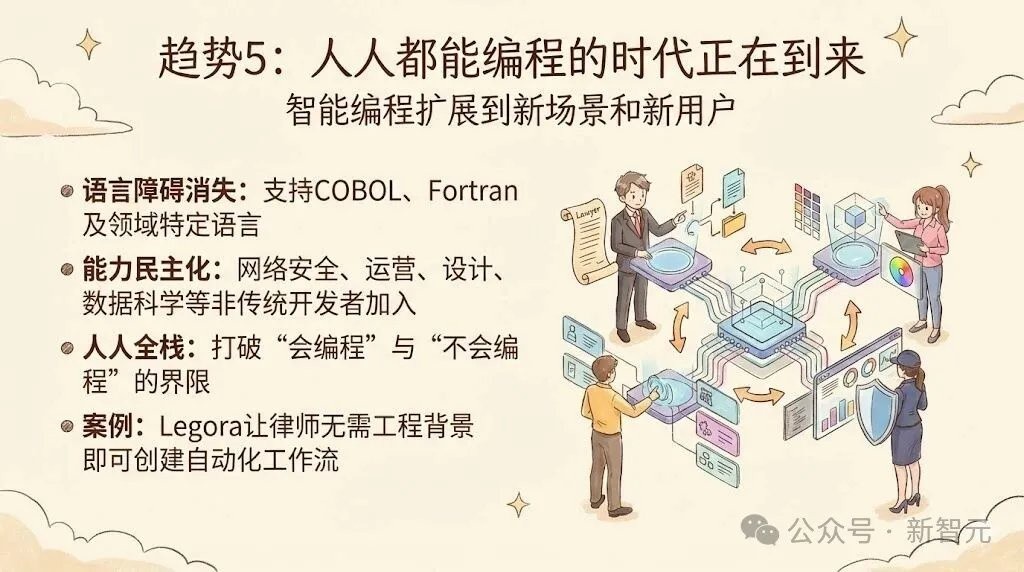
Three core predictions:
1. Language barriers will disappear. COBOL, Fortran, these "old-fashioned" languages? AI agents can handle them too. Those legacy systems in companies that no one dared to touch finally have hope.
2. Coding democratization will surpass the engineering community. Cybersecurity, operations, design, data science—these "non-traditional developers" can also use agents for coding. Anthropic's own Cowork tool is a signal.
3. Everyone becomes a full-stack engineer.
The last point is particularly interesting.
The report's analysis found a consistent pattern: people enhance their core expertise with AI while expanding into adjacent fields.
- Security teams use AI to analyze unfamiliar code
- Research teams use AI to build front-end visualizations of data
- Non-technical staff use AI to debug network issues or perform data analysis
This directly challenges a deeply rooted assumption—that only professional engineers, using professional tools, in IDEs, can do "serious development."
The barrier between "those who can code" and "those who cannot code" is becoming increasingly blurred.
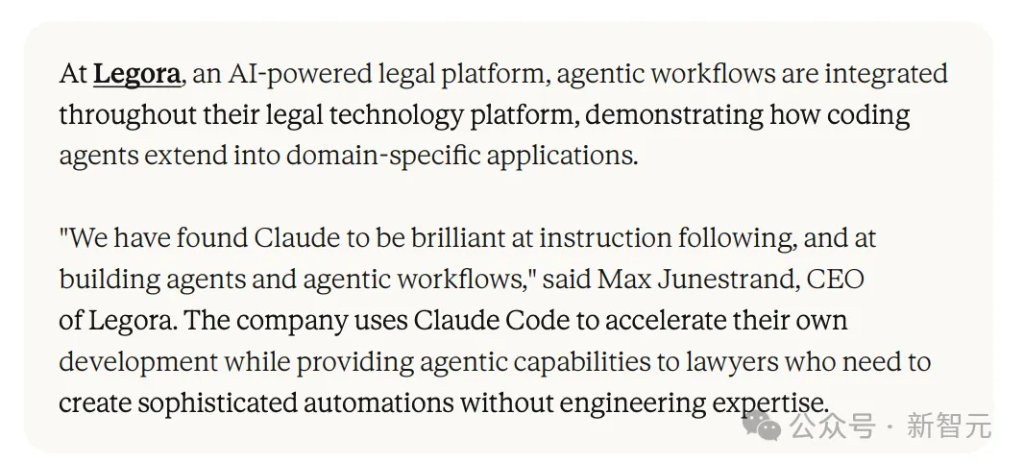
The case of the legal tech platform Legora also proves this point:
Legora's CEO Max Junestrand stated that Claude excels in "following instructions, building agents, and agent workflows." Lawyers can create complex automation processes without an engineering background.
Lawyers are creating their own tools.
This was a fantasy just two years ago.
Trend Six: Productivity Boost, Reshaping Software Development Economics
This is the first of the three major trends in the "impact layer."
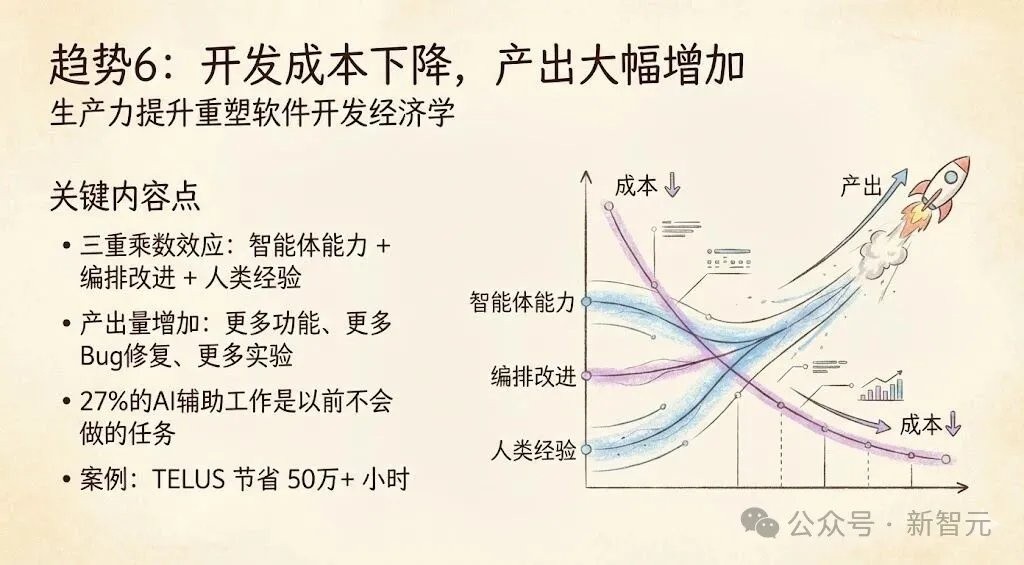
Three major acceleration multipliers: Agent capabilities, orchestration improvements, and better utilization of human experience—these three combine to create a stepwise leap rather than linear growth.
Timeline compression changes project feasibility: Projects that used to take weeks to develop can now be completed in days. Projects that were previously "shelved" due to being unfeasible are now viable The overall cost of ownership in software development is decreasing: The productivity of intelligent agents enhances engineers' capacity, shortens project timelines, and faster value realization improves return on investment.
One of the most interesting insights comes from internal research at Anthropic—
Engineer feedback: The time spent on individual tasks has actually decreased, but the output has significantly increased.
What does this mean?
The productivity boost brought by AI is primarily not about "doing the same work faster," but rather "doing more work"—more features launched, more bugs fixed, and more experiments executed.
There’s also a number that is easily overlooked:
About 27% of AI-assisted work consists of tasks that "would not have been done at all without AI."
This includes: scaling projects, building "value-added" tools (like interactive dashboards), and exploratory work that is simply not cost-effective to do manually.
Engineers also reported that they fixed more "paper cuts": those small issues that affect quality of life but are usually placed at the lowest priority—because of AI, addressing these issues has finally become feasible.
Trend Seven: Non-technical use cases are expanding comprehensively within organizations
Anthropic predicts that one of the most important trends by 2026 will be the steady growth of intelligent agent coding within business functional teams.
It's not just the engineering teams using it. Sales, marketing, legal, operations—these departments are also using it.
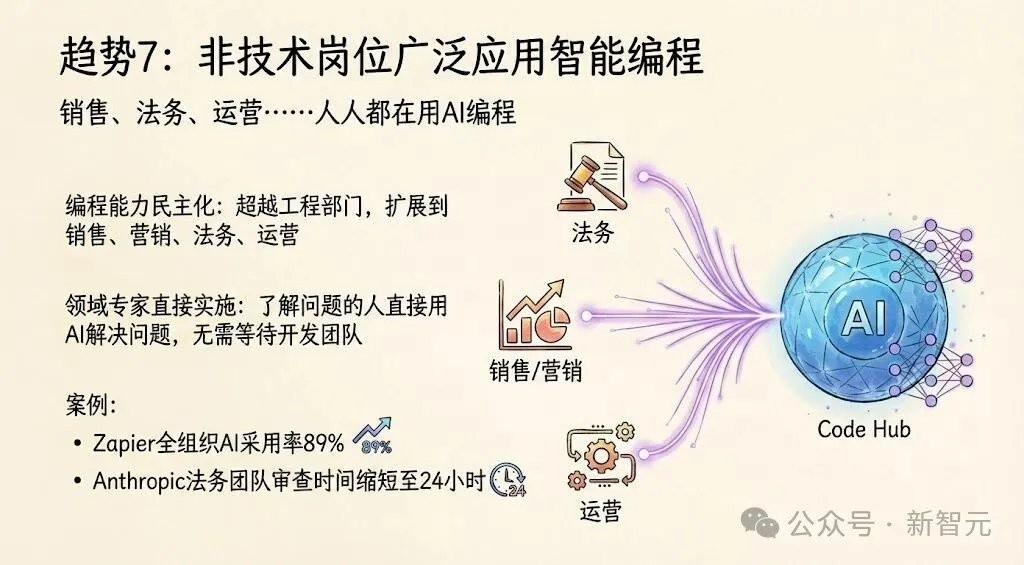
Three core predictions:
- Democratization of coding capabilities beyond engineering departments. Non-technical teams can automate workflows and build tools with minimal engineering support.
- Domain experts directly implement solutions. Those who understand the problems best can solve them themselves, without having to "submit a ticket and wait for scheduling."
- Productivity gains extend across the entire organization. Problems that "aren't worth occupying engineering resources" are resolved, experimental workflows become effortless, and manual processes are automated.
Anthropic's own legal team is a live case study—
The legal team used Claude-driven workflows to reduce marketing review turnaround time from 2-3 days to 24 hours. A lawyer with no programming experience built a self-service tool using Claude Code to categorize issues before they entered the legal queue, freeing up lawyers' time for strategic legal consulting rather than tactical, mundane tasks.
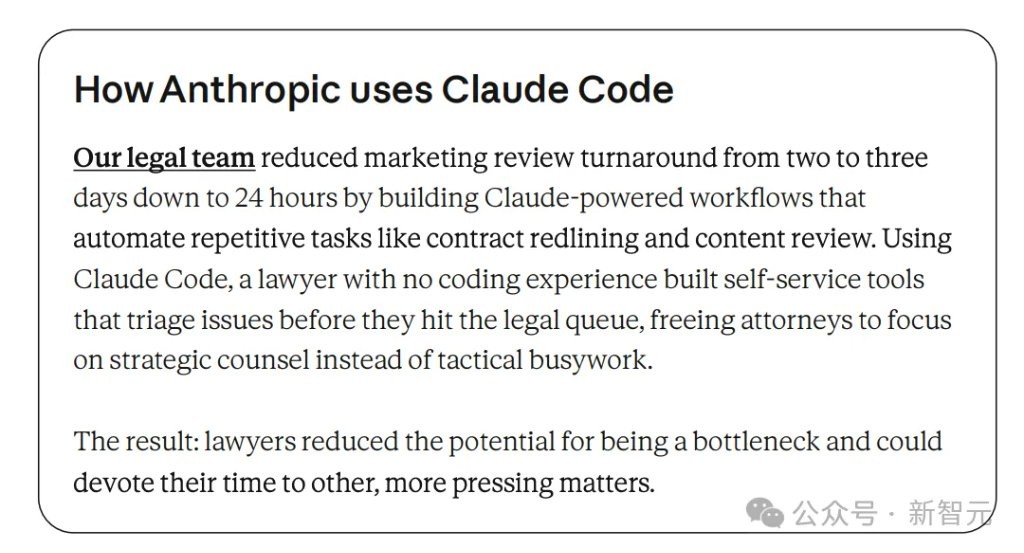
A lawyer, with zero coding experience, built their own tool This passage is worth savoring repeatedly.
Trend Eight: Agent Coding Improves Security Defense but Also Enhances Attack Capabilities
The last trend, and the most controversial one.
Agent coding is simultaneously changing security in two directions—defense and attack.
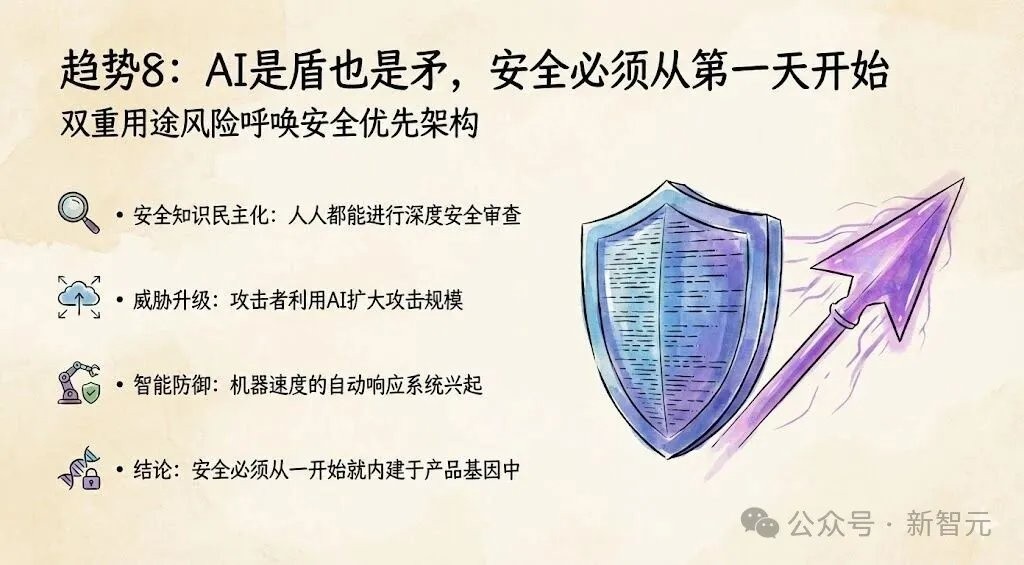
The good news is: Security knowledge has been democratized. Models are becoming stronger and better aligned, making it easier to embed security into products. Now, any engineer can conduct security reviews, fortifications, and monitoring with the help of AI—previously, this required expert-level knowledge.
The bad news is: Attackers can also leverage the same capabilities to scale up attacks.
Three Core Predictions:
-
Democratization of Security Knowledge. Any engineer can become a "security engineer," equipped with deep security review, fortification, and monitoring capabilities.
-
Threat Actors Scale Attacks. While agents enhance defenses, they also enhance attacks. Embedding security into the development process from the start has become more important than ever.
-
Rise of Agent Network Defense Systems. Automated agent systems respond to security at machine speed, automatically detecting and responding, matching the pace of autonomous threats.
The report's conclusion is pragmatic—
The advantage belongs to prepared organizations. Teams that embed security into development from the start using agent tools will be better able to withstand opponents using the same technology.
Four Priorities for 2026
At the end of the report, Anthropic outlines four areas organizations must focus on immediately in 2026—
1. Master Multi-Agent Coordination. Address complexities that single-agent systems cannot solve.
2. Expand Human-Agent Oversight through AI Automated Review Systems. Focus human attention on the most critical areas.
3. Extend Agent Coding Beyond Engineering. Empower domain experts in various departments.
4. Embed Security Architecture into Agent System Design from the Earliest Stages.
These four points converge into a central theme:
Software development is shifting from "writing code" to "orchestrating agents that write code," while maintaining human judgment, oversight, and collaboration to ensure quality outcomes.
The last sentence of the report, and the most critical one:
The goal is not to remove humans from the loop, but to ensure human expertise is applied where it matters most.
Risk Warning and Disclaimer
Markets are risky, and investment requires caution. This article does not constitute personal investment advice and does not take into account individual users' specific investment objectives, financial situations, or needs. Users should consider whether any opinions, views, or conclusions in this article align with their specific circumstances. Investment based on this is at one's own risk
