BodyArmor impairment drags down Coca-Cola's Q4 GAAP operating profit, which fell 32% year-on-year, and the full-year guidance is below expectations | Earnings Report Insights

Wallstreetcn
2026.02.10 12:57
portai
I'm PortAI, I can summarize articles.

Affected by a non-cash impairment charge of up to $960 million from its acquired sports drink brand BodyArmor, Coca-Cola's GAAP operating profit in the fourth quarter fell by 32% year-on-year. Coca-Cola expects organic sales growth for the full year 2026 to be between 4% and 5%, with the lower end of this guidance range below Wall Street's average expectation of 5.01%. After several years of growth driven by price increases, investors are concerned that the growth engine of this consumer giant is slowing down as consumers become more price-sensitive

Despite the continued strong performance of the zero-sugar series and slightly better-than-expected fourth-quarter results, Coca-Cola's growth guidance for 2026 appears somewhat weak against the backdrop of cooling inflation and the waning of pricing power, disappointing the market.

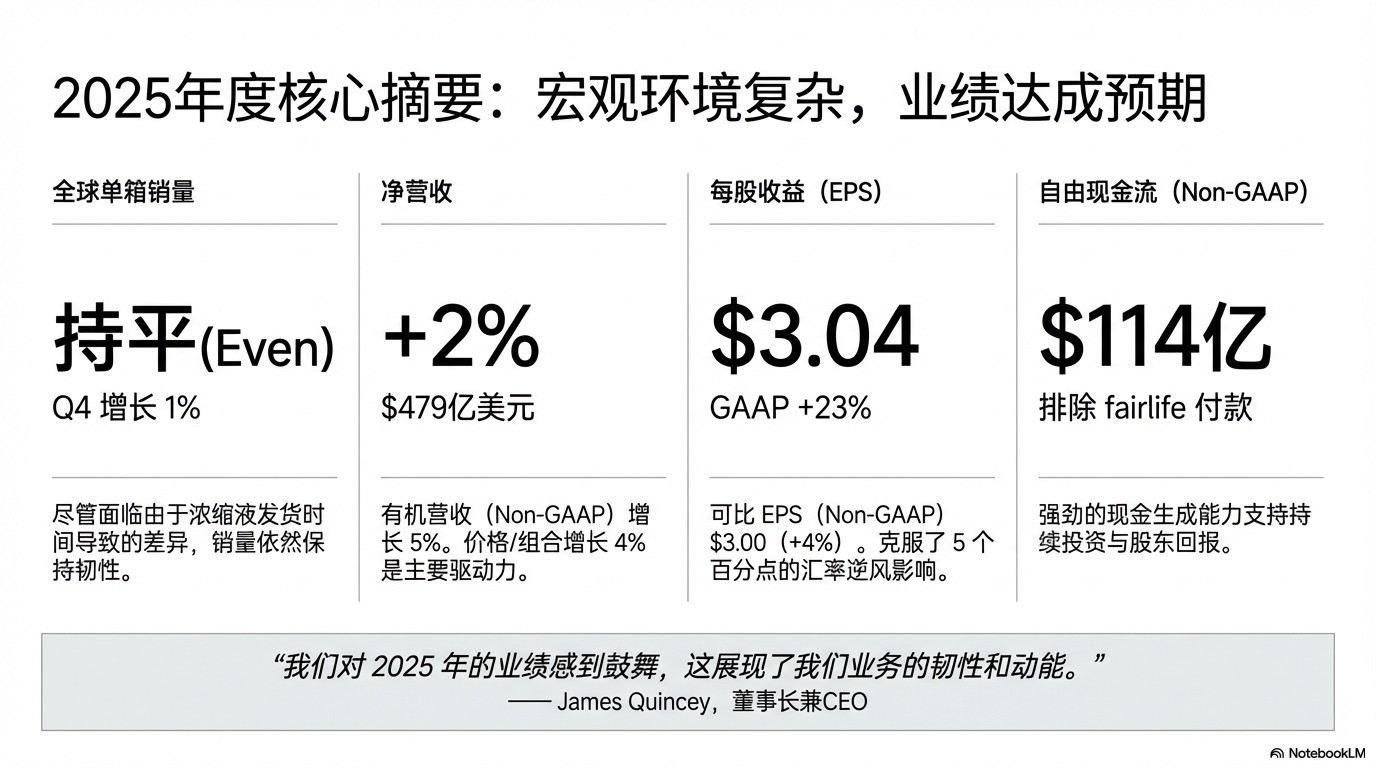
On February 10, global beverage giant Coca-Cola released its financial report for the fourth quarter and the full year of 2025. The report showed that the company's fourth-quarter revenue was $11.82 billion, a year-on-year increase of 2%, with organic revenue growth of 5%; comparable earnings per share (EPS) were $0.58, a year-on-year increase of 6%, slightly above analysts' average expectations.

However, the GAAP operating profit for the fourth quarter fell by 32% year-on-year, impacted by a non-cash impairment charge of up to $960 million related to its acquisition of the sports drink brand BodyArmor.

The most significant market reaction was to the company's outlook for the future. Coca-Cola expects organic sales growth for the full year 2026 to be between 4% and 5%, with the lower end of this guidance range falling below Wall Street's average expectation of 5.01%. After several years of growth driven by price increases, investors are concerned that this consumer giant's growth engine is slowing down as consumers become more price-sensitive.

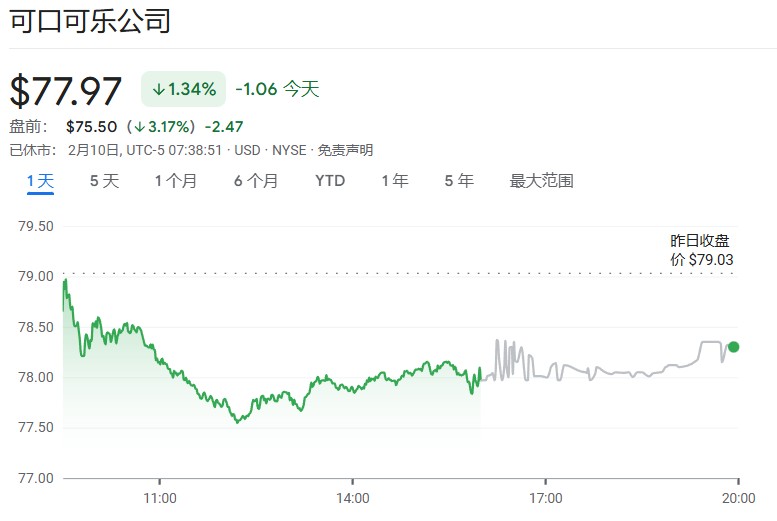
In addition, Coca-Cola is facing an increasingly complex macro policy environment. On one hand, the Trump administration has sent sharp signals about the unhealthiness of carbonated beverages; on the other hand, some states in the U.S. are implementing new plans to restrict food aid beneficiaries from purchasing soft drinks. Due to the guidance falling short of expectations and macro concerns, Coca-Cola's stock price fell by as much as 4.1% in pre-market trading.

2026 Guidance Falls Short of Expectations, Growth Returns to Normalization

The most concerning aspect of this financial report for investors is the performance guidance for 2026. Coca-Cola expects organic revenue growth to be between 4% and 5%, while analysts had previously generally expected an average growth of over 5%. For earnings per share, the company anticipates that comparable earnings per share will grow by 7% to 8% from a base of $3.00 in 2025 (including about 3% from favorable exchange rates), indicating that the company is returning to a more moderate growth norm after the "pricing boom" brought on by high inflation in recent years.

The incoming CEO Henrique Braun faces the challenge of accelerating the company's expansion into non-sugar beverages, sports drinks, and water as consumers shift from traditional high-calorie soft drinks to healthier options. Although the company remains optimistic about this transition, the weak guidance suggests that management is cautious about the consumer environment in the coming year.

Fourth Quarter Performance: Zero-Sugar Cola Remains the Highlight

Returning to the specific performance of the fourth quarter of 2025, Coca-Cola still demonstrated resilience in its core business, particularly with the significant effectiveness of its "sugar-free" strategy:

  • Sales and Prices: Global single-box sales increased by 1%, while price/combination grew by 1%. This indicates that the company maintained a certain pricing power despite a slight increase in sales, although the extent of price increases has clearly narrowed compared to previous years.
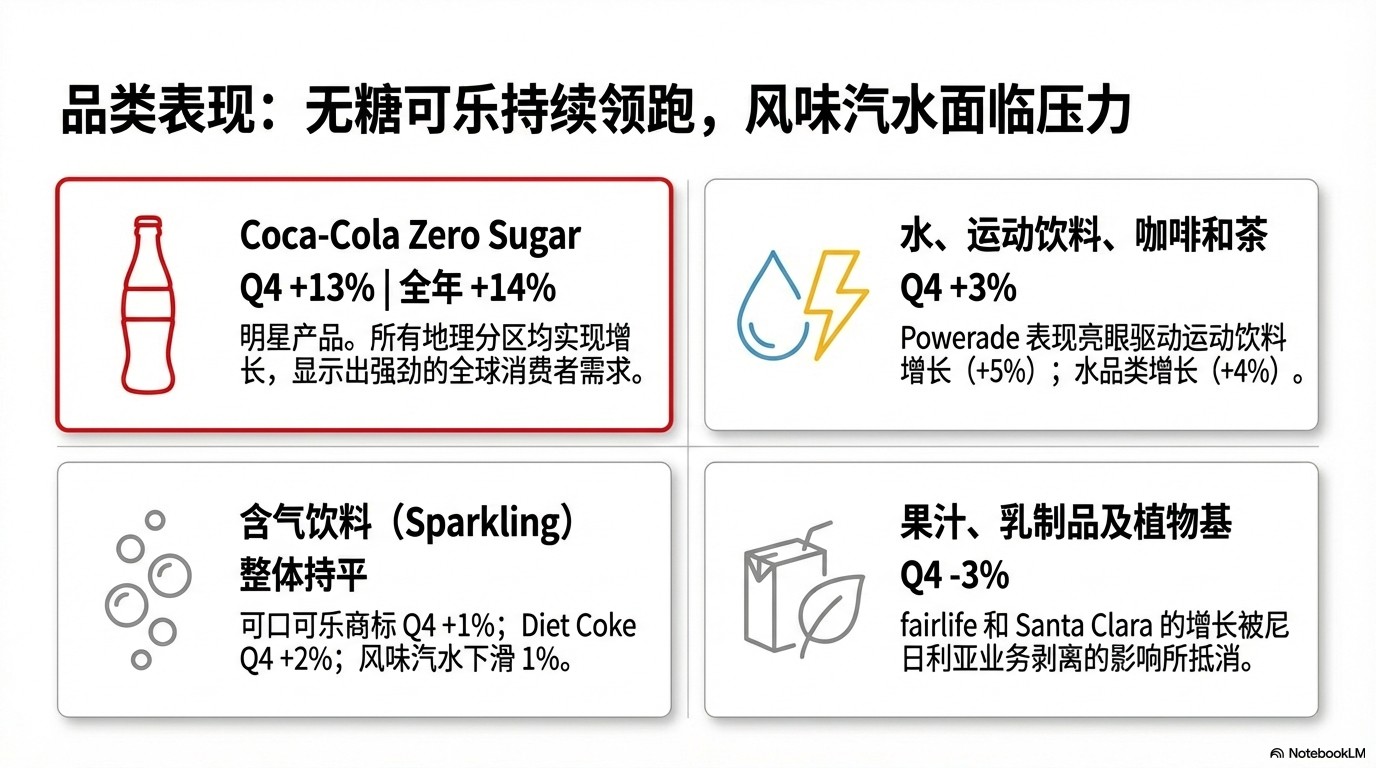
  • Category Performance: Coca-Cola Zero Sugar once again became a star product, with sales surging by 13% in the fourth quarter and growing by 14% for the entire year. In contrast, traditional full-sugar sodas faced pressure on sales due to weakened consumer demand. Diet Coke grew by 2% in the fourth quarter, remaining flat for the year.
  • Other Categories: Sales of water, sports drinks, coffee, and tea grew by 3% in the fourth quarter, showing solid performance; however, sales of juice, dairy products, and plant-based beverages declined by 3%, mainly dragged down by declines in the Asia-Pacific and EMEA (Europe, Middle East, and Africa) regions.

BodyArmor "Explosion," North American Profits Hit

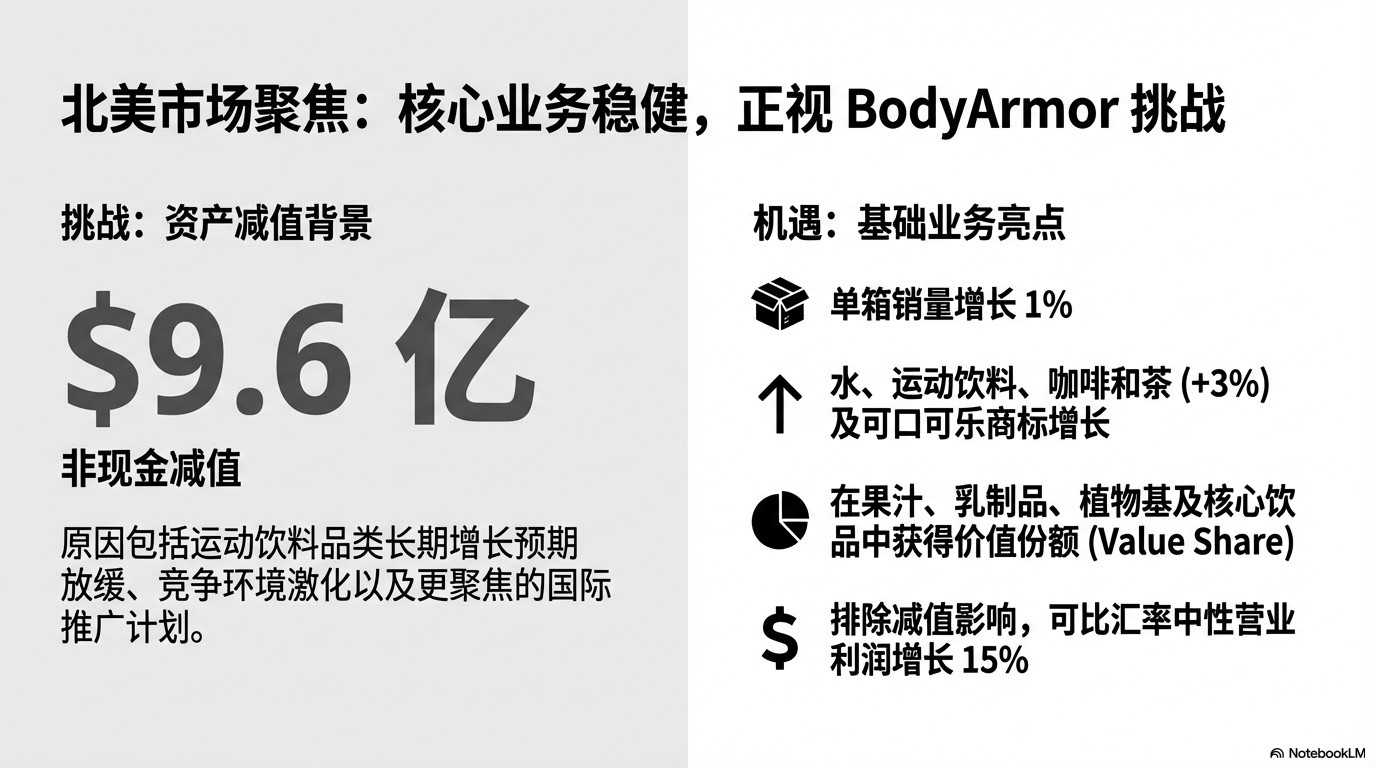
Despite decent revenue performance, profits in the North American market encountered a "black swan." The financial report showed that operating profit in North America plummeted by 65% year-on-year in the fourth quarter, primarily due to a non-cash impairment charge of $960 million related to the BodyArmor trademark.

BodyArmor was a significant acquisition by Coca-Cola to catch up with PepsiCo's Gatorade in the sports drink sector. However, this massive impairment indicates that the brand's performance after integrating into the Coca-Cola system did not meet management's initial expectations, and fierce market competition forced the company to reassess the asset's value.

Excluding impairment and other one-time factors, the fundamentals of the North American market remain strong, with single-box sales growing by 1% in the fourth quarter, price/combination increasing by 4%, and comparable currency-neutral operating profit rising by 15%.

Macroeconomic Headwinds: The Tug-of-War Between Policy Pressure and Health Trends

In addition to financial data, Coca-Cola subtly mentioned the challenges of the external environment in its financial report. With the awakening of consumer health awareness, sugary beverages are facing headwinds.

Even more severe is the pressure from policy levels. Currently, some state-level programs in the U.S. have begun to restrict the use of food assistance benefits for purchasing soft drinks, directly impacting the consumption capacity of low-income groups. At the same time, the recent strong statements from the Trump administration regarding soda health issues may pose potential threats to brand image and long-term demand.

To address these challenges, Coca-Cola is accelerating the diversification of its product portfolio. The financial report indicates that the company is vigorously promoting innovative products like Powerade Power Water and leveraging global sporting events (such as the South American World Cup qualifiers) for marketing, attempting to offset the downward risks of traditional carbonated beverages by reinforcing sports and health attributes