


Has the Japanese yen and Japanese bonds stabilized?

Xingye's Wang Han believes that the fluctuations of the yen and Japanese bonds are not only market volatility but also a reflection of the global order evolving from unipolarity to multipolarity. With the strategic contraction of the United States, Japan has been pushed from "financial leverage" to the forefront of geopolitical games, and the halo of safe-haven assets has faded. The underlying pricing logic has changed, and short-term interventions cannot counter the prevailing trend; the "de-securitization" of Japanese assets has become an irreversible long-term situation
On February 9th, Xinhua News Agency cited data from the Japan Broadcasting Corporation, reporting that in the House of Representatives election held on the 8th, the Liberal Democratic Party won 316 seats, and the ruling coalition secured a majority of seats. In our previous report "Potential Six Geopolitical 'Black Swans' in 2026," we pointed out that "the strategic adventures of opportunistic entities in the Asia-Pacific region" is one of the important geopolitical risks to watch in 2026. In the report "Has the Yen and Japanese Bonds Stabilized? - The Logic Transformation of Japanese Assets in the Process of Multipolarization" dated January 27th, we analyzed the impact of geopolitical changes related to Japan on the yen and the Japanese bond market. In light of the latest results of the Japanese election, we have organized the relevant content as follows for investors' reference:
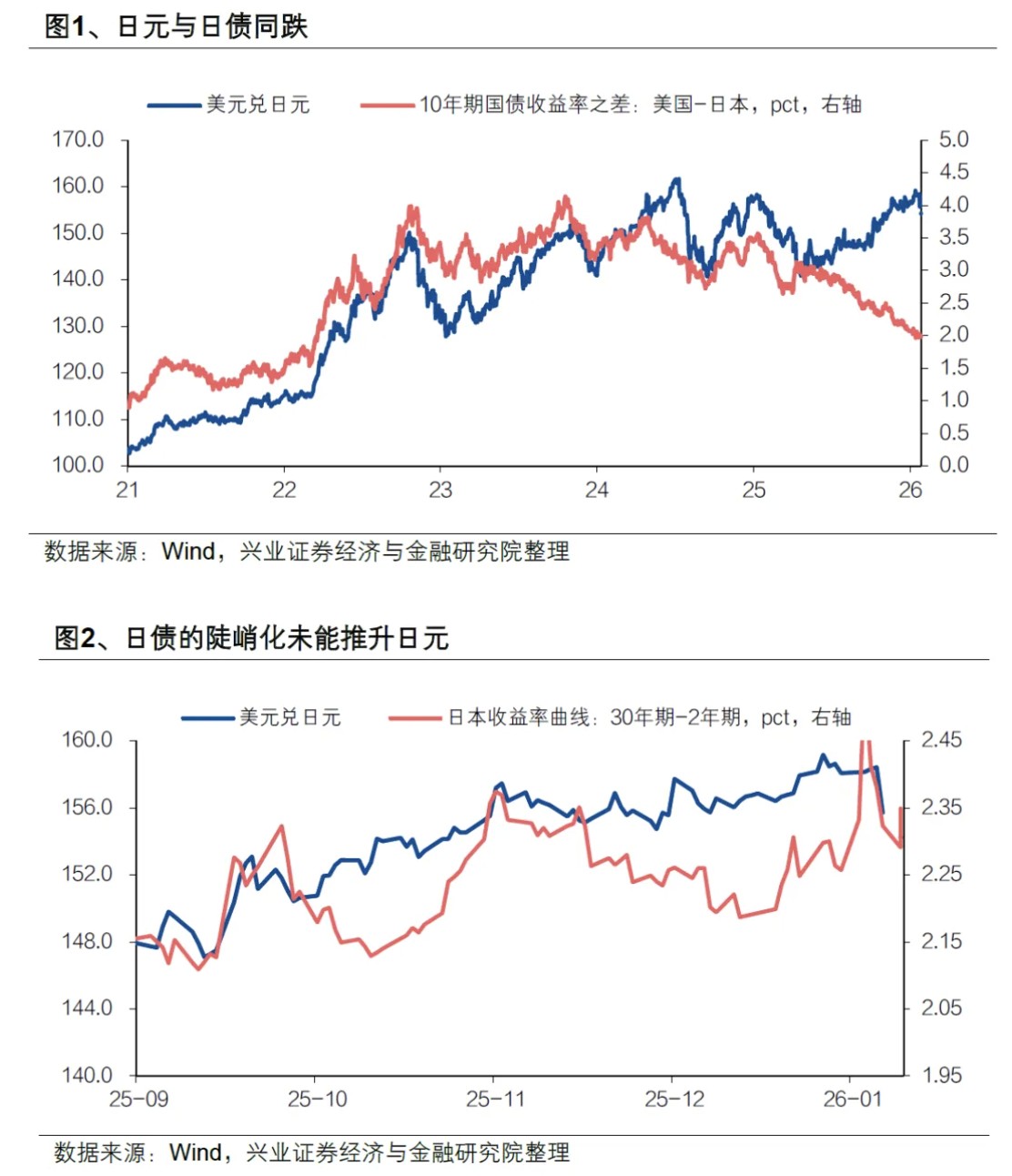
Has the yen and Japanese bonds stabilized? This question needs to be discussed within the larger framework of changes in the global order. Since the beginning of the year, the Japanese capital market has experienced significant volatility, with both the yen and Japanese bonds weakening, and the yen's safe-haven property has noticeably diminished. Recently, under the intervention and guidance of the Japanese government, although market sentiment has temporarily calmed, showing signs of stabilization, we believe that the structural changes presented by the yen and Japanese bonds cannot be simply attributed to short-term economic fluctuations but should be understood within a grand narrative framework , as the global order is profoundly evolving from unipolarity to multipolarity, and this process is systematically reshaping the pricing logic of global asset classes, with the volatility of Japanese assets being a specific manifestation of this logic transformation.
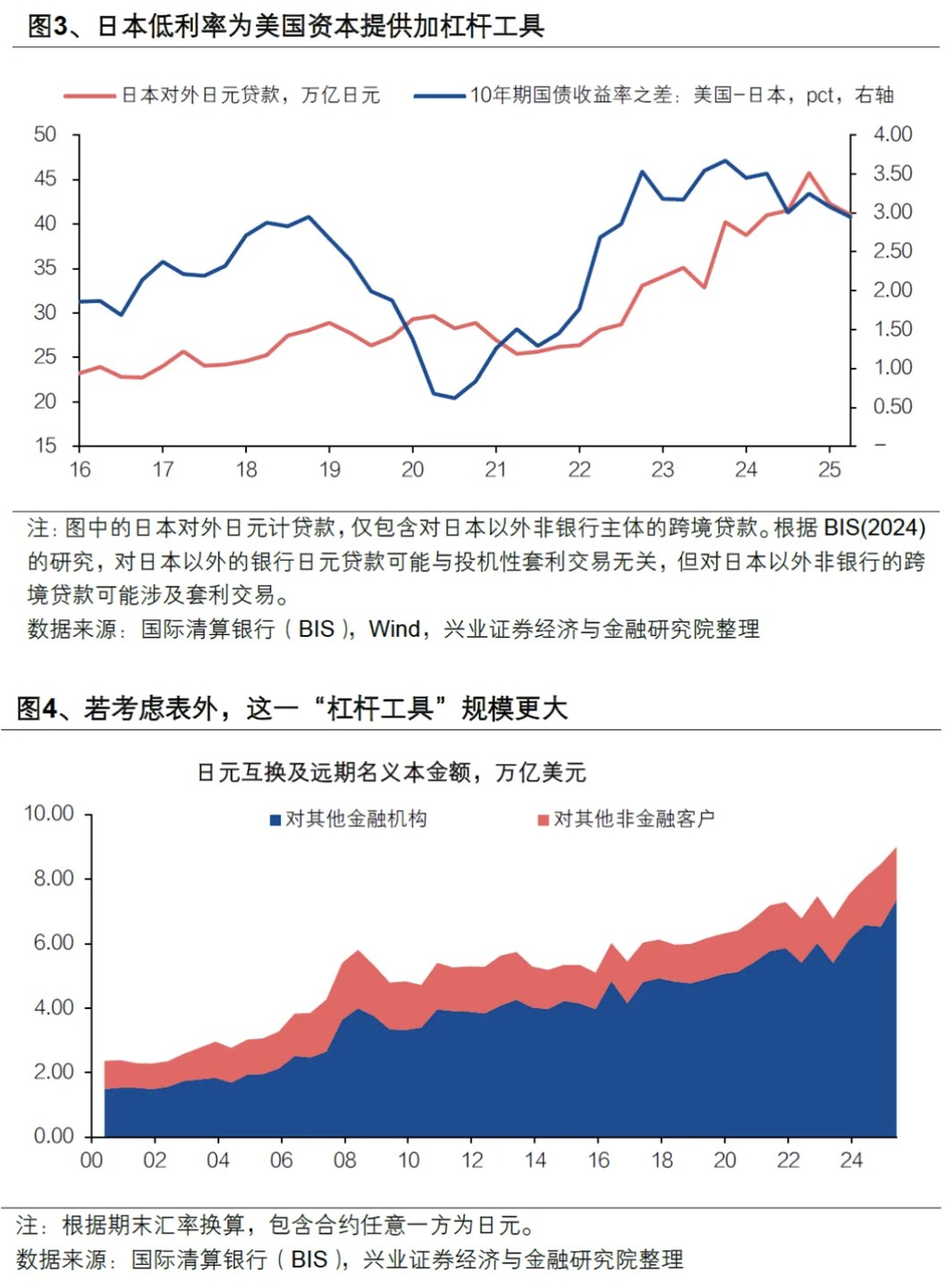
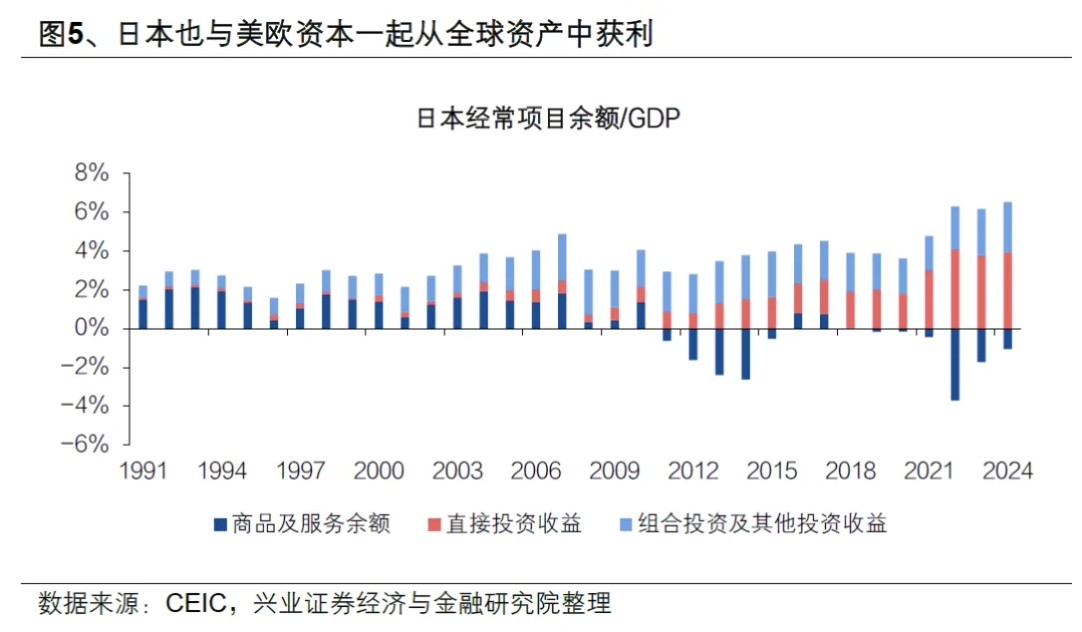
The previous status of the yen and Japanese bonds as "safe-haven assets" stemmed from Japan's unique role under the U.S. unipolar order. After the Cold War, under the U.S.-led unipolar order, Japan's geopolitical value was more reflected in the financial sector. As a strategic ally of the United States and a capital-rich country, Japan maintained a long-term ultra-low interest rate environment, which objectively became an important tool for dollar capital to conduct global arbitrage and leverage operations. At the same time, Japan itself benefited from the security commitments and stable capital flows under this system, obtaining a low-risk environment and relatively stable overseas asset returns, thus jointly supporting the "safe asset" attributes of the yen and Japanese bonds.
As the world order evolves towards multipolarity, Japan's situation has become increasingly awkward. The relative decline of U.S. strength has weakened its control over global affairs and its willingness to invest resources. In this process, Japan's role as a key ally of the U.S. in the Asia-Pacific is undergoing subtle and profound changes. On one hand, the U.S. has reduced its strategic reliance on Japan as a pure financial lever; on the other hand, while the U.S. is pursuing "strategic contraction," it hopes Japan will take on more frontline balancing roles in the Asia-Pacific, which instead pushes Japan to the forefront of geopolitical games, increasing the geopolitical risks it faces.
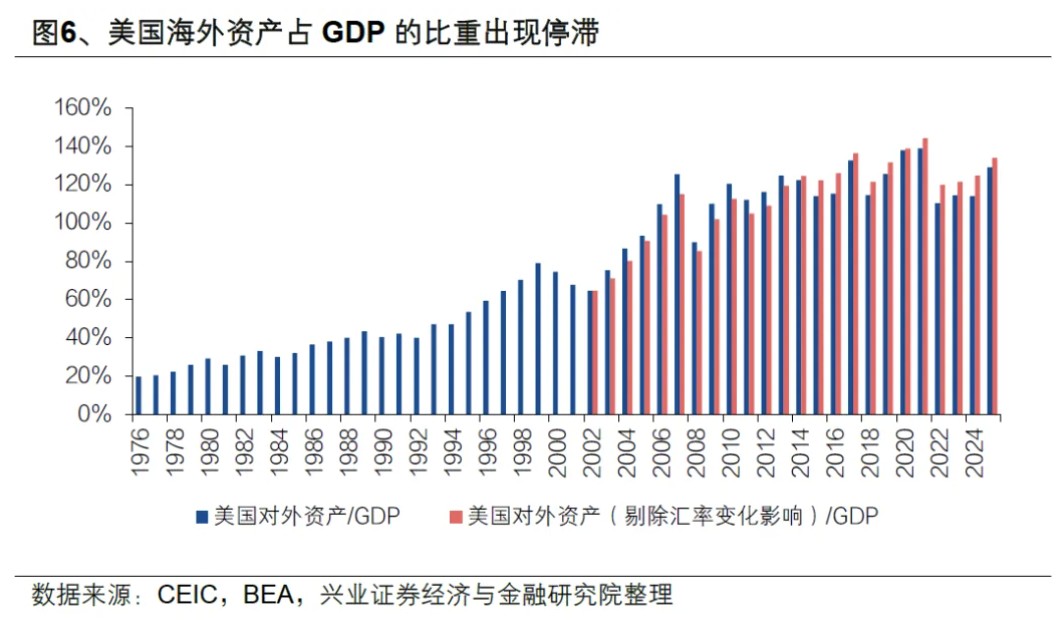
Changes in the geopolitical landscape and the contraction of U.S. influence are the fundamental reasons for the recent turmoil in Japanese bonds and the yen. The relative decline of U.S. hard power, coupled with a slowdown in the pace of foreign asset expansion, has weakened its ability and willingness to conduct capital leverage operations through allies like Japan. At the same time, the U.S. strategic adjustments in Asia have provided space for the rightward shift in Japanese domestic politics and strategic adventurism, potentially undermining the relatively stable regional security framework established since the 1970s and 1980s. The market has begun to reassess the geopolitical security foundation on which Japanese assets rely, and its "safe-haven" halo has faded, which is directly reflected in the simultaneous adjustment of yen and Japanese bond prices Although the Japanese government's intervention can stabilize market sentiment in the short term, the fundamentals of the yen and Japanese bonds remain weak in the medium term. The guidance from Japanese authorities can temporarily smooth market fluctuations and alleviate liquidity pressures. However, these measures cannot fundamentally reverse the asset logic transformation triggered by changes in geopolitical roles. As long as Japan continues to be placed at the forefront of great power competition, the geopolitical risk premium inherent in its assets will persist, and may even amplify with the fluctuations of regional tensions, making it difficult for the yen and Japanese bonds to regain their previous stable "safe-haven" status.
The disintegration of the unipolar order and the process of multipolarization will continue to impact global financial markets in the medium term. The trend of "de-securitization" of Japanese assets is a specific reflection of the multipolar narrative at the global financial level. It embodies the behavior of the United States attempting to maximize its own interests while strategically contracting in different regions: seeking territorial gains in Europe, directly acquiring resources in the Americas, and attempting to leverage Japan's adventurous actions to increase its bargaining chips in Asia. In the short term, the U.S. may try to alleviate its own difficulties through the aforementioned means, which will exacerbate the "circle-shrinking" effect within developed economies. However, in the long term, the macro trend of global capital and growth shifting towards emerging markets and the diversification of the international monetary and financial system is difficult to reverse, and will continue to reshape the underlying logic of global asset pricing.
Risk Warning: Risks of escalating regional conflicts; domestic political backlash in the U.S.; uncertainty impacting financial markets.
Main Text
Since the beginning of the year, the Japanese capital market has experienced significant volatility, with both the yen and Japanese bonds weakening, and the yen's safe-haven attribute noticeably diminishing. Recently, under the guidance of the Japanese government, sentiment has temporarily calmed, and the market shows signs of stabilization. However, we believe that the structural changes presented by the yen and Japanese bonds cannot be simply attributed to short-term economic fluctuations, but should be understood within a broader narrative framework. The global order is profoundly evolving from unipolarity to multipolarity, and this process is systematically reshaping the pricing logic of global asset classes, with the volatility of Japanese assets being a concrete manifestation of this logical transformation.
I. Two Stages of Japan's Geopolitical Position After the War
Stage One: Cold War Period (Post-World War II to the Dissolution of the Soviet Union) - As America's "outpost" in Asia. During this stage, Japan became a key pivot for the United States to influence Asia during the Cold War, playing at least three roles: In the early post-World War II period, Japan served as a supply base, extending America's industrial production chain and supporting its military activities in Asia; as the Cold War progressed, competition over ideology and development models intensified, and Japan became a showcase for Western capitalist values and development models, helping the U.S. achieve its strategic goals in Asia; in the late Cold War period, the U.S. found itself on the defensive in its competition with the Soviet Union, and through measures such as the Plaza Accord, financial liberalization, and trade restrictions, it extracted economic benefits from Japan, thereby enhancing its bargaining capital in the Cold War Phase Two: Unipolar Order Period (Post-Soviet Union Collapse) - Japan's Geopolitical Value Reflected in the Financial Sector. With the formation of a unipolar order, Japan's importance as an industrial and military supply base relatively declined. At the same time, Japan's post-war economic system, developed with the support of the United States, saw its security enhanced after losing the ability to compete directly with the U.S. Furthermore, the willingness and ability of the U.S. to profit from global financial capital increased. After accumulating a certain amount of capital, Japan became a capital-rich country, and its long-term low-interest-rate environment provided a stable leverage tool for U.S. capital. In return, Japanese capital also shared the development dividends of the global market, especially in emerging markets, alongside U.S. and European capital.
In other words, under the previous unipolar order, Japan's geopolitical role allowed it to enjoy the dual dividends of a low-risk environment and stable capital returns, which is the fundamental support for the yen and Japanese bonds being viewed as "safe-haven assets" for a long time.
II. The Shift in Logic Under a Multipolar Order
The U.S. strategic contraction reduces the demand for Japan as a leverage tool. After the collapse of the Soviet Union, the global expansion of U.S. capital was closely related to its soft power, which in turn relied on the support of the dollar's status as a central currency and the hard power of U.S. military strength. However, the decline of U.S. hard power has become a reality and has begun to weaken its soft power. Although the U.S. has recently attempted to acquire assets abroad through coercive purchases and military deterrence, this cannot conceal the fact that the pace of its foreign asset expansion is slowing—evident from the proportion of U.S. foreign assets to GDP. In this context, the demand for Japan as leverage to support U.S. capital expansion may be diminishing.
The U.S. strategic contraction in Asia pushes Japan to the geopolitical forefront. The "strategic contraction" tendency reflected in the U.S. national security strategy provides space for Japan's right-wing forces to promote "political normalization," enhancing their motivation for strategic risk-taking and testing red lines. Such actions may undermine the regional security environment established since the signing of the Treaty of Peace and Friendship between China and Japan, placing Japan back at the forefront of geopolitical games, thereby shaking the underlying logic of its status as a safe asset.
Although Japanese government intervention can stabilize market sentiment in the short term, the fundamentals of the yen and Japanese bonds remain weak in the medium term. The guidance from Japanese authorities can temporarily smooth market fluctuations and alleviate liquidity pressures. However, these measures cannot fundamentally reverse the asset logic transformation triggered by the change in geopolitical roles. As long as Japan continues to be placed at the forefront of great power competition, the geopolitical risk premium inherent in its assets will persist, and may even amplify with the fluctuations of regional tensions, making it difficult for the yen and Japanese bonds to regain their previous stable "safe-haven" status Status.
III. The Disintegration of Unipolar Order and the Process of Multipolarization Will Continue to Affect Global Financial Markets in the Medium Term
The disintegration of the unipolar order and the process of multipolarization will continue to affect global financial markets in the medium term. The trend of "de-securitization" of Japanese assets is a specific reflection of the multipolar narrative at the global financial level. It reflects the behavior of the United States attempting to maximize its own interests while strategically contracting in different regions: seeking territorial gains in Europe, directly acquiring resources in the Americas, and attempting to leverage Japan's adventurous actions to increase its bargaining chips in Asia. In the short term, the United States may try to alleviate its own predicament through the aforementioned methods, which will exacerbate the "circle contraction" effect within developed economies. However, in the long term, the macro trend of global capital and growth shifting towards emerging markets and the diversification of the international monetary and financial system is difficult to reverse, and will continue to reshape the underlying logic of global asset pricing.
Risk Warning: Risk of escalation of regional conflicts; backlash from domestic politics in the United States; uncertainty impacting financial markets.
Source: Wang Han on Macroeconomics
