Panic spreads, and selling is triggering more selling

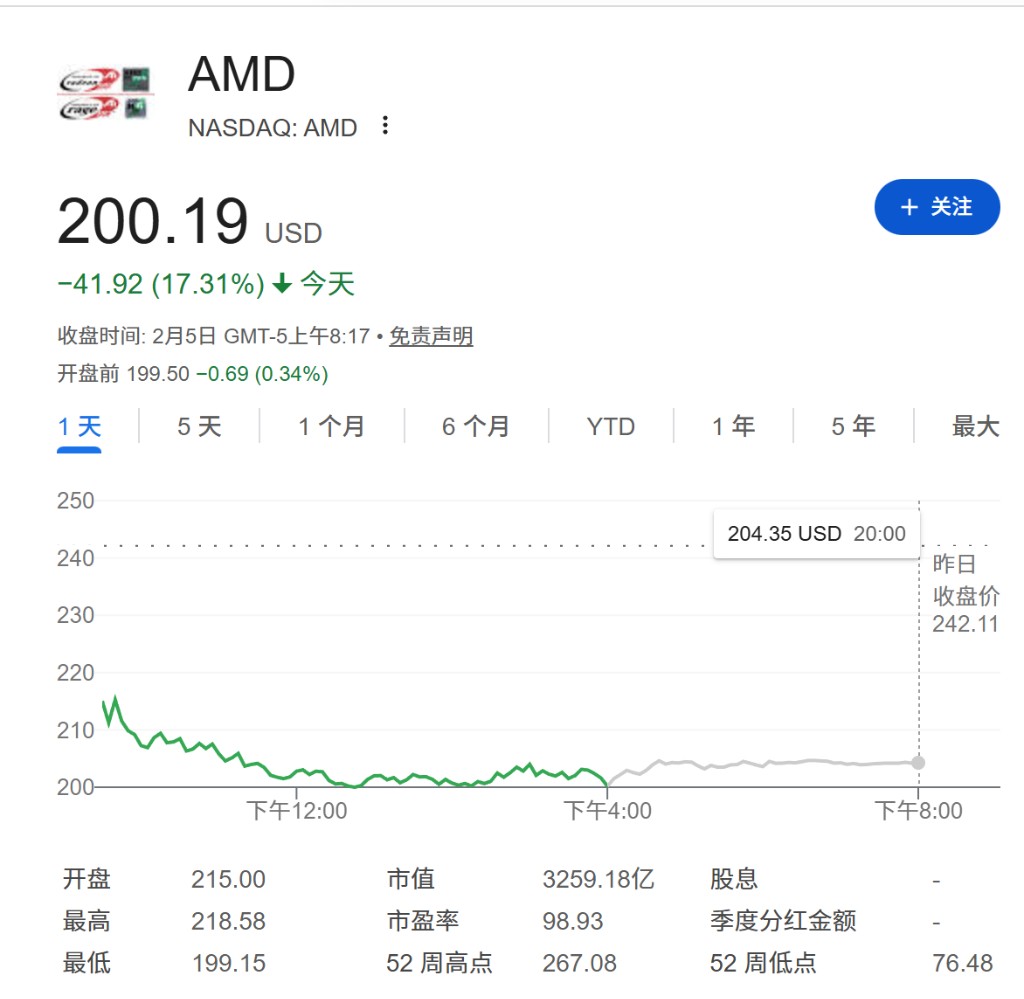
Anxiety in tech stocks has triggered a chain sell-off, with the market shifting from optimism to caution regarding the AI narrative. Software and chip stocks plummeted (AMD down 17%), impacting global assets and creating a negative feedback loop. The core of the market sentiment shift lies in the perception of AI as a threat to business models rather than merely a growth driver, leading to a nearly $1 trillion evaporation in market value for the software sector over the week; at the same time, Alphabet's capital expenditure plan has doubled to approximately $180 billion, intensifying concerns about whether high investments can yield returns
The anxiety in the technology sector is triggering a chain reaction, with investors reversing their views on artificial intelligence and its disruptive impact, leading to significant market volatility. Against this backdrop, the sell-off in the software industry has rapidly spread to chip manufacturers and giant tech stocks, resulting in a self-reinforcing selling pressure that has affected global stock markets, cryptocurrencies, and commodity markets.
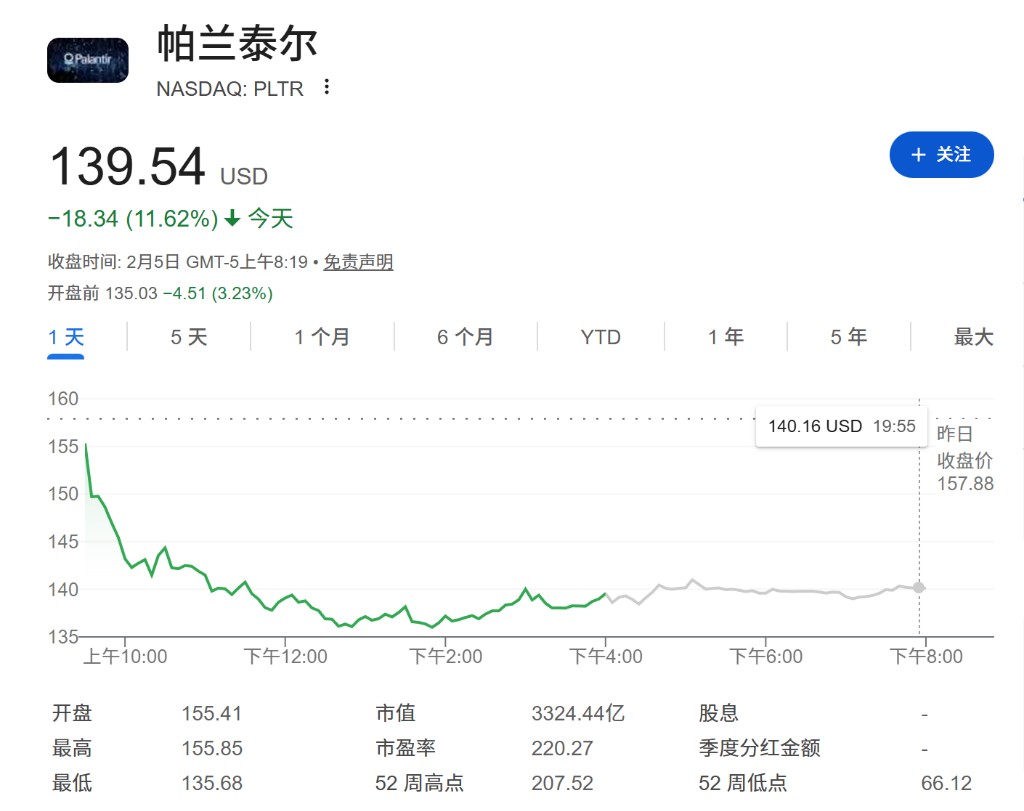
Latest trading shows that the chip industry has become a hard-hit area, with AMD's stock price plummeting 17% and Palantir dropping 12%. Meanwhile, Alphabet announced that its capital expenditures will double this year, exceeding analysts' expectations by more than 50%, and this aggressive spending plan has raised concerns in the market about its return prospects, causing its stock price to significantly decline in pre-market trading, although the drop later narrowed, it still remained in a loss state.


This round of sell-off has a strong contagion effect, quickly sweeping across Asian markets overnight. Affected by the sharp decline in Wall Street chip stocks, the South Korean Kospi index retreated nearly 4%. Meanwhile, volatility is not limited to the stock market, as Bitcoin has fallen below the $70,000 mark for the first time since the 2024 U.S. election, down more than 40% from its peak last October; the precious metals market is also turbulent, with silver prices once plummeting 17%, maintaining a daily decline of around 10%.
Market sentiment is undergoing a profound shift, with investors no longer viewing AI development as a broadly positive factor, but rather beginning to examine its threat to existing business models. This shift has led to the software industry losing nearly $1 trillion in market value within a week. As panic escalates, a negative feedback loop of selling begetting more selling is forming, with market focus shifting to the upcoming Amazon earnings report and the policy decisions of the European Central Bank and the Bank of England.
Reversal of AI Narrative and Rotation of Tech Stocks
This week's market performance paints a grim picture: investor sentiment towards AI has shifted from unconditional optimism to caution. The potential threat that AI technology poses to existing businesses has directly led to a severe blow to the software sector, and this anxiety has spread to the hardware manufacturing side.
This volatility also reflects the sector rotation that the market is experiencing this year. While tech growth stocks are facing sell-offs, the S&P 500 value index rose for the fifth consecutive trading day on Wednesday, while the growth index declined. The equal-weighted S&P 500 index rose 0.8%, reflecting that funds are flowing back into more cyclical stocks against the backdrop of positive ISM services and manufacturing survey data.
Massive Capital Expenditures Trigger Return Concerns
Alphabet's capital expenditure plan disclosed on Wednesday has left the market feeling uneasy. The company expects its capital expenditures this year to reach as high as $175 billion to $185 billion, doubling previous estimates. This aggressive move aims to alleviate computing power bottlenecks and maintain a lead in the AI race.
However, the market's reaction has been tepid, with Alphabet's stock price dropping 2% in after-hours trading. This is not the first time investors have felt anxious about the massive AI investment plans of so-called "hyperscale companies." The core of the market's widespread anxiety lies in whether such a huge investment can translate into substantial returns.

Macroeconomic Signals and Policy Focus
In addition to the turbulence in tech stocks, macroeconomic data has been mixed. While the ISM data has released positive signals, the ADP private sector job growth fell short of expectations, indicating that hiring activity remains sluggish. Currently, the market is closely watching today's release of job vacancy data and initial unemployment claims.
Moreover, investors will also be awaiting Amazon's earnings report after today's market close, marking another critical moment to assess the performance of tech giants