


Lian Ping: Can the new Federal Reserve Chair Waller fulfill Trump's wish for significant interest rate cuts?

Trump nominated Kevin Warsh as the Chairman of the Federal Reserve, aiming to achieve significant interest rate cuts. Warsh's hawkish stance has been overinterpreted by the market, while Trump's loyalty requirements have been overlooked. Warsh's nomination is the result of a triple balance of policy, politics, and the market, satisfying the need for rate cuts while also helping to enhance the central bank's credibility. Warsh's background and his family ties with Trump have also increased his trustworthiness
On January 31, 2026, after repeated deliberations, Trump announced that he would ultimately nominate Kevin Warsh as the next Chairman of the Federal Reserve from among candidates including Kevin Hassett, Director of the National Economic Council, Rick Rieder, an executive at BlackRock, and Christopher Waller, a Federal Reserve governor. From the reaction of the international financial markets, it seems there has been an over-interpretation, such as emphasizing Warsh's previous hawkish stance while ignoring Trump's loyalty requirement for this key position; Trump himself also has overly high expectations for Warsh's actual role in the Federal Reserve system in 2026, forgetting that once the Federal Reserve Chairman takes office, the institutional role often outweighs personal inclinations. The outcome of the Federal Reserve's "leadership change" is likely to be difficult to achieve as Trump wishes.
Why did Trump choose Warsh?
Among the four candidates, Hassett has been closely aligned with Trump and obedient, previously having a high profile, but the market views him as Trump's "puppet," severely lacking in credibility; Rieder lacks management experience at the Federal Reserve, and his Wall Street background easily raises questions of "interest transfer"; Waller's hawkish stance even exceeds Powell's, making it difficult for Trump to accept. Only Warsh is the relatively optimal solution, as Trump praised him for knowing "how to package political demands with rules" and "can accurately align with his intentions."
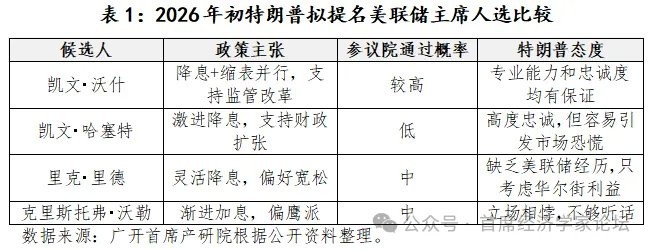
Trump's choice of Warsh is essentially the result of a "triple balance":
First is policy balance. Warsh proposed "concurrent balance sheet reduction and interest rate cuts," which meets Trump's urgent demand to stimulate the economy through interest rate cuts while also mitigating the risk of inflation rebound to some extent by reducing the Federal Reserve's balance sheet, helping to enhance the central bank's credibility and avoid being labeled a "political puppet."
Second is political balance. To avoid repeating past mistakes, Trump’s requirements for the Federal Reserve Chairman candidates consider both "political experience" and "political loyalty." On one hand, Warsh has experience in the Federal Reserve, a Wall Street background, and academic credentials, making Trump's political appointment appear more like a market and technically based choice, which has a relatively high probability of passing in the Senate. On the other hand, Warsh's father-in-law is a long-term important ally of Trump, and the deep family ties also make Trump’s trust in Warsh higher than other candidates.
Finally, there is market balance. Trump also needs to balance the contradiction between "policy reform" and "market stability" to avoid market fluctuations caused by policy haste. Warsh advocates for reducing the Federal Reserve's balance sheet and reforming the monetary policy framework, and his interest rate cut policy could potentially be packaged as "controllable easing within the framework," coupled with his establishment background, which helps to soothe market concerns and anxieties about the weakening of the Federal Reserve's independence, reducing the risk of volatility in policy adjustments.
From Warsh's own perspective, although he was known for his strong hawkish image during his tenure at the Federal Reserve from 2006 to 2011, where he strongly opposed quantitative easing monetary policy, his policy stance has undergone significant adjustments after losing the competition for the Federal Reserve Chair during Trump's first term, demonstrating pragmatic flexibility. For example, in recent years, he has abandoned the free trade ideology, shifted to support Trump's tariff policies, and echoed Trump's criticism of Powell for delaying interest rate cuts, all of which reflect this aspect It can be seen that the combination of professional ability and loyalty is the fundamental reason for Trump's choice of Walsh. At the same time, Walsh's professional competence and background also make it relatively easier for him to be approved by Congress.
Will Trump make another misjudgment?
It is worth mentioning that Jerome Powell, who is about to be replaced by Walsh, was also once Trump's carefully selected "preferred candidate" for the Federal Reserve Chairman. In 2017, Trump faced a similar nomination dilemma for the Federal Reserve Chairman during his first term, when he had to choose one from four candidates: John Taylor, the proponent of the "Taylor Rule," former Federal Reserve Governor Kevin Walsh, National Economic Council Director Gary Cohn, and then Federal Reserve Governor Jerome Powell.
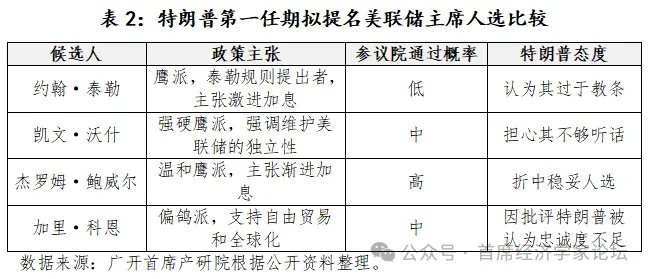
In the end, after comparison, Trump favored the "moderate hawk" Powell, who was professionally credible, politically reliable, and had a regulatory stance that was relatively balanced and prudent. First, the political risk was the lowest. At that time, Powell had served at the Federal Reserve for five years, and his competence and reputation were recognized by both parties, making it easier for the Senate to approve him. Second, his regulatory stance was aligned. Powell publicly supported the relaxation of the Dodd-Frank Act and advocated for simplifying bank compliance requirements. Third, his interest rate stance was "controllable." Although Powell supported gradual interest rate hikes, he opposed the mechanical rate hikes of the Taylor rule, being seen as "more flexible." Fourth, he was a non-academic bureaucrat. Coming from Wall Street and the Treasury Department, Powell was viewed as a "pragmatist" rather than an "ivory tower economist." Trump hoped he could play a positive role in slowing the pace of interest rate hikes, significantly relaxing financial regulations, and creating favorable conditions for the government's economic agenda.
However, Trump may have overlooked a fundamental fact: once appointed, the role of the Federal Reserve Chairman often overshadows personal inclinations. This institutional role constraint is reflected in: first, legal constraints. Although the Federal Reserve Act does not explicitly use the term "independence," its institutional design (such as long terms and financial autonomy) aims to ensure that the Federal Reserve is free from short-term political interference when formulating monetary policy. Second, decision-making mechanisms. The FOMC (Federal Open Market Committee) consists of 12 members, and the Chairman only has one vote. Although he can play a certain role in guiding the agenda and managing expectations, important decisions like adjustments to the federal benchmark interest rate still require a collective vote, making unilateral implementation difficult. Third, market trust. The credibility of the Federal Reserve relies on "policy stability," and excessive catering to politics can undermine its authority in the market. The core institutional role of the Federal Reserve is "politically neutral and technically oriented," and as the head of the Federal Reserve, it is especially necessary to carefully balance the two statutory goals of "price stability" and "full employment," rather than simply catering to the short-term policy demands of the White House. Therefore, every Federal Reserve Chairman has made it their important mission to maintain the independence and market reputation of the Federal Reserve after taking office.
In 2018, the U.S. economy showed signs of overheating, with rapid growth and a low unemployment rate, but inflationary pressures continued to increase. To prevent economic overheating and guard against inflation, the Federal Reserve, led by Powell, raised interest rates four times that year, increasing the federal funds rate from 1.5%-1.75% to 2.25%-2.5% This is in serious opposition to Trump's core demand of "maintaining low interest rates to stimulate the economy and aid in re-election," leading to Trump's dissatisfaction and public accusations that the interest rate hike decision was "wrong" and "too aggressive." After the outbreak of the COVID-19 pandemic in 2020, the Federal Reserve quickly and significantly cut interest rates and initiated quantitative easing. Initially, Trump supported this, but soon called for more aggressive measures (such as implementing negative interest rates, directly purchasing company stocks, and even intervening in the high-yield bond market). Powell clearly rejected this, emphasizing that negative interest rates do not align with the structure of the U.S. monetary market, and that direct stock purchases lack legal authorization and could blur the boundaries between monetary and fiscal policy, undermining the institutional credibility of the Federal Reserve. The conflict between the two sides thus erupted fully, with Trump repeatedly threatening on Twitter and in interviews to fire Powell.
Figure 1: Federal Funds Rate Trend During Trump's First Term
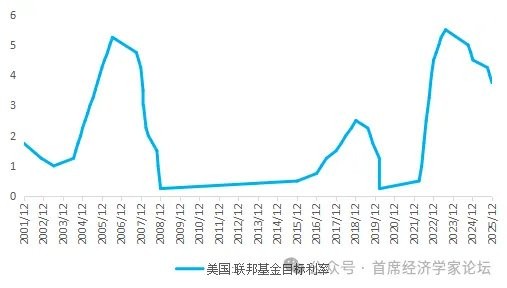
Data Source: Wind, Guangkai Chief Research Institute.
History often repeats itself. After Walsh takes over, there will likely be a short "honeymoon period" with the Trump administration. However, as time goes on, the conflicts and differences between the two sides will gradually surface. This is largely because Walsh's institutional role will begin to dominate. As the Chairman of the Federal Reserve, Walsh must prioritize maintaining the independence and market reputation of the Federal Reserve. Under the current institutional arrangements in the U.S., even if Walsh is determined to reform the independence of the Federal Reserve, such significant institutional changes may not pass in Congress. Although the president has the authority to participate in the selection and final nomination of the Federal Reserve chairman, there is no way to change the institutional arrangements that allow for a "midway exit," which would also lead to Walsh having no concerns when insisting on his position in the future.
Will Trump Achieve Significant Rate Cuts as Desired in 2026?
The traditional monetary policy decision-making framework of the Federal Reserve (from the later Greenspan era to the Yellen era) is primarily based on macroeconomic models such as the Phillips Curve and DSGE to predict future inflation and employment trends, thereby setting a "clear interest rate path" and conveying this expectation to the market through press conferences and dot plots as "forward guidance." Powell's "model navigation + data validation" dynamic adjustment model, while more aligned with reality than traditional model predictions, has the drawback of being relatively slow to respond to the actual economy. Walsh opposes the "model and forward guidance-centered operational framework," essentially abandoning the decision-making model based on "model predictions" and "preset interest rate paths." Unlike Powell's dynamic adjustment and passive response model of "needing to observe several more data points," he advocates for a rapid decision-making approach that is "highly discretionary and results-oriented." In his view, both models and data validation are "post-hoc explanatory tools," rather than "pre-decision bases," and excessive reliance on models and multi-period data validation can lead to policy rigidity, making it difficult to respond timely and effectively to sudden economic shocks such as geopolitical conflicts and large-scale pandemics. However, whether it is Powell's model or Walsh's model, under the current collective decision-making framework and rules of the Federal Open Market Committee (FOMC), especially with a lack of a majority of dovish committee members, it determines that Walsh cannot decide on sustained, significant rate cuts As is well known, the FOMC members include 7 governors and 5 regional Federal Reserve Bank presidents, all of whom have one vote each. In mid-May this year, there was a significant possibility that Waller would succeed Powell as the Chairman of the Federal Reserve. At that time, even if Waller was willing to firmly implement Trump's directive for substantial interest rate cuts, other governors and regional Federal Reserve presidents might not necessarily agree. From the potential member structure of the FOMC, it can be roughly divided into four categories: the first category is the "policy mix type." Essentially, it is a contradictory combination of institutional hawks (worried about the Federal Reserve's large balance sheet) and political doves (catering to Trump's demand for interest rate cuts). The representative of this category is Waller himself. The second category advocates for "employment first" and consists of doves or moderately dovish members, mainly including Governor Cook and Philadelphia Fed President Harker. The third category emphasizes a "data-driven" approach and consists of balanced or moderately hawkish members. In addition to Powell, this includes Fed Vice Chair Barr, Governors Jefferson and Bowman, New York Fed President Williams, and Minneapolis Fed President Kashkari. The fourth category is the "inflation defense priority type," which insists on long-term price stability taking precedence over short-term employment fluctuations, representing strong hawks. Typical representatives include Governor Waller, Cleveland Fed President Mester, and Dallas Fed President Logan.
Table 3: Forecast of Federal Reserve FOMC Members' Policy Stances (June 2026)
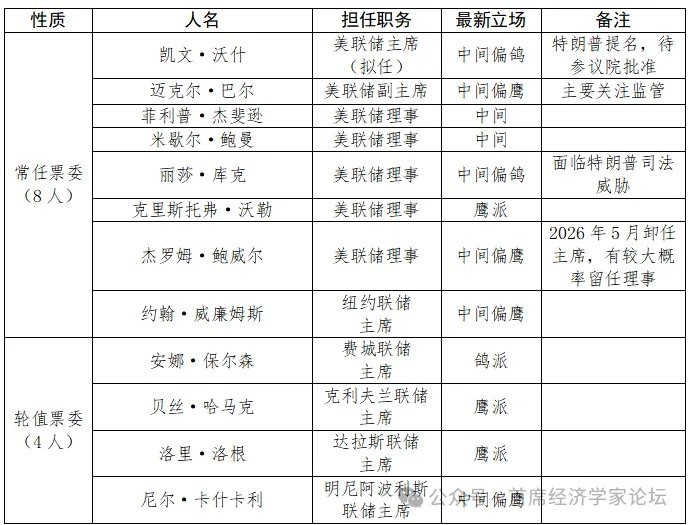
Data source: Guangkai Chief Research Institute compiled from public information
In terms of interest rate cut decisions, unless the U.S. faces a severe economic and unemployment crisis in 2026, typically, Waller can only stabilize support from the first two categories, totaling 3 votes (including himself). According to recent forecasts from the IMF, United Nations, OECD, and various U.S. institutions, although the growth rate of developed economies is generally sluggish in 2026, the U.S., supported by AI capital expenditures and tax reduction policies, is expected to grow at about 1.8%-2.2%, with a low likelihood of a "hard landing." At the same time, due to the strong stickiness of service prices such as wages and rents, coupled with the long lag in tariff transmission, inflationary pressures in the U.S. are expected to gradually rise in 2026. If we consider that Trump is still actively trying to remove the dovish Governor Cook, the support for interest rate cuts may further diminish.
Trump is certainly not completely unaware of this, but he stubbornly believes that the "one vote" held by the Federal Reserve Chairman is not an ordinary vote; its influence permeates agenda setting, expectation guidance, market communication, and even the substantive shaping of policy direction. As long as he takes proactive actions, this important role can play a key role in the following aspects: first, becoming the agenda leader and policy tone setter. The Federal Reserve Chairman is responsible for presiding over FOMC meetings, drafting meeting agendas, and widely communicating with governors and regional Fed presidents before meetings. This means that the Chairman can prioritize the discussion of interest rate cuts, reduce the time spent discussing inflation risks, and weaken the opposing voices of hawkish members. At the same time, his strong stance will also indirectly influence the voting tendencies of some members, thereby substantially dominating the outcome of the decisions Second, become a guide for market expectations. The public statements of the Federal Reserve Chairman (such as press conferences, congressional hearings, etc.) have a strong "signal effect" and can directly influence market expectations. For example, if the Federal Reserve Chairman hints at "possible interest rate cuts" in a speech, it may lead to a decline in some market interest rates ahead of time, and the stock, bond, and foreign exchange markets will also adjust in advance, achieving a de facto easing effect—this is exactly what Trump seeks as "quick results." Third, become a diluter of central bank independence. If the new chairman publicly acknowledges that "it is appropriate to align with government economic goals," or even states that "the president has the right to express opinions on interest rates," it can undermine the institutional firewall of independence, making future interest rate cuts politically more legitimate. This is also why, since 2025, Trump has repeatedly publicly pressured the Federal Reserve and Powell to significantly lower the federal funds rate to 1% or even lower, "the lower, the better."
However, from the perspective of the long-term internal culture of the Federal Reserve and recent actual situations, Trump's above ideas may be wishful thinking. As former Federal Reserve Chairman Ben Bernanke repeatedly emphasized in his book "Monetary Policy in the 21st Century," "Congress is our boss," and only by maintaining independence can "Congress have sufficient reason to continue delegating monetary policy decision-making authority to the Federal Reserve."
The biggest role of Trump's leadership change is to "shift blame"
Given that the U.S. midterm elections are approaching in early November this year, it can be said that it is imminent. This election is a "decisive battle" for Trump—it will determine whether the last two years of his second term will continue to be unchecked, pushing the MAGA movement to the end; or whether he will be prematurely hobbled, ultimately achieving nothing, and even falling into the predicament of being impeached by Congress.
Assuming that Walsh successfully replaces Powell in mid-May this year, there will only be four FOMC meetings left before the midterm elections in June, July, September, and October. He will find it difficult to complete the internal integration of the Federal Reserve and promote continuous and significant interest rate cuts within such a short time frame. If Trump wants to significantly change the structure of the FOMC members, it will take until at least 2028 to see initial results. However, if the Republican Party loses in this midterm election, these changes will no longer be meaningful.
From the latest situation, Walsh's path to appointment may become even more difficult. According to the process, after Trump nominates Walsh as the Federal Reserve Chairman, Walsh must first be approved by the Senate Banking Committee, then submitted for a vote by the full Senate, and finally receive formal appointment. As of early February 2026, the U.S. Senate Banking Committee includes 24 members, with 13 Republicans and 11 Democrats; the total number of seats in the U.S. Senate is 100, with 53 Republicans, 45 Democrats, and 2 independent members joining the Democratic caucus, giving the Democrats an effective influence of 47 seats. Although most members do not reject Walsh personally, Trump's use of judicial means to "hunt down" Federal Reserve Chairman Powell and Governor Quarles, undermining the independence of the Federal Reserve, may cause Walsh to suffer "collateral damage." For example, Republican member Tillis of the Senate Banking Committee clearly stated that protecting the independence of the Federal Reserve "is non-negotiable," and he will oppose the confirmation of any Federal Reserve nominee, including Walsh, until the Department of Justice's criminal investigation of Powell is "fully and transparently resolved." If 11 Democratic committee members respond collectively, Thom Tillis's opposing vote could lead to a 12:12 tie in the Senate Banking Committee, preventing the nomination of Waller from reaching the full Senate vote. In extreme cases, due to the obstruction of votes for directors and chair nominations, Waller is likely to miss the FOMC meetings in June or even July. This would make the consecutive and significant interest rate cuts that Trump hopes to see before the midterm elections even more unlikely.
Therefore, for Trump, the most direct and realistic purpose of this Federal Reserve leadership change is to portray Powell as the "culprit" dragging down the U.S. economy and hindering the return of manufacturing and jobs during a series of public Republican events before the midterm elections, and to make the timely replacement of Powell one of his political achievements.
Risk Warning and Disclaimer
The market has risks, and investment requires caution. This article does not constitute personal investment advice and does not take into account the specific investment goals, financial situation, or needs of individual users. Users should consider whether any opinions, views, or conclusions in this article align with their specific circumstances. Investing based on this is at one's own risk
