


JP Morgan warns: Global copper inventories have doubled, and short-term copper prices may face consolidation

JP Morgan warns that global copper inventories have doubled, reaching a five-year high, with stocks increasing from 470,000 tons to 1 million tons, indicating a shift in the supply-demand balance. Despite disruptions in mine supply, inventories continue to rise, reflecting weak demand. Copper prices remain around $5.30 per pound, under short-term pressure, and are expected to consolidate near $12,000 per ton, with risks skewed to the downside. The market needs to wait for signals of demand recovery after the Chinese holiday to welcome new volatility opportunities
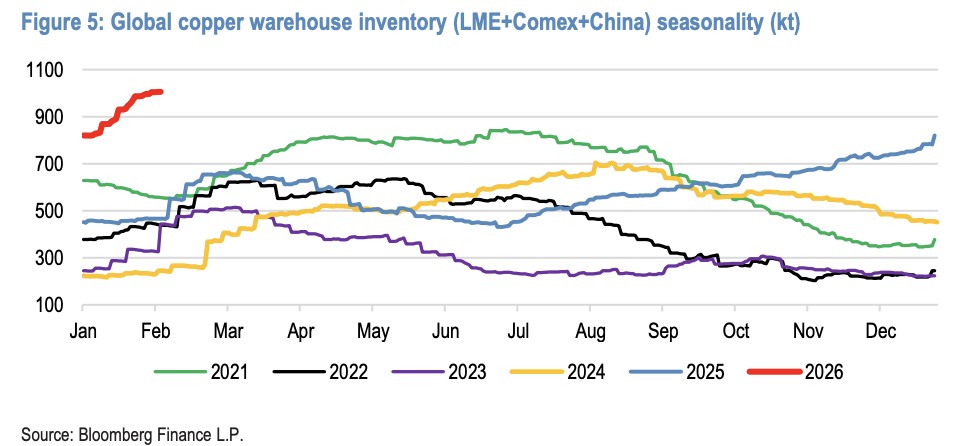
According to the Wind Trading Platform, the Asia-Pacific equity research team at JP Morgan released the "Copper Dashboard" (by Lyndon Fagan et al.) on February 3, 2026, indicating that global visible copper inventories have more than doubled within a year, soaring from approximately 470,000 tons in the same period last year to about 1 million tons, reaching a five-year high. Despite supply disruptions in global mines, inventories continued to rise in the fourth quarter, indicating a shift in the supply-demand landscape.
Inventory Doubles in a Year, and Supply Issues Can't Stop Stockpiling
The report states that as of February 2026, global total inventory is approximately 1 million tons, an increase of 113% from 470,000 tons in the same period of 2025, marking a five-year high. Notably, this inventory growth occurred against the backdrop of supply disruptions in global mines, highlighting the weak demand side.
Market Signals: Mixed High-Frequency Indicators
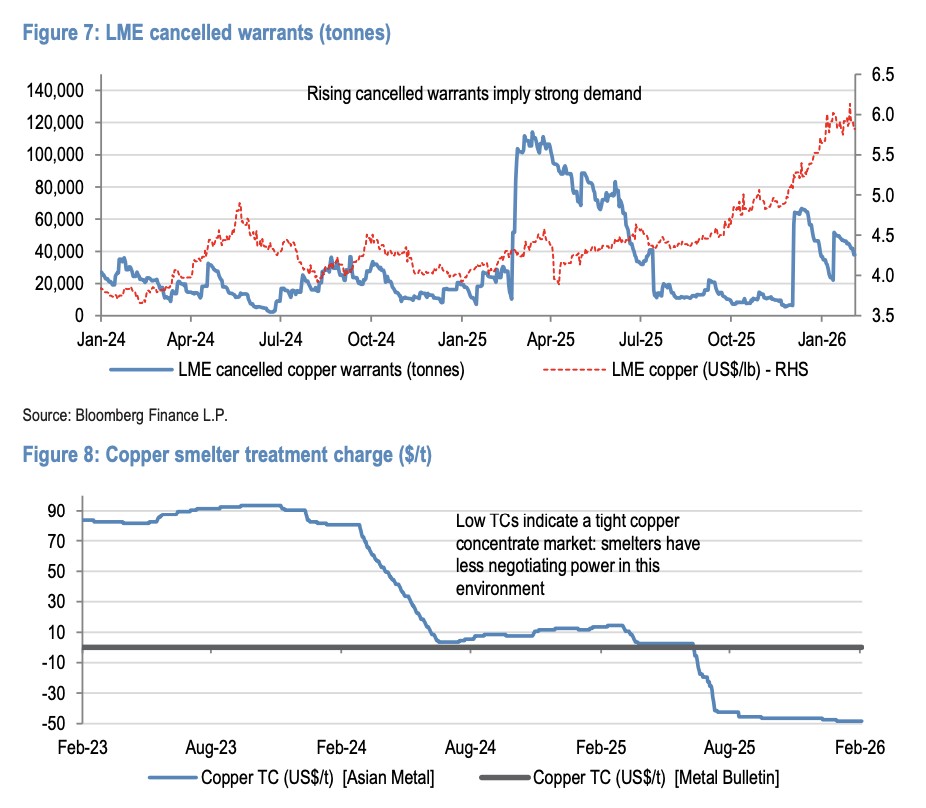
Several high-frequency indicators monitored by JP Morgan present a complex situation. On one hand, copper concentrate processing fees (TC/RC) remain negative, indicating that supply on the raw material side is still tight, and smelters have weak bargaining power in procurement.
On the other hand, net speculative positions on the London Metal Exchange (LME) have begun to decline, and the number of canceled warehouse receipts is also decreasing. These signals suggest that investor sentiment is becoming cautious, and confidence in short-term price trends has weakened. As of early February 2026, copper prices remained around $5.30 per pound, but both technical and sentiment indicators show short-term pressure.
Market Outlook: Consolidation, Awaiting Clear Demand
Considering various indicators, JP Morgan maintains a cautious stance on the copper market, expecting copper prices to consolidate around $12,000 per ton (approximately $5.45 per pound), with short-term risks skewed to the downside. The main reasons include: the Chinese market entering the Spring Festival holiday, traditional off-season demand weakness; global inventories being at high levels, providing natural pressure on prices; low operating rates in downstream manufacturing, leading to insufficient terminal consumption momentum.
However, JP Morgan also points out that only after the latter part of the second quarter of 2026, when clearer signals of demand recovery post-holiday in China emerge, could the market see new fluctuations and upward opportunities. At that time, if economic stimulus policies take effect, infrastructure investment accelerates, or manufacturing orders rebound, copper prices are expected to regain upward momentum.
The above exciting content comes from the Wind Trading Platform.
For more detailed interpretations, including real-time analysis and frontline research, please join the【 **Wind Trading Platform ▪ Annual Membership**】

Risk Warning and Disclaimer
The market has risks, and investment should be cautious. This article does not constitute personal investment advice and does not take into account the specific investment goals, financial situation, or needs of individual users. Users should consider whether any opinions, views, or conclusions in this article are suitable for their specific circumstances. Investment based on this is at one's own risk