


AMD's Q4 data center revenue surged nearly 40% to a record high, but the Q1 revenue guidance was not explosive enough, leading to a nearly 8% drop in after-hours trading | Earnings Report Insights

AMD's Q4 revenue exceeded $10 billion, setting a new record with a year-on-year growth rate of over 30%. EPS growth has slowed but is nearly 16% higher than analysts' expectations. Data center revenue rose to a record $5.4 billion, with sales of the MI308 chip in China generating approximately $390 million. U.S. export restrictions are expected to impact inventory and related costs by about $440 million in 2025. The Q1 revenue guidance median is $9.8 billion, slightly above consensus expectations but below some optimistic forecasts exceeding $10 billion. CEO: Data center revenue is expected to grow by 60% annually over the next three to five years
Nvidia's strong competitor AMD announced that its revenue and EPS earnings in the fourth quarter of last year continued to grow by double digits, exceeding Wall Street expectations, but the revenue guidance for this quarter was not explosive enough, indicating that AMD's breakthrough in the AI chip market still requires time.
AMD expects first-quarter revenue to be between $9.5 billion and $10.1 billion, with a midpoint of about $9.8 billion, slightly higher than the analyst consensus expectation of $9.39 billion, while some more optimistic analysts expect it to exceed $10 billion. The company's guidance disappointed some investors who were hoping to see greater returns from AI computing spending.
AMD's CEO Lisa Su stated during the earnings call that demand for server CPUs is "very strong." The AI business is accelerating. Eight of the top ten AI companies use AMD's Instinct chips to support production workloads. It is expected that data center revenue will grow by 60% annually over the next three to five years, and by 2027, AI revenue will reach "hundreds of billions of dollars."
After AMD announced its earnings report on Tuesday, February 3, Eastern Time, the company's stock price fell further in after-hours trading. AMD, which closed down about 1.7%, dropped nearly 8% in after-hours trading. AMD's stock price has doubled in the past year, and as of Tuesday's close, it has accumulated a 13% increase since the beginning of 2026. After a significant rise in stock price, news that is not "explosive" enough may lead to profit-taking for AMD.
Investors are more concerned about the pace of growth, marginal changes in future guidance, and potential cost/share pressures that may arise in the competitive landscape of AI. In a high-expectation environment, any points that do not fully exceed expectations or significantly increased expense items may amplify sell-offs.
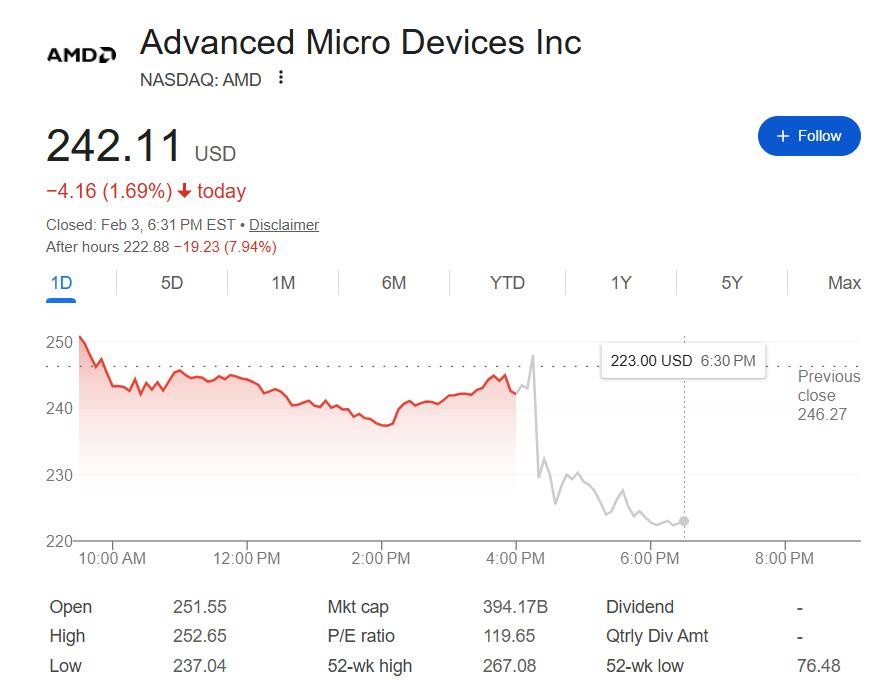
Analysts believe that the lower and upper ends of AMD's revenue guidance range reflect uncertainty in short-term growth pace, with an adjusted gross margin guidance of about 55%, just slightly above the market expectation of 54.5%. For valuation-sensitive investors, such marginal outperformance does not always lead to an immediate positive reaction.
Additionally, on the same day, the AI panic triggered by Anthropic's new tools led to a sell-off primarily in software stocks. In this environment, even if AMD's performance exceeds expectations, it is difficult to remain completely independent of market sentiment, as macro and sector correlations often "amplify" individual stock declines.
Revenue and Earnings Overall Exceed Expectations, Growth Quality Under Scrutiny
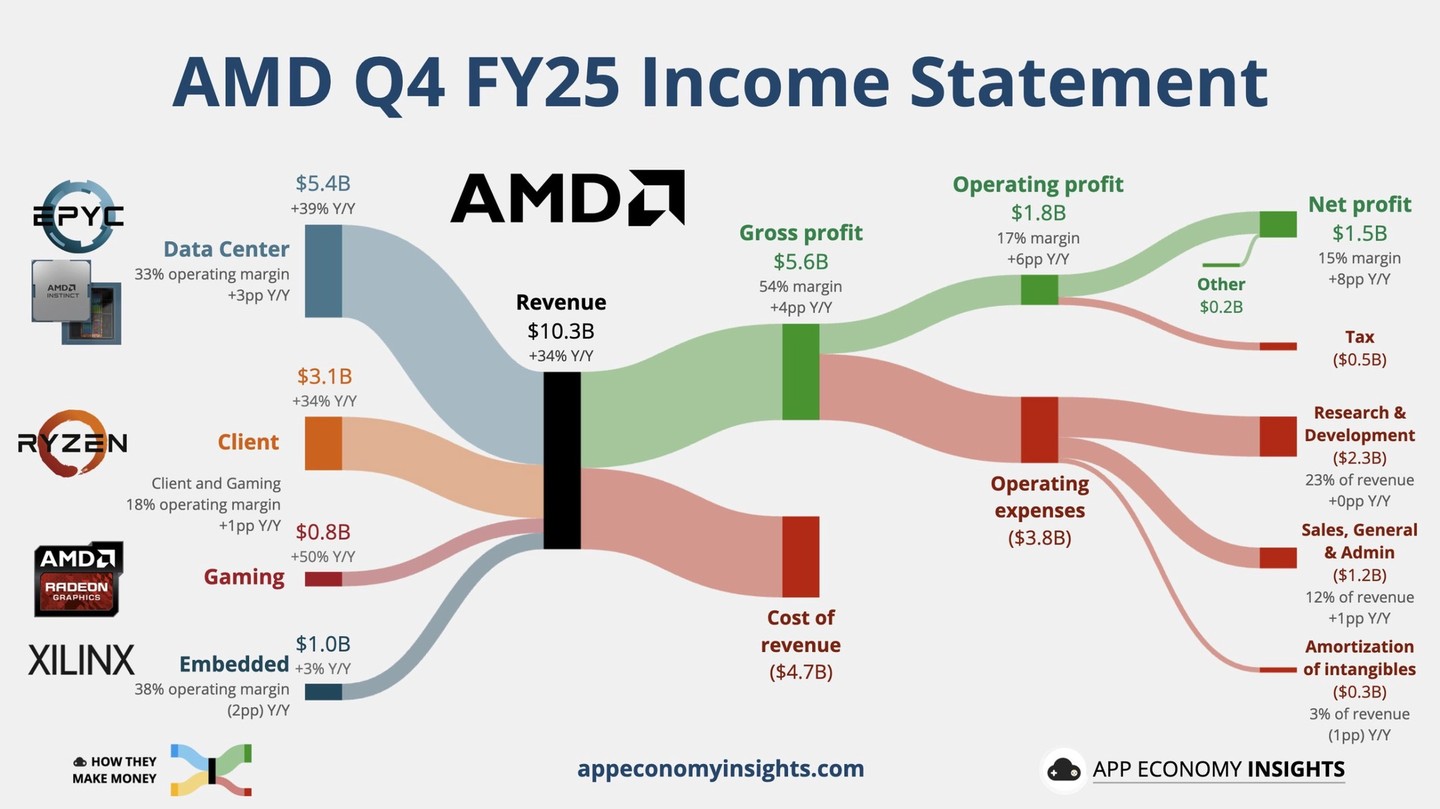
AMD reported fourth-quarter revenue of $10.27 billion, a record high for a single quarter, up 34% year-over-year, with growth slightly lower than the 36% in the third quarter. The company's actual revenue was about $620 million, or 6.4%, higher than Wall Street's expectation of $9.65 billion, indicating strong demand this quarter, especially driven by cloud/data centers and client systems.
The adjusted EPS for the fourth quarter was $1.53, a year-over-year increase of 40%, slowing from nearly 60% year-over-year growth in the third quarter, but still about 16% higher than the analyst expectation of $1.32, indicating that the gross margin and expense structure contributed well to earnings under non-GAAP standards
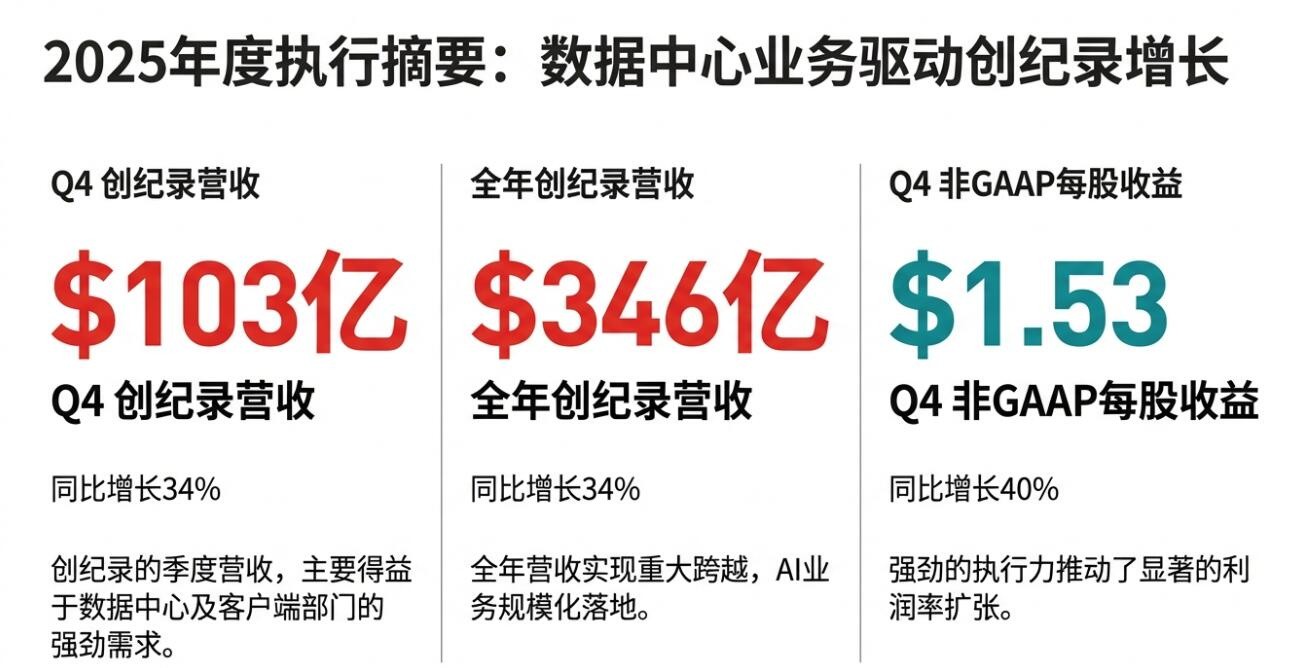
Although both revenue and profit exceeded expectations, the market is now more concerned about whether growth can be sustained in the future—regarding the AI accelerator and EPYC layout, the market expects clearer long-term share and gross margin paths. If investors believe that future growth cannot maintain the current premium, valuations will be repriced, leading to a situation where "performance is impressive but stock prices are under pressure."
Operating Profit and Profit Margin: Significant Efficiency Improvement, but Attention Needed on Cost Elasticity
In the fourth quarter, AMD's operating profit was $2.85 billion, a year-on-year increase of 41%, which is 15.4% higher than analysts' expectations of $2.47 billion. The operating profit margin of 28.0% in the fourth quarter also exceeded analysts' expectations of 25.4% and last year's 26%. This indicates that in the fourth quarter, under the product mix (high-end CPU/GPU) and scale effects, the company's operating leverage was good, and profit margins improved significantly.
However, it is important to note that while maintaining or improving gross margins, AMD has also selectively increased its investment in R&D and capital expenditures. If a large amount of funds is invested in R&D/capacity to maintain long-term competitiveness, it may lower the certainty of marginal profits in the short term, becoming part of the valuation discount.
In the fourth quarter, R&D expenditures were $2.33 billion, with analysts expecting about $2.16 billion. The R&D spending exceeding expectations indicates that AMD continues to invest in next-generation CPU/GPU and AI platforms (including the Instinct/MI series and related software/ecosystem). In the short term, this will suppress the growth rate of free cash flow, but from the perspective of long-term competitiveness, it is a strategic investment.
Capital expenditures in the fourth quarter were $222 million, slightly lower than analysts' expectations of $231.4 million, reflecting that AMD, as a fabless company, did not further expand its spending on capacity procurement/services in that quarter.
Data Center Demand Supports Accelerated Revenue Growth
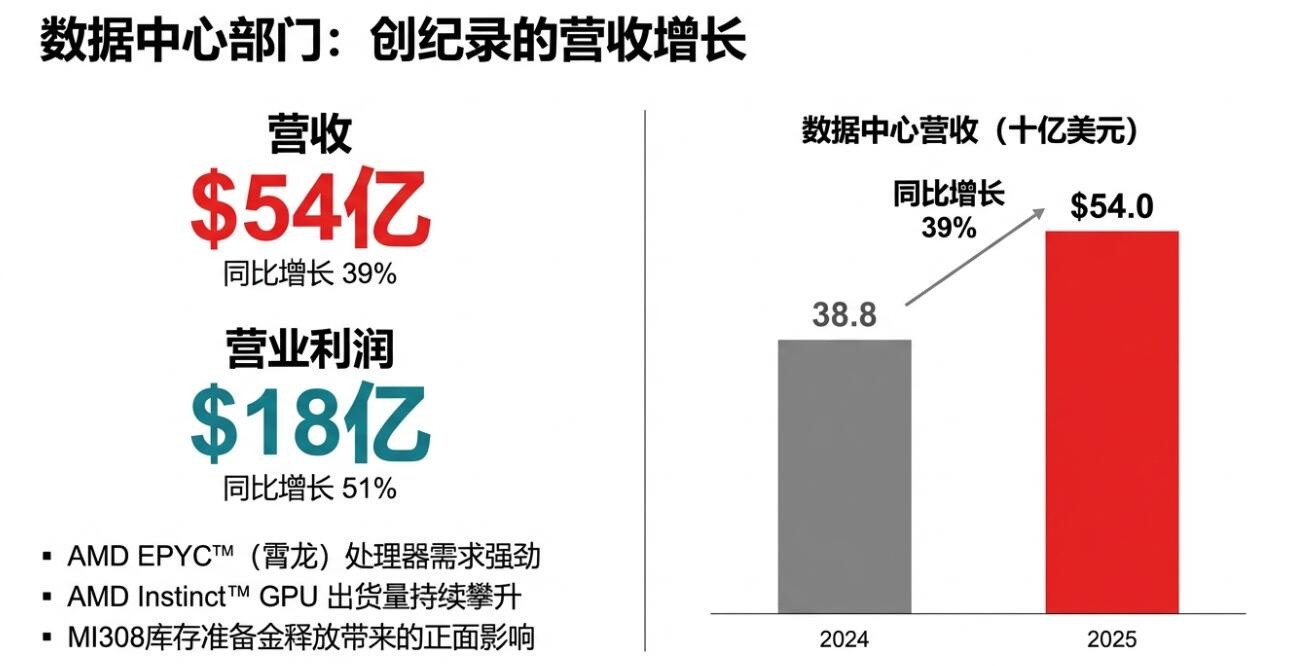
By business segment, AMD's data center, specifically AI/cloud business, continued to grow in the fourth quarter, driving overall revenue to exceed expectations. Data center revenue reached $5.4 billion for the quarter, setting a record for the highest quarterly revenue in this business in the company's history, a year-on-year increase of 39%, accelerating from the growth rate of 22% in the third quarter.
The data center remains the core focus of the market—investors will closely monitor the shipments of EPYC processors and Instinct GPUs, customer concentration, and the purchasing rhythm of individual customers.
 The client and gaming business also contributed approximately $3.9 billion in revenue, a year-on-year increase of 37%, slowing from the 73% growth in the third quarter. This business remained resilient during the quarter. Combined with the market performance of Ryzen/Radeon, the company still has pricing and market share advantages on the consumer side, further solidifying its cash flow foundation.
Chip Shipments to China and U.S. Export Restrictions
The financial report revealed that sales revenue from AMD Instinct MI308 chips in China was approximately $390 million in the fourth quarter. The shipments of this chip to China and the previous provision reversal have a direct impact on gross profit and revenue.
Excluding the release of inventory reserves and the sales revenue of AMD Instinct MI308 in China, the non-GAAP gross margin for the fourth quarter was approximately 55%, lower than the 57% actually recorded by AMD.
AMD also mentioned the related impacts of U.S. government export restrictions, noting that in the annual data for 2025, such restrictions would result in approximately $440 million in inventory and related expense impacts. These consolidated accounting and compliance matters require investors to separate the metrics when assessing "actual end-user demand" and "one-time accounting items due to compliance."
Media reports pointed out that although AMD's first-quarter guidance is generally above consensus expectations, there are concerns in the market about whether AMD can quickly catch up to NVIDIA in AI accelerators. If the market expects faster share erosion and higher short-term shipments, any relatively conservative pace will be seen as a "miss," which is also one of the backgrounds for the post-market selling pressure
