The storage supercycle faces challenges, South Korean stock volatility hits "new highs," and hedging costs surge

Wallstreetcn
2026.02.03 01:37
portai
I'm PortAI, I can summarize articles.

On Monday, the South Korean Composite Index plummeted over 5%, marking the largest decline since April, with chip stocks like Samsung Electronics and SK Hynix leading the drop. Investor risk aversion has increased, causing the Korean volatility index VKOSPI to soar to its highest level in nearly 10 months, with the premium relative to the global VIX reaching an all-time high. Analysts advise investors to hedge cautiously and wait for confirmation before re-entering the market

After experiencing the strongest early-year rally globally, investors are hedging against volatility risks in the South Korean stock market.

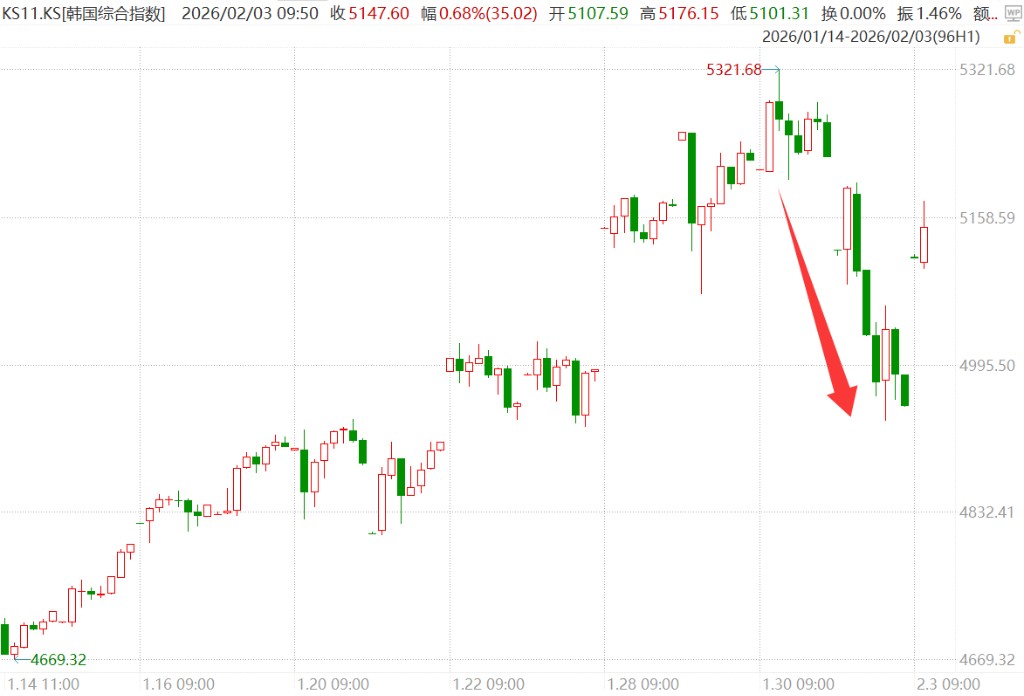
On Monday, the South Korean stock market faced its largest decline since April, with the KOSPI index dropping over 5%. At the same time, the cost of one-month put options betting on a 10% decline in the KOSPI surged to its highest level since November last year compared to call options.

(The KOSPI index plummeted yesterday, rebounding with a higher opening on Tuesday)

Notably, the premium of the KOSPI volatility index relative to the VIX has reached a historical high. During the strong rebound of the South Korean stock market over the past few months, the spread between the two has continued to widen, analysts believe that investors have increased their hedging efforts while chasing the rally.

Although volatility has risen across various asset classes and stock markets, the increase in VKOSPI is particularly significant. This reflects a notable rise in investor concerns about potential pullbacks after the supercycle in storage has driven the South Korean stock market sharply higher.

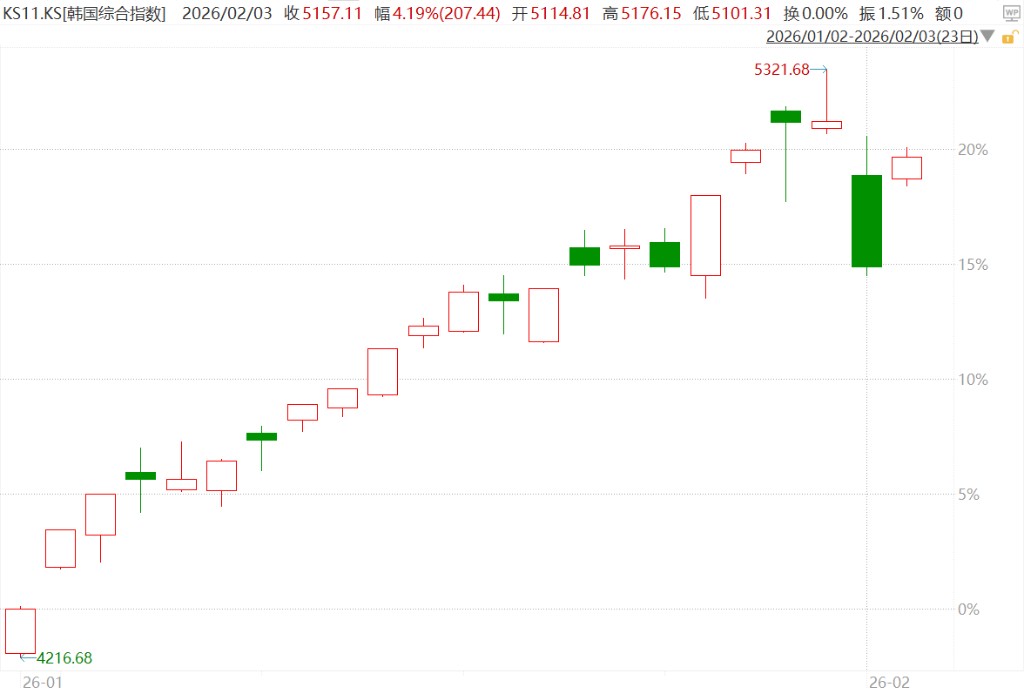
(Before the sharp decline on Monday, the KOSPI index had already accumulated over a 20% increase this year)

On Monday, the stock prices of the two chip giants, Samsung Electronics and SK Hynix, both plummeted over 5%, despite both companies reporting significant profit growth last week. The stock prices still fell after the earnings announcements, further exacerbating investor caution.

Volatility Indicators Soar to Extreme Levels

The KOSPI 200 volatility index (VKOSPI) surged nearly 8 points on Monday, marking the largest single-day increase in nearly 10 months, and has risen for six consecutive trading days.

Jangwon Seo, head of global derivatives at Korea Investments & Securities, stated last week that the high level of VKOSPI reflects "increased market uncertainty and expectations of extreme volatility in South Korean stocks," advising investors to consider hedging.

Paul Johnson, head of equity business at Barclays in the Asia-Pacific region, pointed out last week that the rally in the South Korean market accelerated in January. He stated:

Given the relative lack of liquidity in market volatility and the low supply of structured products linked to the index, the demand for leveraged speculative trading and hedging activities through options will naturally drive the market significantly.

Since the low point in April last year, the benchmark KOSPI index has more than doubled, significantly outperforming similar global markets. This strong rally has prompted investors to increase protective measures while taking profits.

Ha SeokKeun, Chief Investment Officer at Eugene Asset Management, stated:

A cautious approach is needed, waiting for confirmation of a market rebound before building positions However, he still views this pullback as a buying opportunity