


Space X investor: This year's IPO will be "the largest wealth creation event in history," Musk is still underestimated, and excess rocket capacity is giving rise to space data centers

Sequoia Capital partner Shaun Maguire believes that the upcoming IPO of SpaceX will be "the healthiest wealth creation event in history," with its valuation soaring from $36 billion in 2019 to $800 billion. He stated that the market still underestimates Musk's value, and the excess rocket capacity of SpaceX will create market opportunities for space data centers. Maguire successfully realized cognitive monetization from $36 billion to $800 billion through reverse investment, and Starlink's laser communication network has enhanced global data transmission speeds. SpaceX's D2D technology is expected to become mainstream by 2028, and Starship will drive the development of space data centers
Sequoia Capital partner Shaun Maguire believes that the upcoming IPO of SpaceX will be "the healthiest wealth creation event in history," with the company he calls "the greatest company of all time" seeing its valuation soar from $36 billion in 2019 to $800 billion.
This top investor, who has invested in five companies under Musk, recently stated that the market still severely underestimates Musk's value, and the excess rocket capacity of SpaceX will give rise to the potential "one of the largest market opportunities in history" for space data centers.
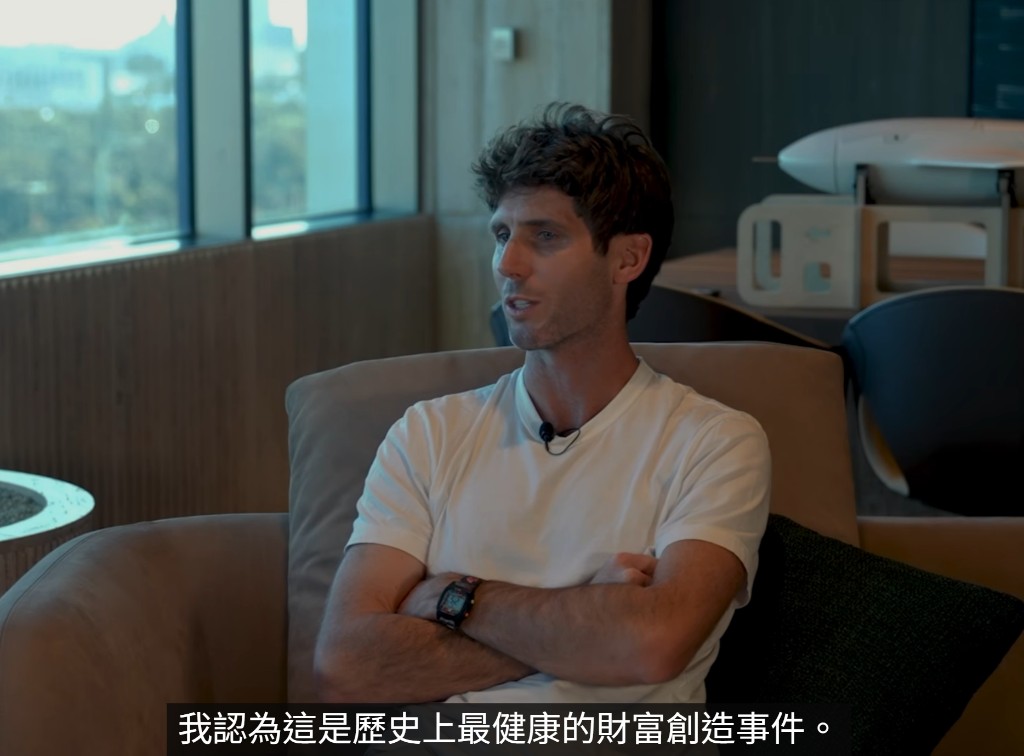
Highlights from the interview video:
- The victory of contrarian investment logic: In 2019, the market viewed SpaceX merely as a rocket launch company with limited growth. Maguire, leveraging his physics background, anticipated the technical feasibility of Starlink and heavily invested when the market assigned a "zero valuation," achieving a cognitive realization from $36 billion to $800 billion.
- The business philosophy of "potential energy conversion": Unlike conventional CEOs eager for monetization, Musk is accustomed to long-term accumulation of infrastructure capabilities (such as Gigafactory and Starship) in a zero-revenue state. Once the technology crosses a critical point, it releases astonishing momentum through annual production of millions or by rewriting industry models.
- Laser links reshaping global communication: With a vacuum laser communication network composed of over 9,000 satellites, Starlink has achieved faster intercontinental data transmission speeds than undersea cables, evolving from a mere access tool to a core digital infrastructure carrying global long-distance traffic.
- D2D rewriting the telecommunications industry landscape: Through spectrum acquisition and optimization of V3 satellites, SpaceX's satellite direct-to-device technology (D2D) is on the brink of explosion, expected to achieve large-scale adoption by 2028, potentially replacing consumer fixed networks as the company's largest revenue source within the next five years.
- Starship giving rise to space data centers: As Starship enters a reliable mass production phase in 2026, SpaceX will face an excess of rocket capacity, prompting the company to utilize low launch costs to address the power and land bottlenecks faced by ground AI data centers, opening up a terascale space computing market.
- The "atomic" advantage in the AI race: Maguire emphasizes that the ultimate outcome of AI competition will be constrained by physical resources (atoms) such as power and hardware, while Musk, through the cross-company synergy of xAI, Tesla Energy, and SpaceX's space infrastructure, has mastered a foundational support that pure software AI giants cannot reach
- The healthiest wealth creation event in history: The upcoming SpaceX IPO is seen as "the largest wealth creation movement in history." Since most of its employees are mission-driven and have endured long-term challenges, this massive flow of wealth will be more constructive, and due to grand goals like the Mars mission, the core team is unlikely to leave.
Maguire revealed in the podcast "Sourcery with Molly O'Shea" that Sequoia Capital has invested approximately $1.2 billion in SpaceX since 2019, and this investment is currently valued at about $12 billion, achieving a tenfold return. He stated that the investment decision at that time was considered "crazy" in the industry, as based on the global launch market size at that time, SpaceX's valuation had almost no room for growth, and the market's valuation of businesses like the Starlink satellite network and Starship super heavy rocket was zero.
Maguire pointed out that the surge in SpaceX's valuation mainly comes from four waves of evolution in the Starlink business: the consumer network has reached 9.2 million subscribers, the enterprise market covers several airlines, the government defense business has launched the Starshield product line, and the Direct-to-Cell mobile satellite service is expected to have 6 million users by the end of 2024. He predicts that 2028 will be a key year for Direct-to-Cell, when the scale of this business may surpass that of the consumer network.
Even more disruptive is the space data center plan. Maguire stated that once Starship achieves reliable operation in 2026, SpaceX will face overcapacity, while AI data centers on Earth are facing limitations in power, land, and environmental regulations. He has completed relevant economic model calculations and believes this will be "one of the largest market opportunities in history," and the public will see a complete argument in SpaceX's IPO documents.
The Contrarian Bet of 2019
Maguire's investment decision seemed extremely unusual at the time. In 2019, SpaceX completed only 13 launches for the entire year, with the global launch market size around $5 to $6 billion. Even if SpaceX achieved 100% market share, with a 40% EBITDA profit margin, the net profit after capital expenditures would only be about $1 billion, making a $36 billion valuation equivalent to 36 times the theoretical maximum profit.
More critically, the market was completely pessimistic about SpaceX's core growth engine. All previous satellite network companies—Iridium, Globalstar, Teledesic—ended in failure, and Starlink was seen as another project destined to lose money. Starship was still in the early stages of development, with commercialization far off Maguire's background in physics allows him to validate the technical feasibility of Starlink in advance. He stated that he knows what questions to ask, ultimately concluding, "This time is different." Sequoia subsequently invested $1.2 billion, becoming a significant shareholder in SpaceX.
The Four Waves of Starlink's Evolution Drive Valuation Surge
SpaceX currently operates about 9,000 satellites in orbit, which communicate with each other via lasers, transmitting trillions of bits of data per second. Maguire compares this to Global Crossing laying transatlantic submarine fiber optics in 1999, believing that SpaceX has established a similarly tiered infrastructure in space, with lasers transmitting faster than fiber optics in a vacuum.
The first wave of consumer network services had 9.2 million subscribers by the end of 2024. Maguire revealed that it took Starlink only 12 months to go from its first revenue to an annual revenue of $1 billion. Users only need to install a 10 to 12-inch dish antenna to connect to the satellite network.
The second wave targets the enterprise market, starting with the aviation industry. Qatar Airways, United Airlines, and JetBlue have successively signed contracts to provide Starlink services on their aircraft. Maguire mentioned a marketing effect: many rural passengers find that Starlink on the plane is faster than their home wired network, which in turn encourages them to subscribe to home services.
The third wave introduces the Starshield product line for the government and defense market, serving military drones, battlefield communications, and government security networks.
The fourth wave, Direct-to-Cell, may be the most disruptive. Mobile phones can connect directly to satellites without additional equipment, with SpaceX's satellites disguised as base stations, automatically switching when the phone cannot receive ground signals. By the end of 2024, this service had 6 million subscribers, growing rapidly.
In 2025, SpaceX acquired EchoStar's 2GHz spectrum for $17 billion, signaling an aggressive move into the mobile satellite market. Maguire predicts that 2028 will be a key year for Direct-to-Cell, by which time SpaceX will have enough V3 satellites in orbit, and the spectrum and mobile antennas will be optimized, making large-scale mobile satellite services a reality. He believes that five years later, the scale of Direct-to-Cell could surpass that of consumer network services.
Space Data Centers: Overcapacity Creates New Opportunities
Maguire believes that space data centers are SpaceX's next major opportunity. The logic is clear: Starship is expected to begin reliable operations in 2026, and once all Starlink and Direct-to-Cell satellites are deployed, SpaceX will face overcapacity. Meanwhile, the AI industry on Earth is facing severe bottlenecks—insufficient power, difficulties in land acquisition, strict environmental regulations, and the NIMBY effect are making it increasingly difficult to build data centers This has created a mismatch between supply and demand: there is an oversupply of launch capacity at the launch end, while demand on the ground is exploding but supply is limited. Maguire revealed that six months ago he stated, "The macro logic is correct, but the micro mathematics has not been figured out yet." Now he has completed the economic model calculations, and the conclusion is "this will be very huge."
Musk has publicly discussed the concept of space data centers, but a complete economic model has not yet been released. Maguire stated that once SpaceX's IPO documents are made public, the market will see how big this opportunity is. He believes this could be "one of the largest market opportunities in history."
This layout also explains why Maguire believes Musk is still undervalued. Although Musk's net worth exceeds $400 billion, making him the richest person in the world, Maguire believes the market should focus on the "derivative of progress"—the rate of change rather than the current position. He pointed out that xAI is building the world's largest coherent training cluster, and Musk is "the best in the world at atoms," referring to hardware, infrastructure, and manufacturing capabilities, which are the most scarce resources for AI.
Maguire's logic is that the bottleneck for AI will soon shift from model capability to reasoning computing power, and the bottleneck for reasoning computing power is electricity. The combination of xAI with Tesla's energy business and SpaceX's space data center capabilities will create a combination that other AI companies cannot replicate.
"The Healthiest Wealth Creation Event in History"
Maguire believes that the SpaceX IPO will be radically different from past tech IPOs. He refers to it as "the healthiest wealth creation event in history," due to the characteristics of SpaceX employees.
Those who have been with the company for over 15 years joined not to get rich, but because they genuinely wanted to build rockets and send humans to Mars. They have battled with the laws of physics, fought against environmental groups, and debated with skeptics, having witnessed many near-failure moments that they overcame. This experience has shaped a culture that is frugal, pragmatic, and mission-driven.
Maguire predicts that this group of people will not squander their wealth like typical tech nouveau riche, but will invest in public art, scientific research sponsorship, and other fields. He mentioned that several early employees he knows plan to become artists after the IPO. "These people didn't come for the money, and it took them a long time to get to this point."
More importantly, SpaceX's mission is not yet complete. The milestones for the next five years include: normalizing Starship operations, large-scale deployment of Direct-to-Cell, launching space data centers, building a lunar base, and preparing for Mars missions. Maguire quoted the mindset of SpaceX employees: "Why retire when we are about to send humans to Mars?"
Maguire has also invested in Musk's other four companies: xAI, Neuralink, The Boring Company, and X. His optimism about these companies is based on the same logical framework: Musk's way of building companies is to "accumulate potential energy and then convert it into kinetic energy." These companies currently appear to be making slow progress with limited revenue, but once they break through the critical point, their growth rate will catch the market off guard.
From $36 billion to $800 billion, Maguire's tenfold return is built on a profound understanding of this unique business model. His latest judgment is: This is just the beginning.
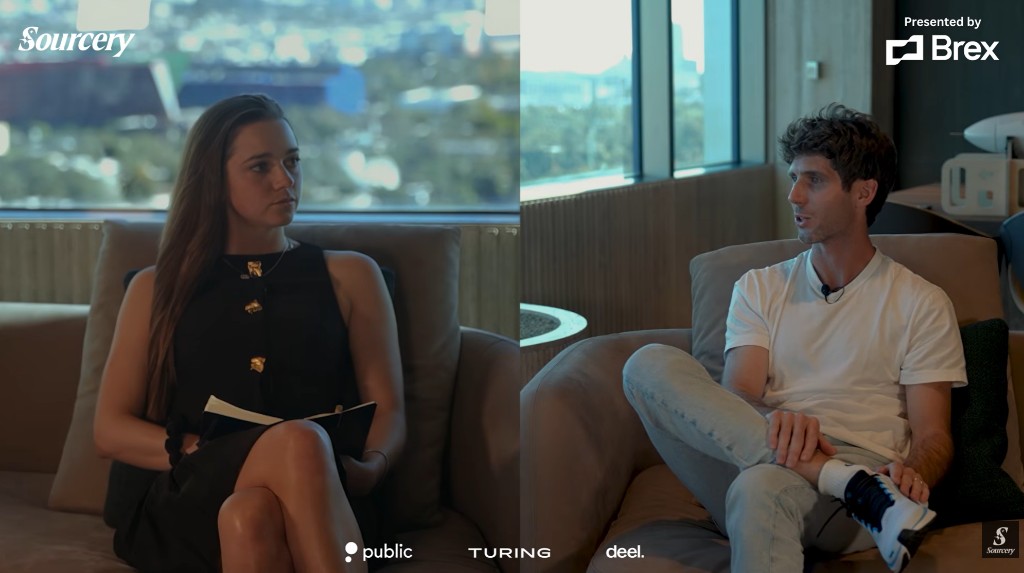
Below is the full interview:
SpaceX IPO and Space Data Centers
Host Molly: Let's start with the upcoming IPO of SpaceX. I think many people are eager to participate. I'm curious about the internal workings that are happening. The latest news is that there will be data centers in space. So, what should people know about SpaceX?
Shaun: That's a great question. I'm honored to be a major investor in the company, and I want to state upfront that I see this as a huge responsibility, so I try not to share information that I believe is not public yet, but I'm good at packaging information that is public because I follow it very closely. Look, I personally believe SpaceX is the greatest company of all time. I think this company is just getting started. I have many other great portfolio companies, but I would say SpaceX is not on the same level as all the others. And being involved is very exciting, like launching rockets into space.
For me, one lesson from observing how Elon builds the company is that he focuses on bottlenecks and the most important things, and once those start to smooth out, he begins to focus on what you can do with that. An example is that the company didn't really start seriously looking into Starlink until November 2018, which was two years after they achieved reusable flight with Falcon 9. So my impression is that he intuitively understands, and the company understands, that Falcon 9 has passed that huge, challenging stage of achieving reusability, and they know that there will be more launch capacity in the coming years, so it was finally time to start thinking about what to do with that extra capacity, and that's when they really started taking Starlink seriously.
I think there have been some developments regarding space data centers in the last six months or so. It's very similar; just like you need Falcon 9 to become reliable. I believe Elon and the company have gained a lot of confidence that Starship will achieve reliable flight and reusability this year or by 2026. That's my strong feeling. Soon, probably within two years, I think the company will basically have excess capacity. It's like they can launch all the Starlink data satellites they want, all the direct-to-phone satellites they want, and there may still be excess launch capacity in 2028 or 2029 So on one hand, you start to think about what else we should do to fill the capacity that will come in about three years. On the other hand, we all know what is happening in the AI field. We are limited by power, constrained by regulations, which may be more restrictive. This surplus of launch supply combined with the Starship coming online, along with this extreme urgency on Earth, makes the company seriously consider: Can we really do data centers in space? Is it mathematically feasible?
I mean, Elon has publicly talked about this many times, and the answer is yes. The public hasn't seen the complete argument yet, hasn't seen the mathematical calculations, but I just want to say that I think the math is very compelling, and I believe space data centers—about six months ago I was on the TBPN show, and at that time I said I wasn't saying I didn't believe in space data centers. I said macro-wise it makes sense, I'm not sure if it makes sense micro-wise. For example, I haven't finished all the mathematical calculations. I can now say that I have done the calculations, and I think it will be absolutely huge.
Molly: Is that the big algorithm we talked about when we came in?
Shaun: I don't even know which algorithm it is.
Molly: You have a huge whiteboard over there. That's crazy.
Shaun: Unfortunately, you know, I didn't use that whiteboard, so that's not mine. That's someone else's.
Starlink's Business Model and Direct-to-Phone Service
Molly: Among these things, I also want to talk about Starlink. Can you break down this business for those who are not familiar?
Shaun: Of course. Starlink is an incredible business. Currently, the first wave of Starlink is primarily providing consumer internet from space to rural areas. Simply put, the way it works is you launch a rocket. The initial V1 version launches about 60 Starlink satellites each time. So you have these satellites in the sky, and we have now gone through two or three generations after that. So we have about 9,000 satellites in space now.
These satellites can communicate with each other using laser links. So they transmit massive amounts of data back and forth in the constellation, you know, at the level of terabits per second. Then you have this huge space infrastructure, and on the ground, people have user terminals, which are small dishes about 10 inches or 12 inches wide, known as phased array antennas. Basically, it's a beam of radio waves that you can control to lock onto a satellite, and every 20 seconds or so switch from one satellite to the next as it moves out of sight.
Okay. Basically, you just need these ground terminals at your home, in your car, or elsewhere, or on an airplane. Now you have these satellites up there. Data is transmitted from the satellites to the ground and transmitted in space, and we have basically built a system equivalent to all the long-distance fiber optic cables on Earth. If you go back to around 1999, Global Crossing was a big deal. They laid fiber optic cables across the Atlantic Ocean and made a lot of money by transmitting data. Now, the equivalent of those fiber optic cables is in space You don't need cables because it's just lasers communicating with each other in free space.
So, this is really the best way to transmit mobile data over long distances in history. Starlink is now transmitting a large portion of long-distance data in the world. So anyway, the consumer business is the first act, and then it starts to enter the enterprise business. The aviation industry is one of the earliest markets to perform well. I think the aviation industry will— we're seeing this now. Qatar Airways was one of the first airlines to sign up, and United Airlines has also signed on. If I remember correctly, JSX was actually the first airline to sign up. We're igniting this fire, and when people get on planes using Starlink and have this magical experience, I think many times they realize, especially if you live in rural areas, that the Starlink internet on the plane is much better than the wired internet or dial-up you have, or whatever else, depending on where you specifically live. So I think more and more people are learning about and purchasing Starlink this way.
And now there is a new product, the government product Starshield, which comes after that. The latest product in the Starlink family is "Direct to Cell." This is cellular service from space, which is quite crazy. Initially, Direct to Cell was designed for... technically it works anywhere, but SpaceX is limited in how much data it can transmit to densely populated cities. Starlink has a strange characteristic; compared to ground networks, when you set up a base station tower, you only have coverage within a few miles around the tower. But Starlink satellites have coverage everywhere they pass in their orbit. So many times it passes over deserts or oceans or sparsely populated areas.
So we have excess bandwidth capacity in remote areas, while there is a shortage in dense cities. So Direct to Cell was initially developed in collaboration with many global operators, with T-Mobile in the U.S. being the first. When T-Mobile's signal is poor or coverage is low, they can switch to the Starlink network, and data will be transmitted directly from space to your phone. So basically, these satellites are mimicking and spoofing mobile base stations. This will be absolutely... SpaceX just announced that by the end of last year, they had 9.2 million subscribers on the core Starlink consumer side, as well as 6 million Direct to Cell subscribers. Direct to Cell is growing very quickly. When we look five years ahead, all my investment estimates suggest that Direct to Cell could be larger than the initial consumer internet business.
Molly: What are the economic benefits behind this? Can it even be compared to other businesses?
Shaun: Yes. The economic benefits are incredibly good. There are some very mature analysts who have given their estimates. I might know too much, but I just want to say that the profit margins are extremely high, and the unit economics are very strong. It's like Africa making a leap in mobile communications; they didn't lay fixed phone lines everywhere but went straight into the mobile era Starlink is truly a leapfrog technology. You don't need ground infrastructure, so we see schools in Ghana using Starlink to help children learn. In any case, the unit economics are very good. I think all of this will be disclosed in the S-1 filing, and the unit economics are incredibly good.
Molly: When we interviewed David Sacks, we put a red buzzer button under one of the hats, and whenever he didn't want to comment on something, he would press it. I could only accept "no comment." But that was a good answer.
Shaun: Yes, I'm trying, you know, to give you something.
Molly: Maybe this would be an interesting question: What are the unintended consequences of unleashing the internet and cellular networks on the world? I've noticed this at least when flying. United Airlines, I think that's fake, but...
Shaun: Well, the penetration rate isn't very high yet. Definitely not. I think within about 9 months, most of United's fleet will be upgraded, but they install Starlink when the planes undergo annual or semi-annual maintenance. So you have to wait until the planes reach their scheduled maintenance window.
Molly: I think that's a good thing.
Shaun: Yes, that's a good thing.
The Combination of Starlink with Autonomous Driving and Future Mobility
Molly: What unintended consequences do you think all this access—Starlink combined with autonomous vehicles and future mobility—will have?
Shaun: Yes, I call it "ubiquitous internet." Look, I think this is going to be crazy, and I think it will feed back into many other Elon companies. For example, when you have a self-driving Tesla, and now you pair it with Starlink—whether it's directly connecting to your phone or they put a dish antenna on the roof, in the future I don't know why they wouldn't just embed the dish antenna in the car, because then you have a larger, optimized radio device.
Imagine you're in the car, you have Starlink, your car is self-driving, you have perfect internet everywhere, your car starts to become your living room, you're doing Zoom calls, or watching sports, or chatting with grandkids or whatever. It's like we're heading to a place where there's internet everywhere. Optimus (the robot) will use this.
You know, military drones will use this. Kids in Africa will use this. We already—my point is that SpaceX does a great job of providing Starlink basically for free whenever there's a major natural disaster anywhere in the world because all the ground facilities, usually power and cellular communication, go down.
In any case, this is just an incredible resilient data transmission layer, better in many cases than all previous ground methods, not in all cases, especially in urban areas, but in most cases. This is really cool
SpaceX's Future Roadmap and Vertical Integration
Molly: What excites you the most about SpaceX? Is it Starship, direct phone connectivity, or the roadmap for the next decade? What does it feel like to visit Starbase? What is it like to invest in this company?
Shaun: Well, I have to say the atmosphere at the company right now is incredible. The team knows they are on the edge of history, and everything before this has just been a warm-up. It really is like a toy compared to what’s coming in the next five years. Everyone at the company understands this.
First is Starship; 2026 should be the year of Starship. I don’t think people will fully realize what 2026 means. When you look five years ahead, it will really change many industries. Then I think around 2028, it will be the year of direct phone connectivity. SpaceX has already talked about this publicly, but it takes time. You know, they just acquired some spectrum. It takes time to get antennas and phones optimized for that spectrum. They need a lot of V3 satellites in space, but by 2028, this will be the main space cellular service. I don’t know exactly when the space data center will start. But I think this will be—this is one of the biggest market opportunities ever.
Then at some point in the near future, they will land infrastructure on the Moon and Mars, and eventually land Optimus on Mars, followed by humans. All of this is happening faster than people think. So, yes, look, yesterday I was at SpaceX in Hawthorne, and in two days I’m going to Starbase. It’s crazy; when you go to Hawthorne now—when I first went to Hawthorne, I thought, wow, this is the most amazing place I’ve ever seen. It’s a real rocket factory. And now after visiting Starbase, Hawthorne feels small and old... like comparing a Super Nintendo to a modern PC.
I hope others can experience the scale of the infrastructure that SpaceX is building. Lastly, I want to mention the level of vertical integration happening within the company. I think this might be the most vertically integrated manufacturing company in the U.S. That’s why things like space data centers can happen very quickly, astonishingly quickly.
Comments on Musk and xAI
Molly: Is SpaceX the first Elon company you invested in?
Shaun: Yes, I first invested in 2019, you know, accumulating about $1.2 billion. In all the different funds, this position is worth about $12 billion today, based on an $800 billion valuation. So hopefully its value will far exceed this in the IPO. But I really feel this is just the very early stage of the company. After that, I was lucky to invest in most of the other companies, and I’m extremely optimistic about all of Elon’s companies I think he is still extremely undervalued.
Molly: Do you think Elon is undervalued?
Shaun: 100%. It's not that... I would say he only gets about 10% of the appreciation he deserves.
Molly: What was the initial process of getting into SpaceX like? Because I can't imagine the environment was as enthusiastic back then as it is now.
Shaun: No, look, I know this sounds crazy, but in 2019, investing in SpaceX was a highly contrarian investment. It was hard to convince people to do it. Even I didn't really believe it the year before. I know this sounds crazy today, but in 2019, SpaceX was just a launch company. They had 13 launches that year. The total global launch market, I would say, was about a $5-6 billion addressable market in 2019.
At that time, people thought the theoretical maximum EBITDA (Earnings Before Interest, Taxes, Depreciation, and Amortization) margin for the launch business was about 40%. So if you captured 100% of the market, the potential EBITDA would be about $2 billion. This is an industry that requires a lot of capital expenditure investment and depreciated assets, so if you captured 100% of the market, you would probably only have $1 billion in profit. And the company's valuation in 2019 was $36 billion. So investing at a theoretical maximum return of 36 times, if you couldn't find another market, you wouldn't have much growth, and people thought that was crazy or stupid.
When I say "people," there were also some visionary investors who invested early on. I believe credit should be given where credit is due, like Founders Fund, Valor, Vy, and today’s Steve Jurvetson from DFJ. Some people understood the long-term potential much earlier than I did. But in 2019, it was indeed very contrarian, or extremely contrarian.
Additionally, at that time, Elon—when we first invested, Tesla's market cap was about $70 billion. That was shortly after the "production hell," and the external perception was not as it is today. For Starlink, basically all previous internet constellations had failed. If there’s anything I can take credit for, it’s that with my physics background and some knowledge of communications, I was able to understand that Starlink would actually work a year before it really did, and knew what questions to ask to really evaluate the investment.
So that's it. It was a strange moment; people basically valued Starlink at zero because previous internet constellations had failed, and assumed the launch market wouldn’t grow, while Starship was essentially given zero value. So I don't know, there was a strange period of about two years where it was undervalued. Then after Starlink reached about $1 billion in revenue—very quickly, probably within 12 months of their first revenue—they achieved an annualized revenue of about $1 billion At that point, it became an extremely consensus-driven investment. So there were a couple of strange years when you could buy a lot of stocks, and people didn't understand at the time. Now, it's like, good luck finding stocks; no one wants to sell, and this will—I'm very excited about the IPO. It will be quite incredible.
Molly: How do you think that initial caution, or hesitation about the business, and having those early supporters influenced Elon in bringing in new investors? Because I feel like it's a very tight-knit circle.
Shaun: Yes. Look, that's also one of the reasons I speak very carefully; I don't want to say anything that's not public yet. I think to operate at the scale Elon does, he needs to trust the people around him as much as possible. Trust that people will—when you're as aggressive as he is, there will always be times when things don't look as good—people need to be patient during tough times and be very trustworthy about the information on the roadmap. So yes, it's a pretty small group, and I'm lucky to have invested in most of his companies.
Molly: How did you get into the other companies? What was the process like?
Shaun: I mean, once you start working with SpaceX and meet other people, that's basically it. Really, the teams at the other companies are just as excellent. They're just in the early stages of their development cycles.
Molly: Which of the other companies do you think is the most undervalued?
Shaun: To be honest, I think they are all severely undervalued right now. I think xAI is severely undervalued. It makes sense; its revenue scale is obviously much smaller compared to OpenAI, Anthropic, Google, but it surprises me how people don't understand how fast this company is growing. You just need to look at the derivative of progress.
And look, I think the bottleneck for reasoning will be power. Even if you have the best model in the world, if you can only meet 1% or 2% of market demand, your growth rate and expansion opportunities will be severely limited. I just think xAI will—Elon is the best in the world at atoms (hardware/physical world), and I think atoms will be the decisive factor in the AI race. The way Elon builds companies is different from others. The way I describe it is that he builds potential energy and then converts that potential energy into kinetic energy. Many other companies immediately convert potential energy into kinetic energy once they have it. The super factories Elon builds might not produce any cars or revenue for five years and then suddenly start making a million cars.
You know, like SpaceX took nearly a decade to go from Falcon 9 to Falcon 9 reusable and then very quickly launched Starlink. Now they have spent nearly a decade on Starship, and today Starship's revenue is zero, but that will turn into an incredible number. Just like xAI, they have been building the world's largest coherent training cluster, and they are not really focused on monetizing it right now. To me, it's a bit crazy that people haven't understood this model yet It's not that I am bearish on other foundational model companies. I just believe that xAI will shock people with its rapid scale. But I am optimistic about all companies. I am optimistic about Boring Company. I am optimistic about Neuralink. Tesla is a publicly traded company, so I won't comment on Tesla, but I am really crazy optimistic about all of them.
AI Capital Expenditure and IPO Topics
Molly: What are your thoughts on the massive spending in this category?
Shaun: I think it's rational.
Molly: Okay.
Shaun: A year ago, I might have had a more pessimistic view on this spending. I think a lot has happened that has made me more optimistic and believe it's rational. One of the ironic things is that I think SpaceX's IPO will actually help all private companies this year, including AI companies, because it creates a lot of liquidity and attracts a lot of capital into the tech space, and people will—this will only create a lot of liquidity that can go into the next wave of AI company building.
Additionally, there are rumors that Anthropic will go public in 2026. I think this will also catalyze more funds into this category. It's very important that I just believe we have reached a point—I think we have reached AGI (Artificial General Intelligence). There are different definitions, but I believe we have absolutely reached such a point: in most fields of mathematics, physics, or computer science, the best models outperform the average PhD students from top research projects.
So, I think the economic value we are about to achieve will be so extreme. We are already seeing this in the programming field, which may be the first true vertical. Then, like the next-generation Google equivalent on the consumer side, the next generation of search, just asking any question—like my son has eczema, being able to ask relevant questions and get a lot of ideas from different models—this is very useful and has already replaced a lot of behaviors for me and many people on Earth. But I think the whole field is becoming increasingly useful at an extremely fast pace, proving the rationality of capital expenditure. This is my personal view.
Molly: I hope there will be many liquidity events in the future.
Shaun: I think the liquidity events in '26 will be significant, and I think it's very important for keeping the whole party going.
Molly: Yes, that's interesting. I just interviewed Snowflake's CEO Sridar, and I asked him—he's a great guy, very interesting.
Shaun: Yes, that's great. I want to give a shout-out to my partners Pat Grady and Carl Eschenbach. They led an amazing investment in Snowflake, which is truly an incredible investment. They invested $100 million at a $1 billion valuation a few years before the IPO Molly: But one question I asked him is, what do you think about this huge private lockup? Do you think these companies should go public? If you want to know the answer, you have to listen to that episode. But I'm curious about your perspective. As we move into— I also asked Vlad (Robinhood CEO) this question because he is the king of retail investors.
Shaun: I actually took a graduate math class with Vlad back when I was a kid at Stanford.
Molly: Really?
Shaun: Yes, Real Analysis Math 205 ABC, taught by Brian White, the professor who wore koala shirts every day. Anyway, I've watched Vlad all the way, he's a legend.
Molly: So, do you think we've passed the "stay private forever" phase, and are we now actually in the "let's go public, it's good for you" phase? Vlad said it's actually much better than you think.
Shaun: Yes. Look, I think it really depends on the specific company and timing. For SpaceX, this data center opportunity has arisen, creating an incredible catalyst for going public, and given our demand, I think it's 100% the right thing for the company. Then there are other companies, like Stripe, where I think it makes sense for them to stay private right now. So I think it really depends on the specific company and how much capital you need.
Ultimately, I think if you're a good company, the public market is almost always a better source of funding than the private market, but if you're private, you have more control and flexibility to make very long-term investments. So it's a trade-off between getting capital and having flexibility for long-term planning. But I hope we see more companies going public earlier. I mean, as an investor, I have a bias; you need liquidity events to keep the whole industry running. So I hope SpaceX's IPO can catalyze some of those companies. I think a lot of people look at SpaceX as an example and say they've stayed private, so I can stay private too.
Molly: Totally agree.
Shaun: I hope their going public can catalyze a lot of companies. It's like, if you're still private after over a billion dollars in annual revenue and profitability or after a Series Q funding round, you'd better have a really good reason.
Wealth Creation and Corporate Culture
Molly: Given your risk exposure from early-stage to growth-stage and SpaceX's IPO, I think this is an interesting situation here in Los Angeles. This will be the biggest wealth creation event in a long time.
Shaun: It's the same in Texas.
Molly: It's the same in Texas, but since we're in Los Angeles and you're an investor in many companies here. First, what unexpected consequences do you think this will have on productivity here? I've talked to some founders who are a bit worried because some of their employees own Shaun: 0.7% of the shares, you know. I don't... I think in most companies, that somewhat undermines the culture. I don't think that will happen at SpaceX because SpaceX is such a mission-driven company. As I said before, the next five years and the five years after that will have the coolest milestones ever. Many people on this team have been working towards this. I mean, some have worked for this for 20 years, and many have worked for the past 5 or 10 years. It's like, when we're about to send humans to the Moon and Mars, why slow down or retire?
I think the reasons for working hard at SpaceX transcend the missions of most companies. I think it isolates a lot of the bad behaviors that come from sudden wealth—like if you work at a social media app company and now you're rich. It's like, well, I can continue to provide kids with AI junk content or go play on my giant yacht. Sorry, this is not directed at any particular company; it's just a general statement. This is really just a statement of values, and SpaceX's mission is one of the coolest and purest missions in the history of any company. So I think it somewhat transcends the typical incentive systems.
Molly: Given that this is also a huge wealth creation event in Los Angeles and Texas. Sequoia is a very large investment firm with many exit cases. How do you prepare founders and founding team members for these liquidity events? Do you have any wealth advice?
Shaun: I don't... honestly, I don't have a prepared answer; nothing comes to mind immediately.
Molly: Even psychologically.
Shaun: The psychological aspect is the most important. I've had many customized conversations with individual founders, tailored for them. I'm really not worried about SpaceX's situation. As for SpaceX, I think these people will use their money to do the most amazing things. You know, there's a meme that many tech billionaires' wives go off to do all these NGOs and bad causes, frankly.
I think SpaceX will be the complete opposite. The people who have been there the longest and made the most money are those who have stayed the longest. And those who have been there for over 15 years have had to fight with environmental organizations, had to fight with physics. They have been making hardware. They had to be very frugal. This has already become a culture of preparedness. These people are naturally frugal. They are also naturally driven by what I think are very positive things. Most of the people who joined SpaceX 15 years ago did so for the mission. They did it because they love space, they want to build rockets, they want to work with their hands, they want to keep America competitive in the space industry, and so on.
It's like self-selection; I think most of the early people there didn't think it would become such a big company. They weren't doing it to get rich; they got rich very slowly and with very real skills and experiences in the real world—like how much design in this world is done to take money and do bad things So no matter what, I think this group of people—I think we will see more beautiful travertine sculptures in the city, just for public art. I actually have two good friends, or rather good friends, who were early employees at SpaceX. They might become artists, that's their passion.
I think we will see something real—this will not be like any other tech wealth creation event, simply because of the nature of what the company is doing, how slowly it happens, that people are not there to make money, and the hardships they went through to get to where they are now. It will be wonderful. Get ready for more truly positive and quirky things.
For example, I hope, you know, I went to Burning Man about 10 years ago. Some very good friends in my camp created something they called the "Movable Feast." It was a mobile dining table. Basically, it either had a motor that you drove, or you could pedal it. To get on this "Movable Feast," you had to wear black tie attire. So we would dress up, along with a few others in the camp. Some were participants, some volunteered as servers, and we really just sat at this mobile dining table, moving around the desert in our formal wear, enjoying a three or four-course meal.
I know this sounds absolutely silly, but it was so whimsical and so much fun. When you put 8 to 10 people in this very unique, crazy, just-for-fun environment, it's a lot of fun, and you connect with people. I think we will see a lot of this kind of physical whimsy from the SpaceX crowd. More inventions, a lot of things.
Molly: Okay, that sounds like a healthy wealth creation.
Shaun: I think this is—I really believe this is the healthiest wealth creation event in history.
Risk Warning and Disclaimer
The market has risks, and investment requires caution. This article does not constitute personal investment advice and does not take into account the individual user's specific investment goals, financial situation, or needs. Users should consider whether any opinions, views, or conclusions in this article align with their specific circumstances. Investing based on this is at your own risk.
