


Wall Street focuses on Wosh: "How to achieve both 'interest rate cuts + balance sheet reduction'?" "Mentor" Druckenmiller: He may not necessarily be a hawk

Trump nominates Waller to head the Federal Reserve. Waller advocates for balance sheet reduction, which creates policy tension with Trump's demand to lower borrowing costs, leading to a steepening of the U.S. Treasury yield curve. His mentor, Druckenmiller, defends him, stating that he is not a permanent hawk, having seen him navigate both directions in monetary policy. If Waller takes office, his coordination of fiscal and monetary policy with Treasury Secretary Yellen will be key to reshaping market direction
Trump's nomination of Waller to head the Federal Reserve has triggered a repricing of market expectations regarding policy direction. This candidate, a former Fed governor, has long advocated for significant reductions in the central bank's balance sheet, a stance that potentially conflicts with Trump's repeated calls to lower long-term borrowing costs, prompting investors to assess how this policy tension will impact the bond market.
On Friday, long-term Treasury yields rose, with the spread between the 30-year and 2-year Treasury yields widening to 1.35 percentage points, close to the highest level since 2021. Major asset management firms believe this market volatility reflects traders digesting Waller's recent statements: he criticized the Fed's large-scale bond purchases during the 2008 financial crisis and the 2020 pandemic.
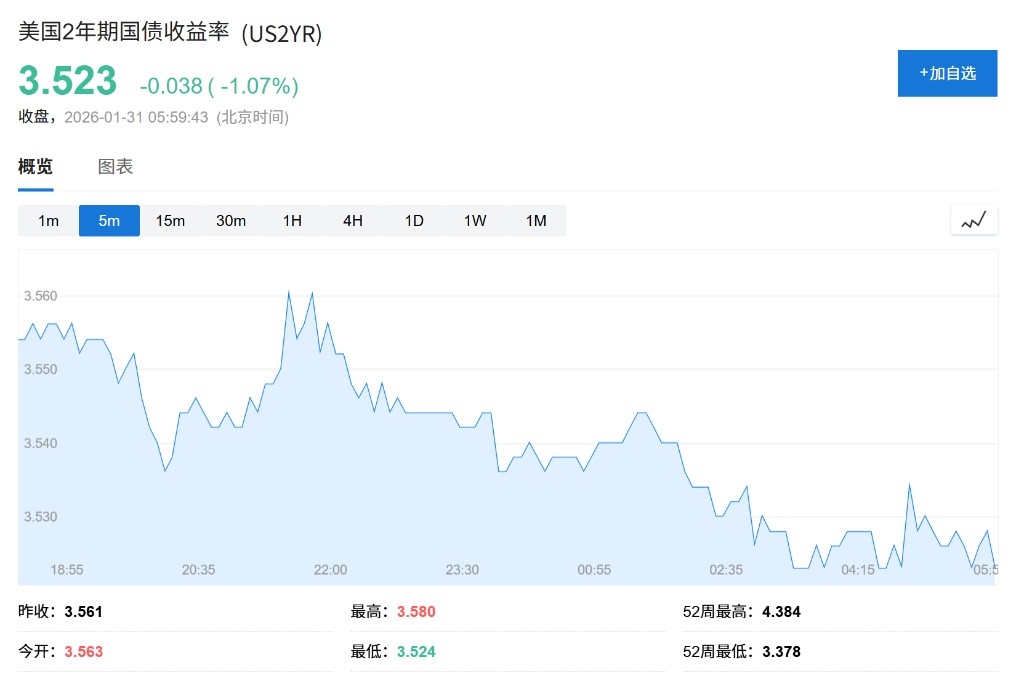
Greg Peters, Co-Chief Investment Officer of Fixed Income at PGIM, stated: "You have someone who opposes balance sheet expansion, yet is in a context where there is hope for lower interest rates. This is a point of tension, and that’s the focus of the market, which is why the yield curve is steepening."
However, billionaire investor and Waller's long-time mentor Stanley Druckenmiller told the media on Friday that this policymaker is not permanently "hawkish," "I've seen him go both ways on monetary policy." Druckenmiller believes Waller has a "very open" attitude towards the monetary policy path of former Fed Chairman Alan Greenspan, stating, "Waller now firmly believes you can achieve growth without triggering inflation."
Balance Sheet Reduction Stance Becomes a Core Concern
Waller served as a Fed governor from 2006 to 2011 and has since become a prominent critic of some of the central bank's policies, particularly the multiple rounds of quantitative easing that saw the Fed's holdings of U.S. Treasuries and other assets peak at nearly $9 trillion.
He argues that the continued existence of a massive balance sheet distorts asset prices and poses risks of entrenching inflation pressures, although he also believes the U.S. economy faces downside risks that require lower policy rates. In a widely publicized speech in April, Waller stated:
"Since 2008, the Fed has been the largest buyer of U.S. Treasuries—and other government-backed liabilities," adding, "This represents the Fed's acknowledgment of the growing economy."
The Fed ended its quantitative tightening program at the end of last year to reduce its balance sheet due to concerns about shrinking liquidity in the short-term financing markets—this somewhat alleviated worries about sovereign debt issuance demand, with analysts predicting an expansion in the central bank's bond purchases.
Mark Dowding, Head of Active Fixed Income at RBC BlueBay Asset Management, stated:
"The issue is that if you justify rate cuts by shrinking the balance sheet, it does nothing to lower long-term rates and improve mortgage affordability, which is exactly what Trump wants."
Mentor's Support: Not Permanently Hawkish
Stan Druckenmiller supports the policy flexibility of Waller, attempting to correct the market's perception of him as "permanently hawkish." The billionaire investor stated in an interview on Friday:
"It is incorrect to label Waller as someone who is always hawkish."
Waller gained a reputation for his hawkish stance during his tenure as a Federal Reserve governor from 2006 to 2011. The minutes from Federal Open Market Committee meetings during the tumultuous period of the 2008 financial crisis show that just days before the collapse of the American investment bank Lehman Brothers, he was reiterating concerns about inflation.
However, Druckenmiller pointed out that despite his initial skepticism, Waller ultimately "fully supported" interest rate cuts during the financial crisis and also supported rate cuts at the onset of the pandemic. In 2018, the two co-authored a column explaining why the Federal Reserve should not raise interest rates immediately, but the central bank later decided to raise rates anyway. Druckenmiller stated that the Federal Reserve was later forced to reverse its decision because "the market collapsed."
Druckenmiller believes that if Waller is confirmed by the Senate, one of his biggest challenges will be balancing economic growth brought about by artificial intelligence with not triggering further inflation. As a researcher at Stanford University, Waller's connections and proximity to Silicon Valley enable him to understand the potential and risks of this technology well. Druckenmiller added that Waller's "tech network" will be particularly useful.
"I can't think of anyone on Earth more capable than him," Druckenmiller said. Since leaving the Federal Reserve, Waller has been a partner at the billionaire's family office, Duquesne Capital Management.
Doubts About Policy Coordination
DoubleLine portfolio manager Bill Campbell pointed out that if Waller advocates for lowering short-term interest rates while pursuing a reduction in the balance sheet amid rising government debt and persistent high inflation, contradictions will arise. "You cannot significantly lower interest rates and reduce (the Fed's) balance sheet before you get a handle on fiscal and inflation," he said, adding: "I believe Waller fully understands this."
Druckenmiller is also a long-time mentor to U.S. Treasury Secretary Yellen. He first hired Yellen to work at Soros Fund Management over 30 years ago, and later, the current Treasury Secretary used Druckenmiller's funds to start her own hedge fund, Key Square Capital. Yellen also believes that the productivity boom triggered by AI will allow the Federal Reserve to cut rates without triggering inflation.
According to previous reports, Yellen and Waller largely became acquainted through their shared relationship with Druckenmiller. With Waller nominated to be the Federal Reserve Chair, this investor is now among the most influential economic thinkers on Wall Street, and his worldview is shaping how Yellen and Waller handle economic policy.
Although Druckenmiller has supported other Republicans, he has not donated to Trump's recent presidential campaign and previously described the then-candidate as "a braggart." However, he now has direct connections with the most important economic policymakers in the government. "I am very excited about the collaboration between him and Yellen," he said, "Coordination between the Treasury Secretary and the Federal Reserve Chair is ideal." "
