


The Federal Reserve will welcome a supply-side reformer - How to understand Walsh's monetary policy framework?

Trump nominates Kevin Warsh as the new chairman of the Federal Reserve, marking the end of the Powell era. Warsh has experience in the Federal Reserve and government, has a close relationship with Trump, and has high political feasibility. He advocates for reducing market impact through balance sheet reduction, believes that AI will have a significant impact on productivity, and supports interest rate cuts. His monetary policy framework emphasizes interest rate cuts, balance sheet reduction, and regulatory easing. Although he criticizes quantitative easing, the purpose of balance sheet reduction is to better facilitate interest rate cuts and control inflation expectations
Trump nominates Warsh as the new Federal Reserve Chairman: On January 30th, Eastern Time, Trump officially nominated Kevin Warsh as the Chairman of the Federal Reserve, marking the imminent end of the "Powell Era," which has lasted nearly eight years since Jerome Powell took office in 2018. Although procedurally, the Federal Reserve Chairman still needs to go through Senate hearings and confirmations, the practical resistance to Warsh's approval is not high. Warsh has a background in serving within the Federal Reserve and the government, has a relatively close relationship with Trump, and is trusted by other Republicans, making his nomination for Federal Reserve Chairman politically more feasible compared to Waller and Rieder. Additionally, Warsh's judgment on lowering the neutral interest rate to around 3% aligns with Powell's thinking, which also suggests that the possibility of Powell remaining in office as a board member is low. However, due to his ideas on interest rate cuts and balance sheet reduction, the market views him more as a "hawkish" candidate, but for Trump, loyalty takes precedence over pure academic credentials, and Warsh's dovishness may not be significantly weaker than that of other potential candidates.
A reformer on the supply side: From Warsh's perspective, he leans more towards the supply side. In terms of monetary supply, he hopes the Federal Reserve will reduce its impact on the market through balance sheet reduction, and the restoration of the Federal Reserve and fiscal credibility will stabilize inflation expectations, subsequently allowing credit generation and liquidity to be provided more by market institutions and investors under deregulation. In terms of the economy, he believes that AI has a significant supply-side breakthrough effect on productivity, which can support more interest rate cuts while stabilizing inflation.
Warsh's views and labels are "interest rate cuts + balance sheet reduction + deregulation + strong dollar": Warsh's approach and objectives regarding balance sheet reduction, as well as the coordination between monetary policy and the Treasury, require deeper interpretation. His framework is not a contradictory combination of large-scale balance sheet reduction and significant interest rate cuts, but rather a coherent monetary policy philosophy.
(1) Federal Reserve balance sheet and QE: Warsh has historically criticized quantitative easing (QE), but this does not mean he will massively reduce the various assets held by the Federal Reserve after taking office. Based on his understanding of the relationship between money, fiscal policy, and inflation, the essence of balance sheet reduction is still to facilitate better interest rate cuts and control inflation expectations.
(2) The relationship between money and fiscal policy: Warsh believes that the Treasury should collaborate with the Federal Reserve while respecting monetary policy, clearly and prudently describing the future size of the balance sheet and the goals to be achieved to the market. However, the cooperation between the Federal Reserve and the Treasury may also mean that without Bessent's consent and cooperation, Warsh will not initiate large-scale quantitative tightening.
(3) Inflation: For Warsh, "inflation is a choice." His discussion on balance sheet reduction is essentially aimed at controlling inflation by managing the money supply and stabilizing inflation expectations, meaning that balance sheet reduction is beneficial for stabilizing inflation expectations. Warsh will not refuse to cut interest rates due to concerns about recent inflation risks, and he has also expressed that advancements in AI that enhance productivity will support higher growth under stable inflation.
(4) Financial Regulation: Warsh is similarly aligned with Trump on the relaxation of regulations. If Warsh were to lead the Federal Reserve, potential policies he might consider include adjustments to the Supplementary Leverage Ratio (SLR) to boost demand for U.S. Treasuries, lowering regulatory standards for small and medium-sized banks to increase credit creation, and modifying the standards for stress testing financial institutions.
(5) U.S. Dollar: Compared to Trump's recent "welcome" stance on a weaker dollar, Warsh supports a relatively strong dollar and believes that the strength of the dollar comes from an increase in real returns.
How do "interest rate cuts, balance sheet reduction, and a strong dollar" form a coherent framework? Although Warsh's monetary policy thinking differs from the modern monetary policy theory of the "establishment," its logic is internally consistent. Warsh believes that if the Federal Reserve's balance sheet size is not controlled, even with interest rate cuts, the market's long-term risk-free rate may remain high due to concerns about excess liquidity and fiscal monetization. What he hopes for is: (a) a reduction in the size of the balance sheet in the medium to long term -> (b) a smaller balance sheet, combined with clear guidance from the Treasury, leads to a decrease in concerns about inflation and unrestrained fiscal expansion -> (c) market inflation expectations and term premiums remain stable or decrease -> (d) at this point, further lowering interest rates becomes more credible, enhancing economic growth by encouraging private credit creation rather than relying on the central bank to continuously provide liquidity. On this basis, a relatively strong dollar can be achieved in the medium to long term.
Ideals are grand, but even if Warsh takes office for 26 years, significant balance sheet reduction may be difficult; MBS reduction may be more feasible: From a practical operational perspective, Warsh may not be able to implement significant balance sheet reduction in the short term as he wishes; if a balance sheet reduction is to begin, it is more likely to first involve a reduction of MBS (mortgage-backed securities) on the Federal Reserve's balance sheet in coordination with Fannie Mae and Freddie Mac. The current issue facing the market is that, with the U.S. deficit being relatively high, the issuance of U.S. Treasuries continues to expand, but after the overnight reverse repurchase (ONRRP) liquidity is exhausted, the purchasing volume of U.S. Treasuries by domestic and foreign market investors begins to lag behind the issuance speed. For Warsh, stabilizing liquidity in the Treasury market is of utmost importance, especially as Trump faces midterm election pressures and does not ease fiscal expansion. On one hand, regulatory reforms can encourage banks to increase their holdings of U.S. Treasuries through SLR exemptions, but if large-scale balance sheet reduction begins in mid-2026, the demand for U.S. Treasuries may struggle to keep up with supply, leading to new liquidity issues in the monetary and Treasury markets. Therefore, the probability of large-scale balance sheet reduction occurring in 2026 is not high How to view monetary policy? We tend to believe that Warsh's dovishness will not be much weaker than that of Hassett and Waller, and he has the ability to push for at least a 75 basis point rate cut by 2026, bringing the upper limit of interest rates back to around 3.00%, with an optimistic scenario allowing for 100 basis points of space. However, if inflation rebounds in 2027 due to fiscal expansion and geopolitical issues, the risk of Warsh raising interest rates again would be higher than that of other candidates, but this should not be a concern for 2026.
Short-term nominal interest rate curve steepening risk vs. long-term real interest rate curve steepening: If the market trades Warsh as slightly more hawkish than other candidates regarding balance sheet reduction, then while short-term U.S. Treasury yields decline due to rate cut expectations, there remains a risk of a short-term rebound in long-term U.S. Treasury yields. However, for Warsh's monetary policy framework, the long-term potential impact may be the "steepening of real U.S. Treasury yields," while nominal long-term U.S. Treasury yields may actually have room to decline after inflation and fiscal expectations stabilize. Although the Federal Reserve's balance sheet reduction may slightly push up term premiums, in Warsh's view, the subsequent recovery of the Federal Reserve's and fiscal credibility and further stabilization of inflation expectations will bring about a greater decline in term premiums. Considering that the market's pricing of the Federal Reserve's rate cut expectations (currently around 50 basis points for 2026) is not very sufficient, U.S. Treasury yields still have downward opportunities from a full-year perspective in 2026, and if the 10-year U.S. Treasury reaches above 4.3%, it will also provide good trading opportunities.
Regarding the U.S. dollar, Warsh pays more attention to the strength of the dollar globally. Although this does not mean that the dollar index can rebound significantly during a rate cut cycle (and as non-U.S. interest rate differentials narrow), after the dollar index weakened significantly due to Trump's remarks and the short-term sharp appreciation of the yen, there is room for a further slight rebound in the short term. For the whole year, the central tendency of the dollar index in 2026 should be lower than in 2025, and after rate cuts in the second half of the year, the central tendency may enter below 95. As for the equity market, a Federal Reserve chairman advocating for rate cuts is not bad news, and their relaxed regulatory stance may further boost confidence in the capital markets and increase liquidity. In the context of AI narratives and the high probability of U.S. corporate nominal profits being maintained, although the attractiveness of U.S. stocks compared to non-U.S. equity assets decreases in 2026, nominal returns remain considerable.
Asset performance review: The CME FedWatch Tool shows that expectations for a rate cut in March have further cooled, and the market's pricing for rate cuts throughout the year has converged to 2 times. The interest rate market showed mixed results, with the 2-year U.S. Treasury yield down 2.54 basis points to 3.52%, and the 10-year U.S. Treasury yield up 0.42 basis points to 4.25%. The dollar index strengthened by 1%, closing at 97.12. The three major U.S. stock indices fell simultaneously, with the Dow Jones Industrial Average down 0.36%, the S&P 500 down 0.43%, and the Nasdaq index's decline widening to 0.94%. The precious metals market was severely impacted, with COMEX gold dropping 8.35%, London gold spot down 9.25%, and COMEX silver falling by 25.20% The independence of the Federal Reserve may not be "absolutely necessary": From international experience, central bank independence has never been a "fixed parameter" written in legal texts, but rather a system equilibrium gradually formed through the long-term interaction of fiscal sustainability, the intensity of political cycles, and the way the economy operates. There are central banks with very strong independence, like the German central bank, as well as those like the Bank of Japan that are more willing to meet political and fiscal demands. Under the influence of Trump and the potential impact of Warsh, the Federal Reserve may also explore paths different from those of the past few decades; however, the overarching trend of fiscal influence on monetary policy currently seems difficult to reverse.
Risk Warning: The risk of unexpected liquidity issues in the U.S. market; the risk of Trump’s policies exceeding expectations and stimulating inflation; geopolitical risks impacting financial stability.
1. Warsh's "rate cuts + balance sheet reduction" is not as hawkish and contradictory as it seems
Due to the opposition from many American economists and establishment figures against the Trump administration's Justice Department issuing a subpoena to Federal Reserve Chairman Powell and threatening criminal prosecution, the likelihood of Hassett, who is too closely tied to Trump, being confirmed by the Senate Banking Committee has significantly decreased. This may also be an important factor leading to the relatively dovish policy stance and the exit of Hassett, who is most trusted by Trump, from the race for Federal Reserve Chairman. In this context, Warsh, who has a background in both the Federal Reserve and the government, has a relatively close relationship with Trump and is also trusted by other Republicans, has a higher political feasibility compared to Waller and Rieder.
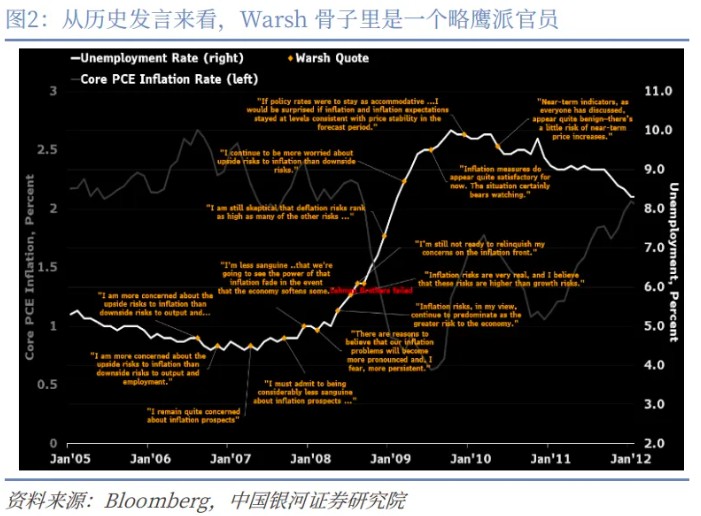
Whether from the perspective of comparing views with other Federal Reserve Chair candidates or market pricing, Warsh is relatively more hawkish. Although Warsh may not strongly support rate cuts and risk-friendly policies like Hassett, considering Trump's expectations and the overall framework mentioned by Warsh, he is unlikely to have adverse effects on risk assets and precious metals in the medium to long term, even though the market will still price Warsh's slightly hawkish ideological framework in the short term. Below, we first list Warsh's overall views:
(1) What are Warsh's main views? "Rate cuts + balance sheet reduction + regulatory easing + strong dollar"
Overall, Warsh's label is "rate cuts + balance sheet reduction + regulatory easing + strong dollar." Of course, his approach and purpose regarding balance sheet reduction, as well as the degree of coordination between monetary policy and the Treasury, require deeper interpretation. His framework is not a contradictory combination of large-scale balance sheet reduction and significant rate cuts, but rather a coherent monetary policy philosophy.
 (1) The Federal Reserve's Balance Sheet and QE and QT: Warsh's famous assertion about quantitative easing (QE) is that it is a "reverse Robinhood" style plunder of the working class by the wealthy. The Federal Reserve artificially lowers risk-free interest rates, harming the interests of the working class who hold fewer financial and physical assets, while significantly benefiting the wealthy who hold assets; this distorts the price discovery mechanism in financial markets, leading more funds to flow into financial management and speculation rather than into productivity-enhancing investments like industrial production. From this perspective, Warsh's thoughts align with Trump's re-industrialization of America. However, Warsh's opposition to QE should not be simply understood as a comprehensive and large-scale reduction of various assets held by the Federal Reserve after he takes office; this issue needs to be interpreted in conjunction with his views on the relationship between monetary and fiscal policy. At the same time, for Warsh, the essence of balance sheet reduction is still to facilitate a better and more stable interest rate cut.
(2) The Relationship Between Monetary and Fiscal Policy: The Federal Reserve bears some responsibility for fiscal profligacy, but Warsh supports a form of the "Federal Reserve-Treasury Agreement" similar to that of 1951, ensuring smooth coordination between fiscal and monetary policies. The agreement reached in 1951 ended the Federal Reserve's practice of maintaining low interest rates at the Treasury's request to reduce federal borrowing costs. Of course, Warsh refers more to the cooperation between the Treasury and the central bank, rather than refusing to assist the Treasury's financing through interest rate cuts or balance sheet expansion. In an interview in July 2025, Warsh stated, “(This) is about coordinating with the Treasury on the goals that the Federal Reserve deems important—how to pursue these goals and how to present them to the market. In this sense, it will be a collaborative effort.” The Federal Reserve Chair and the Treasury Secretary can clearly and prudently describe the future size of the balance sheet and the goals they hope to achieve to the market. On one hand, Warsh does not support the Federal Reserve using continuous balance sheet expansion as the main means to support ongoing fiscal financing, hoping to downplay the Federal Reserve's balance sheet presence in the market; but on the other hand, cooperation with the Treasury also means that without Bessent's consent, Warsh would not initiate quantitative tightening, and temporary liquidity measures like RMP are completely acceptable as long as the signal transmission is correct.
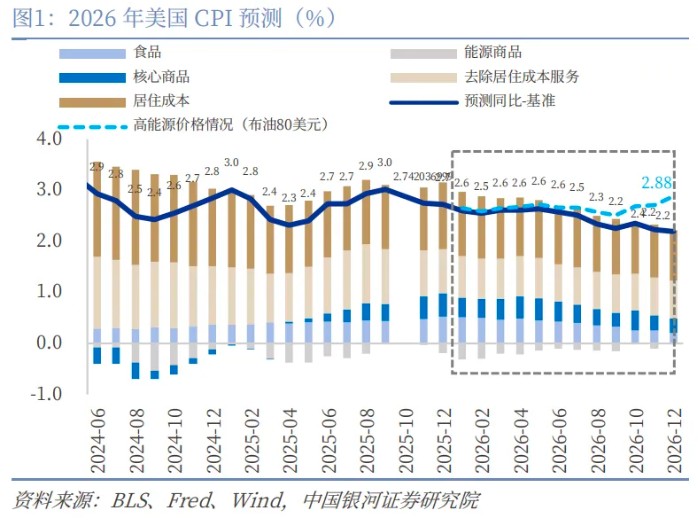
(3) Inflation: For Warsh, "inflation is a choice," which is to some extent influenced by Friedman’s monetarist views. Although this sounds somewhat hawkish, Warsh's discussion on balance sheet reduction is essentially aimed at controlling inflation by managing the money supply and stabilizing inflation expectations, meaning that balance sheet reduction is beneficial for stabilizing inflation expectations. Warsh would not refuse to cut interest rates due to concerns about recent inflation risks; he has also expressed that in the context of AI enhancing productivity, such supply-side advancements would support higher real growth rather than inflation. However, it should be noted that if inflation unexpectedly rebounds in 2027, the likelihood of Warsh tightening monetary policy is indeed higher than that of Hassett and other candidates **
(4) Financial Regulation: Warsh is also highly consistent with Trump in terms of loosening regulations. Warsh has consistently criticized the Dodd-Frank Act, which strengthens financial regulation, and the stringent Basel III capital requirements, arguing that they lead to the concentration of credit resources in large financial institutions, making it more difficult for small businesses and wage earners to obtain loans, which is detrimental to credit creation. Policies that Warsh's Federal Reserve may consider include adjustments to the Supplementary Leverage Ratio (SLR) to boost banks' demand for U.S. Treasuries, lowering regulatory standards for small and medium-sized banks to increase credit creation, and modifying the standards for stress testing financial institutions.
(5) The Position of the Dollar: Compared to Trump's recent "welcome" view on the weakening dollar, Warsh supports a relatively strong dollar, with its strength stemming from an increase in real returns. During his tenure as a Federal Reserve governor, Warsh understood that the dollar's status as a "global currency" is not inherent but relies on the comprehensive strength of the United States, whether it be excellent innovation capabilities, sound monetary and fiscal policies, or a stable inflation environment. For Warsh, the growth of real returns is strongly correlated with the strength of the dollar, meaning that through AI and other financial regulatory reforms, U.S. growth can be more vibrant in a stable inflation context, thereby maintaining the dollar's strong position and uniqueness.
(II) How do "Interest Rate Cuts, Balance Sheet Reduction, and a Strong Dollar" Become a Coherent Framework? Warsh's Supply-Side Reform
Although Warsh's policy mix sounds somewhat "contradictory," further analysis reveals that while his monetary policy approach differs from the MMT (Modern Monetary Theory) "establishment," the logic is internally consistent.
On the surface, balance sheet reduction generally implies a tightening of monetary policy and liquidity, while interest rate cuts encourage market liquidity creation; it is rare to see both conditions coexist, which is also somewhat contradictory for the dollar's trend. So how can we understand this monetary policy framework that differs from MMT? Warsh states that the Federal Reserve's balance sheet is too large, weakening the clarity and credibility of monetary policy; if the "printing press quiets down," it can actually achieve lower policy interest rates.
This means that Warsh believes that if the size of the Federal Reserve's balance sheet is not controlled, even if interest rates are cut, the market's long-term risk-free interest rates may remain high due to concerns about excess liquidity and fiscal monetization. In other words, if the Federal Reserve maintains a large balance sheet, further QE combined with interest rate cuts may raise inflation expectations and term premiums Therefore, Warsh's vision of "interest rate cuts + balance sheet reduction" is not a simultaneous and chaotic process. What he expects is (1) to reduce the size of the balance sheet in the medium to long term -> (2) a smaller balance sheet, combined with clear guidance from the Treasury, leads to a decrease in concerns about inflation and unchecked fiscal expansion -> (3) market inflation expectations and term premiums remain stable or decrease -> (4) at this point, further interest rate cuts can be made, making low rates more credible and enhancing economic growth by encouraging private credit derivation rather than relying on continuous liquidity provision from the central bank.
On this basis, favorable factors such as the credibility of U.S. Treasuries, stability of inflation expectations, growth brought by AI, and actual returns in the U.S. (rather than just an increase in nominal returns under high inflation) will attract capital inflows into the U.S., achieving a relatively strong dollar in the medium to long term.
(3) If Warsh takes office, will he immediately push for balance sheet reduction? How might it be reduced?
Although Warsh's theoretical framework hopes to release sufficient signals regarding balance sheet reduction before implementing more effective interest rate cuts, in practical terms, it may not be possible to significantly reduce the balance sheet in the short term; if balance sheet reduction is to begin, a more likely approach would be to first cooperate with Fannie Mae and Freddie Mac to reduce the MBS (mortgage-backed securities) held on the Fed's balance sheet, and once market expectations and yields stabilize further, attempt to adjust the U.S. Treasuries held by the Fed.
From Treasury Secretary Bessent's experience, there remains a significant gap between "what one wants to do" and "what one can do." Bessent had criticized the previous Treasury Secretary Yellen's policy of increasing short-term debt issuance and the proportion of existing short-term debt multiple times before taking office. However, after Bessent took office, due to the continued high U.S. fiscal deficit and concerns about the stability of long-term debt and re-inflation triggered by Trump's statements and tariff policies, Bessent had to maintain a relatively high level of short-term debt issuance to ensure smooth financing for the Treasury and prevent excessive pressure on long-term U.S. Treasury yields. This also means that for both the Federal Reserve and the Treasury, the stability of the U.S. financial market and liquidity security are the top priorities. If balance sheet reduction or adjustments to the structure of Treasury issuance affect the stability of the financial market, then these policy visions may not be implemented on a large scale.
From the liquidity challenges in the U.S. Treasury market at the end of 2025 and the U.S. fiscal situation, the short-term pattern of purchasing U.S. Treasuries through RMP (Reserve Management Purchases) and providing liquidity to the market is unlikely to change significantly, and it indirectly shows that even if Warsh can take office smoothly, the overall situation in the U.S. in 2026 may not support large-scale QT-style balance sheet reduction. The current issue facing the U.S. Treasury market is that, with a high deficit, the issuance of U.S. Treasuries continues to expand, but after the overnight reverse repurchase (ONRRP) liquidity is exhausted, the purchasing volume of U.S. Treasuries by domestic and foreign market investors begins to lag behind the issuance speed, which has also led to SOFR briefly exceeding the upper limit of the interest rate corridor, the IORB (Interest on Reserve Balances), at the end of 2025. In this case, with no further motivation for overseas investors and domestic banks to absorb newly issued U.S. Treasuries, the Federal Reserve can only act as a marginal liquidity provider once again Mitigating liquidity issues through RMP has indeed proven effective.
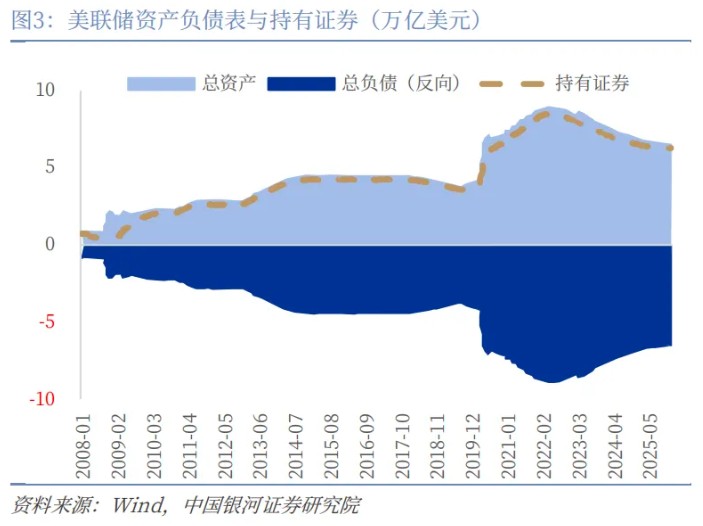
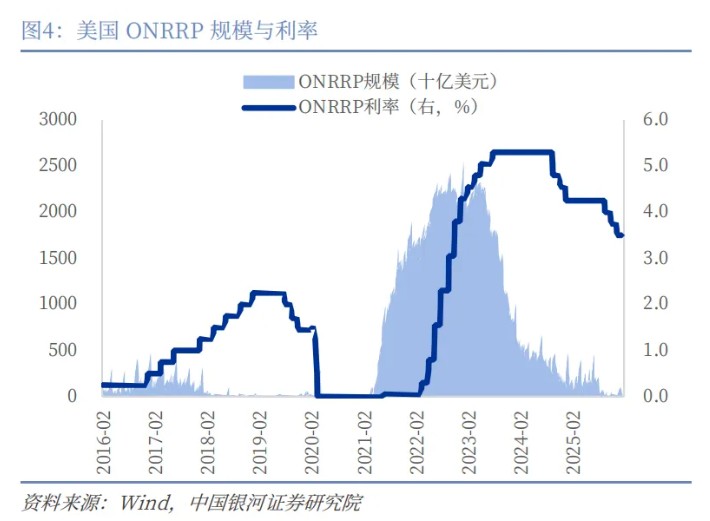
For Warsh, stabilizing liquidity in the U.S. Treasury market is paramount, especially as Trump faces midterm election pressures without easing fiscal expansion. On one hand, regulatory reforms can encourage banks to increase their holdings of U.S. Treasuries through SLR exemptions, but if large-scale balance sheet reduction begins in mid-2026, the demand for U.S. Treasuries may struggle to keep pace with supply, leading to new liquidity issues in the money market and U.S. Treasury market, which would not benefit Warsh's long-term policy goals.
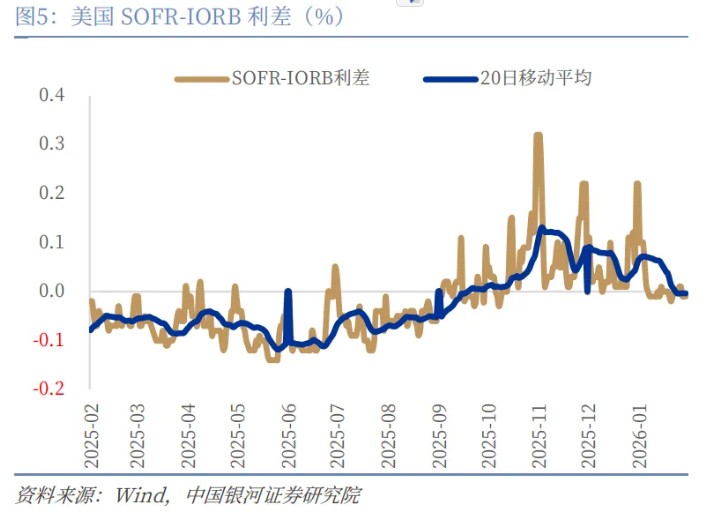
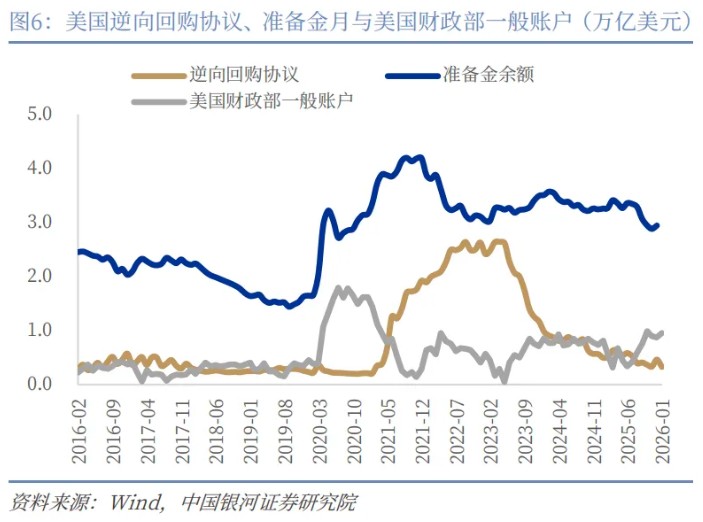
Therefore, if Warsh intends to reduce the balance sheet at the outset of his tenure, decreasing the Federal Reserve's holdings of MBS (mortgage-backed securities) while allowing the "two housing enterprises" to cooperate in purchasing may be a better approach. Firstly, this policy aligns with President Trump's policy thinking. At the beginning of 2026, Trump expressed a desire for Fannie Mae and Freddie Mac to purchase approximately $200 billion in MBS to lower mortgage rates and improve housing affordability. Subsequently, the Federal Housing Finance Agency (FHFA) confirmed that the "two housing enterprises" had initiated the purchase of about $3 billion. Treasury Secretary Bessent stated that the core goal of the MBS purchase plan is to roughly match the Federal Reserve's current pace of MBS balance sheet reduction (approximately $15 billion/month). Warsh's plan to reduce the balance sheet complements Bessent's MBS purchase plan and aligns with the Trump administration's core demand to lower mortgage rates without engaging in quantitative easing. Therefore, Warsh is unlikely to immediately push for large-scale reduction of U.S. Treasuries (the market may not have the capacity to bear this), and reducing MBS is a more appropriate option.
(4) Under Warsh's governance, how should we view monetary policy and U.S. assets in the short and long term?
In terms of monetary policy, there is no need to overly worry about Warsh's previously hawkish stance. Firstly, the Federal Reserve chair nominated by Trump will likely execute his core demand for "interest rate cuts." At the same time, Warsh's "balance sheet reduction" concept ultimately aims for better interest rate cuts. He also believes that productivity improvements driven by AI will reduce inflation risks, making further rate cuts feasible. Therefore, we tend to think that Warsh's dovish stance will not be much weaker than that of Hassett and Waller, and he has the ability to push for at least a 75 basis point rate cut by 2026, bringing the upper limit of interest rates back to around 3.00%, with an optimistic scenario still allowing for 100 basis points of space. However, if inflation rebounds in 2027 due to fiscal expansion and geopolitical issues, the risk of Warsh raising rates again would be higher than that of other candidates, but this should not be an issue for 2026.
In terms of assets, the U.S. Treasury market may be most visibly affected by Warsh's vision. In the short term, due to Warsh's slightly hawkish stance, there is a small steepening space for nominal U.S. Treasury yields. If the market trades Warsh's slightly hawkish balance sheet reduction stance compared to other candidates, then while short-term U.S. Treasury yields may decline due to rate cut expectations, there remains a risk of short-term recovery in long-term U.S. Treasury yields. However, for Warsh's monetary policy framework, the long-term potential impact may be the "steepening of real U.S. Treasury yields," while nominal long-term U.S. Treasury yields may actually have room to decline after inflation and fiscal expectations stabilize.
Specifically, although the Federal Reserve's balance sheet reduction may slightly push up term premiums, in Warsh's view, the subsequent recovery of the Federal Reserve's and fiscal credibility and further stabilization of inflation expectations will bring about a greater decline in term premiums. If Warsh's policy is successful, the yield curve of real U.S. Treasury yields (i.e., TIPs) will further steepen, meaning that U.S. Treasuries will provide higher real returns in the long term due to stronger economic growth expectations. However, from a nominal perspective, long-term U.S. Treasuries benefit from lower short-term rates and are also supported by stable inflation expectations and the recovery of monetary authority credibility, leading to lower term premiums. Therefore, nominal long-term bond yields are not pessimistic in the medium to long term. Considering that the market's pricing of the Federal Reserve's rate cut expectations (currently around 50 basis points for 2026) is not very sufficient, U.S. Treasury yields still have downward opportunities from a full-year perspective in 2026, and if the 10Y U.S. Treasury reaches above 4.3%, it will also provide good trading opportunities.
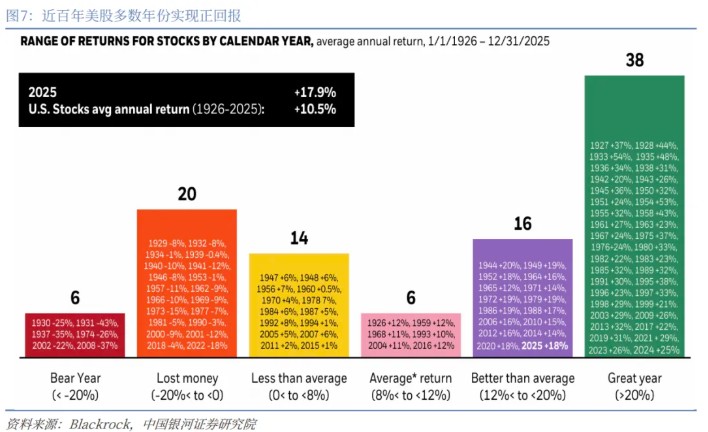
Regarding the U.S. dollar, Warsh pays more attention to the dollar's strength globally. Although this does not mean that the dollar index can significantly rebound during a rate cut cycle (and as non-U.S. interest rate differentials narrow), there is short-term room for a further slight rebound after the dollar index weakened significantly due to Trump's remarks and the short-term sharp appreciation of the yen. For the whole year, the central tendency of the dollar index in 2026 should be lower than in 2025, and after rate cuts in the second half of the year, the central tendency may fall below 95. As for the equity market, a Federal Reserve chairman who promotes rate cuts is not bad news; their relaxed regulatory attitude may further boost confidence in the capital market and increase liquidity. Therefore, in the context of AI narratives and the high probability of maintaining nominal profits for U.S. companies, although the attractiveness of U.S. stocks compared to non-U.S. equity assets decreases in 2026, their nominal returns remain considerable.
Risk Warning and Disclaimer
The market has risks, and investment requires caution. This article does not constitute personal investment advice and does not take into account the specific investment goals, financial situation, or needs of individual users. Users should consider whether any opinions, views, or conclusions in this article are suitable for their specific circumstances. Investment based on this is at one's own risk.
