


Goldman Sachs and Citigroup evaluate Apple's financial report: Performance exceeds expectations, 2.5 billion active users are expected to support a new cycle for iPhone

Apple's Q1 performance for fiscal year 2026 was impressive, with revenue of $143.8 billion and a record high gross margin, driven by strong iPhone demand that significantly boosted the Chinese market. Goldman Sachs and Citigroup are both optimistic about the long-term service potential brought by its 2.5 billion active devices and look forward to new products such as foldable screens and AI Siri to stimulate growth. Despite facing pressure from tariffs and component costs, investment banks still maintain a target price of over $315, optimistic about the valuation premium driven by AI strategy
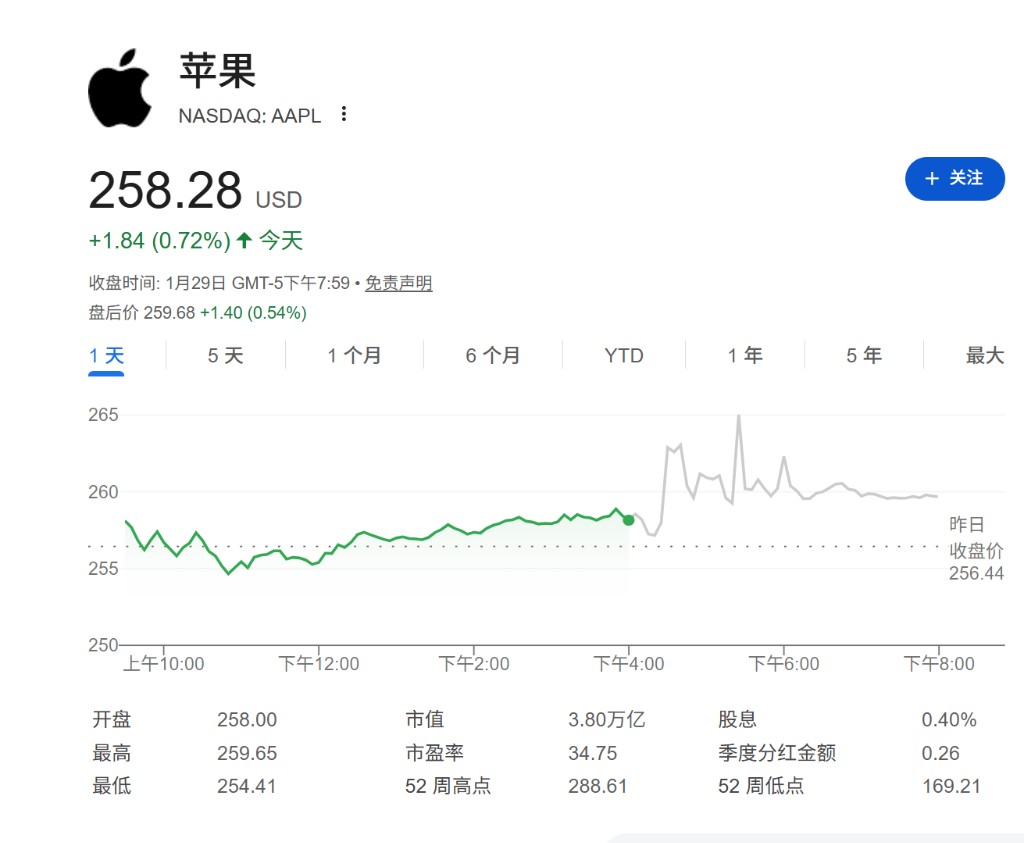
Apple Inc.'s fiscal year 2026 Q1 performance significantly exceeded expectations, with strong iPhone sales and record profit margins driving the stock price up about 2% in after-hours trading. Wall Street investment banks are generally optimistic about the growth potential of service revenue resulting from the installed base of Apple devices surpassing 2.5 billion, as well as the stimulating effect of new products like the foldable iPhone on the upgrade cycle.
Apple's quarterly revenue announced on January 29 reached $143.8 billion, a year-on-year increase of 16%, surpassing the company's previous growth guidance of 10-12% and exceeding market expectations of $138.4 billion. Earnings per share were $2.84, exceeding market expectations of $2.67. iPhone revenue was $85.3 billion, a year-on-year increase of 23%, far exceeding the market expectation of $78.2 billion.
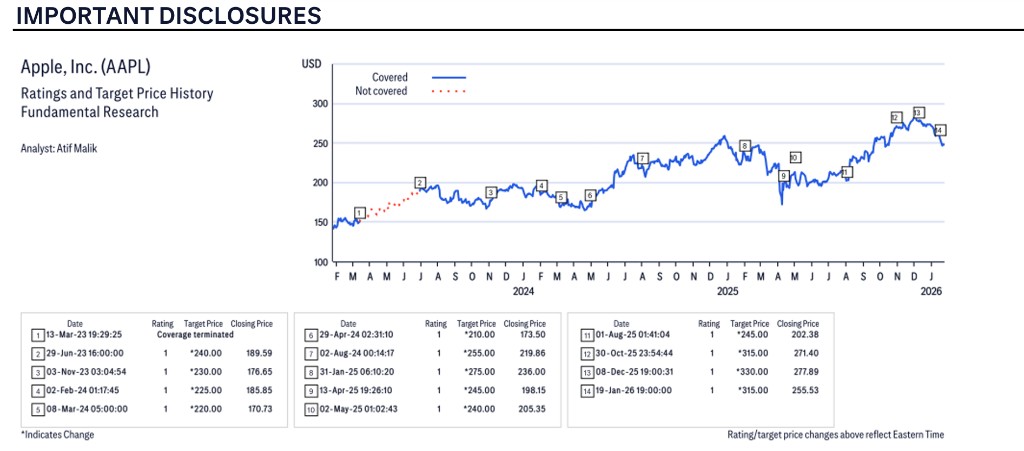
According to news from the Wind Trading Desk, Goldman Sachs maintained a buy rating after the earnings report, with a target price of $320. According to a report from Goldman Sachs analyst Michael Ng's team, the company's gross margin reached a historic high of 48.2%, with both product and service business gross margins setting records. Citigroup maintained a buy rating with a target price of $315, with analyst Atif Malik's team noting that the active device installed base exceeding 2.5 billion supports future growth.
The better-than-expected performance boosted market confidence in Apple's AI strategy and product cycle. Investors will focus on how Apple addresses cost pressures from tariffs and the progress of the personalized AI Siri and collaboration with Google Gemini set to launch in the spring.
Strong iPhone Performance, Impressive Growth in China Market
Goldman Sachs' report shows that Apple's iPhone revenue reached $85.3 billion, a year-on-year increase of 23%, far exceeding Goldman Sachs' expectation of $78.0 billion and the market consensus of $78.2 billion. Goldman Sachs had previously expected a 13% year-on-year growth for iPhone, but the actual performance significantly outperformed expectations. Revenue from the Greater China region grew by 38% year-on-year, setting a historical high for upgrade users in mainland China, while the conversion of users (from other brands to iPhone) achieved double-digit growth.
In other product lines, Goldman Sachs reported that Mac revenue was $8.4 billion, below Goldman Sachs' expectation of $9.1 billion and the market expectation of $9.3 billion, a year-on-year decline of 7%. iPad revenue was $8.6 billion, exceeding both Goldman Sachs and market expectations of $8.1 billion, with a year-on-year increase of 6%. Revenue from wearables, home, and accessories was $1.15 billion, below Goldman Sachs' expectation of $1.21 billion and the market expectation of $1.22 billion, a year-on-year decline of 2%.
Goldman Sachs analysts stated in the report that the company guided for "double-digit growth" for iPhone, while the actual performance significantly exceeded this expectation. The focus of investors will be on how Apple addresses higher component costs, the outlook for iPhone demand in global and Chinese markets, the product update cycle, and the development of Apple Intelligence
Record Gross Margin Becomes a Highlight
Goldman Sachs reports that Apple achieved multiple gross margin records in the first fiscal quarter. The overall gross margin reached 48.2%, exceeding Goldman Sachs' expectation of 47.7% and the market consensus of 47.4%. The product gross margin reached 40.7%, surpassing Goldman Sachs' expectation of 39.9% and the market expectation of 39.4%; the service gross margin reached 76.5%, exceeding Goldman Sachs' expectation of 75.5% and the market expectation of 75.6%. This is the first time in Apple's history that both product and service gross margins have set records simultaneously.
Goldman Sachs pointed out that the gross margin of $6.92 billion exceeded the expected $6.55 billion and the market expectation of $6.56 billion. Operating expenses were $1.84 billion, in line with the company's guidance, but increased by 19% year-on-year, reflecting increased investment in research and development.
According to Citigroup's report, the company's guidance includes $1.4 billion in tariff-related costs, with a gross margin guidance range of 47-48%. How to manage commodity cost inflation and its impact on margins will be a focus of market attention.
2.5 Billion User Base Supports Future Growth
The active device installation base has become a key factor for investment banks to be optimistic about Apple's long-term prospects. According to Goldman Sachs' report, the active installation base of all devices has surpassed 2.5 billion, exceeding Goldman Sachs' expectation of 2.45 billion and performing better than expected.
Goldman Sachs believes that the record installation base should support the sustained momentum of the iPhone product cycle, such as new products like foldable iPhones. The large user base provides a solid foundation for service revenue growth and the promotion of new products.
According to Goldman Sachs' investment theory, Apple's brand loyalty has created a continuously growing installation base, providing visibility for revenue growth, reducing customer churn rates, lowering customer acquisition costs for new products and services, and encouraging repeat purchases. Most of the gross profit growth over the next five years should be driven by the service business.
Citigroup's report lists seven key points of concern from the earnings call: strategies to cope with higher component costs, the outlook for iPhone demand globally, especially in China, and the replacement cycle, growth drivers for the service business, AI developments including significant upgrades to Siri and the Gemini collaboration, tariff situations and impacts, the 2026 new product launch plan, and CEO succession plans.
Investment Banks Maintain Positive Ratings, Focus on AI Progress
Goldman Sachs maintains a buy rating with a 12-month target price of $320. According to Goldman Sachs' report, the target price is based on a 34 times price-to-earnings ratio of the company's NTM+1Y earnings per share. Goldman Sachs believes that Apple stock should rise driven by iPhone-driven revenue exceeding expectations and record profit margins.
Citigroup maintains a buy rating with a target price of $315. According to Citigroup's report, the target price is based on a 33 times price-to-earnings ratio of the expected earnings per share in 2027, which is about a 20% premium to Apple's historical levels. Citigroup believes the premium is reasonable, reflecting gross margin expansion excluding tariff impacts, an increase in service sales proportion, gradual adoption of Apple Intelligence, and a strong balance sheet.
 AI strategy has become a focus for institutions. According to a Goldman Sachs report, the collaboration with Google Gemini and the anticipated launch of a more personalized AI Siri this spring will be focal points. A Citigroup report indicates that Apple's AI development progress includes the upcoming major overhaul of Siri, the Gemini collaboration, and changes in leadership.
In terms of risks, the Citigroup report highlights key risks including a potential weakening of the macro economy or shifts in consumer demand that could lead to an unexpected slowdown or contraction in the smartphone market, uncertainties in US-China relations that may impact the supply chain, regulatory risks such as the European Digital Markets Act, and the cautious increase in holdings by institutional investors due to the weighting of market index stocks
