


Intervention signal arrived? New York Fed's "rate check" ignites the yen, 147-149 becomes the new focus range

The United States conducted an "interest rate check" through the New York Federal Reserve and issued a strong "verbal intervention" warning in coordination with Japan, directly leading to a single-day drop of over 4% in the USD/JPY exchange rate and triggering significant volatility in the options market. This move is seen as a significant shift in the U.S. attitude towards the foreign exchange market, with its deterrent effect far exceeding Japan's unilateral actions. The market is urgently pricing in the possibility of a joint intervention by the U.S. and Japan, viewing the 147-149 range as a key support level for the yen's mid-term trend
The global foreign exchange market is receiving a significant signal. A "verbal intervention" action involving the U.S. central bank, targeting the yen, is forcing traders to reassess the outlook for the dollar/yen and prepare for potential coordinated currency intervention. This marks a possible significant shift in the U.S. attitude towards the foreign exchange market.
At the core of the action is the "rate check" conducted by the New York Federal Reserve on behalf of the U.S. Treasury last Friday. This move has been widely interpreted by the market as the strongest "verbal" warning that the U.S. and Japan may coordinate to support the yen. Japanese Finance Minister Shunichi Suzuki subsequently stated that the government is responding to exchange rate fluctuations in accordance with the spirit of the U.S.-Japan joint statement, further strengthening speculation about coordinated actions between the two countries.
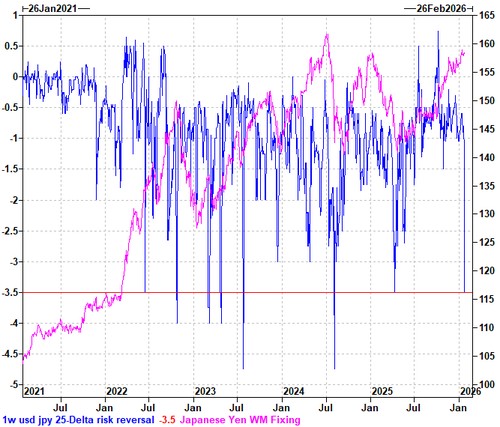
This event quickly stirred the foreign exchange market. The dollar/yen exchange rate plummeted from a high of 159.23 on Friday, briefly falling below the 154 mark on Monday morning, marking one of the largest single-day declines of the year. The options market also reacted sharply, with short-term volatility expectations soaring, indicating that traders are urgently pricing in potential intervention risks.
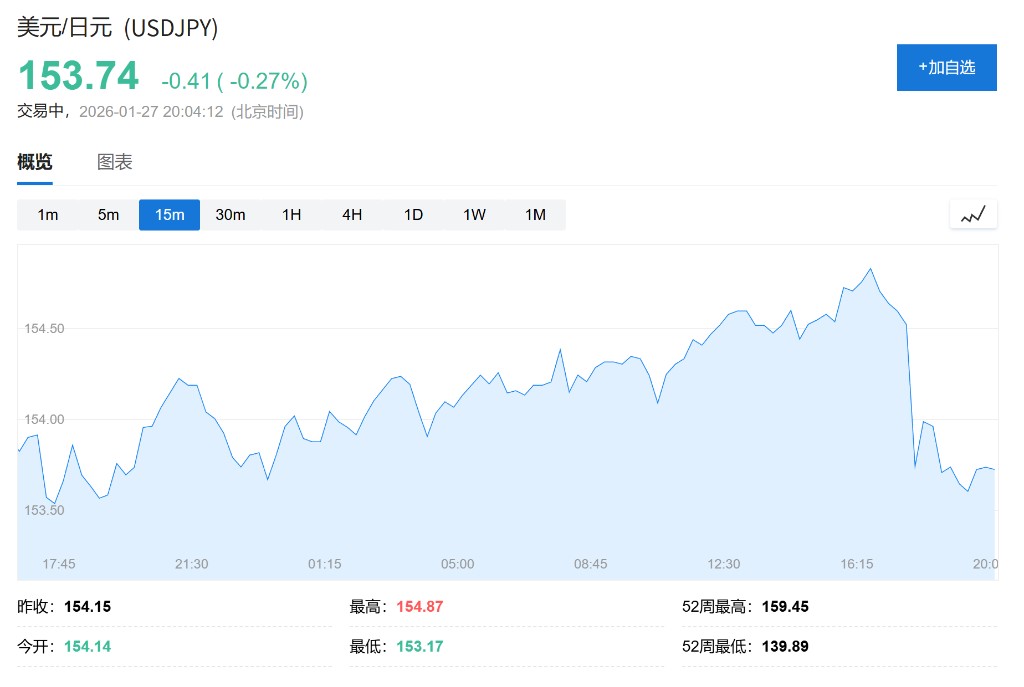
The market impact was immediate. Analysts pointed out that U.S. involvement greatly enhanced the credibility of the intervention threat, forcing a large number of yen short positions to be hurriedly closed. The effect of this "verbal intervention" has far exceeded the unilateral actions of Japanese authorities in recent years, signaling that a new phase of foreign exchange competition, led by U.S.-Japan coordination, may be beginning.
What is a "Rate Check": The Strongest Verbal Intervention Signal
A "rate check" refers to the action of a country's central bank or monetary authority inquiring about foreign exchange buying and selling quotes from major commercial banks. This is not an actual transaction, but its signaling significance is extremely important, usually seen as an official direct warning of serious dissatisfaction with exchange rate trends and the potential for actual action at any time.
According to Bloomberg, Goldman Sachs forex trader Adam Crook pointed out that a high-profile "rate check" is the most powerful policy tool aside from actual intervention, and if it fails, actual intervention often follows within a week. The uniqueness of this signal lies in the involvement of the U.S. The action by the New York Federal Reserve indicates that intervention has shifted from Japan's unilateral concerns to a potential U.S.-Japan bilateral coordinated action.
Historical data shows that the probability of actual intervention following a "rate check" is very high. The most recent "rate check" reported occurred during the intervention period in July 2024, and the previous one was on September 14, 2022, when Japanese authorities implemented yen-buying intervention about a week later. The fact that the Federal Reserve conducted the check is viewed by the market as having greater symbolic significance and deterrent power than before.
Market Reaction: Short Positions Retreat and Options Market Repricing
The threat of intervention immediately reversed market sentiment and capital flows. The dollar/yen exchange rate fell sharply, with increased volatility during trading. More importantly, the behavior patterns of market participants underwent a fundamental change.
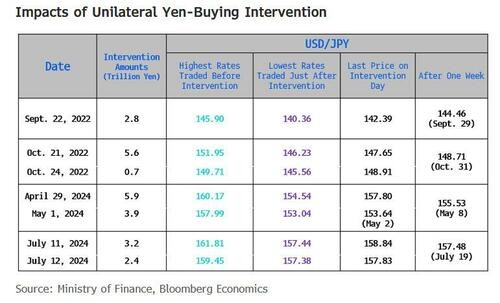
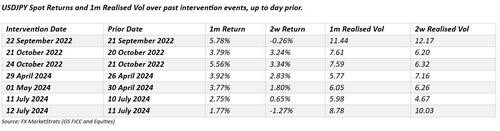
Goldman Sachs trading desk pointed out that the previous market strategy of "buying USD/JPY on dips below 154" has completely disappeared. Trader Kristian Brauten-Smith stated that there is currently little interest in buying USD/JPY, limited to taking profits on existing cash short positions. This shift in sentiment has led to heavy upward pressure on the exchange rate.
The reaction in the options market has been even more pronounced. According to Reuters, last Friday afternoon, the USD/JPY short-term risk reversal indicator (1-month 25 Delta risk reversal) closed at 3.5 volatility, indicating that the market paid a high premium to guard against a significant short-term appreciation of the yen. Goldman Sachs options trader Jemima Currie noted that the market has fully priced in the recent intervention risk premium, with levels approaching those seen during the unwinding of yen arbitrage trades in July/August 2024.
New Balance Range: 147-149 Becomes Mid-term Focus
As the threat of intervention changes market dynamics, analysts have assessed the potential new equilibrium range for USD/JPY. A key consensus is forming: the 147-149 area may become a critical level for attracting substantial buying in the mid-term.
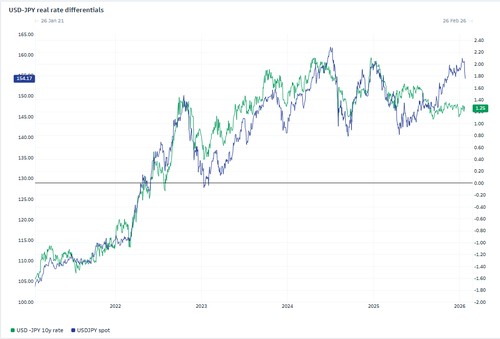
Goldman Sachs trader Kristian Brauten-Smith analyzed that, given the potentially more lasting impact of this intervention and the fact that other G10 currencies have been about 10% stronger against the dollar than before, the market may not see firm USD/JPY buyers until the exchange rate falls to the mid-term range of 147-149. This judgment is also supported by fundamental analysis. Goldman Sachs' suggested trading strategy includes buying a binary put spread with strike prices at 151/147, as the level around 147 is implied by the 10-year real interest rate differential as the fair value level for USD/JPY.
However, the downward path is not without obstacles. Goldman Sachs trader Masaaki Shinotsuka pointed out that due to the pressure on balance sheets from issues related to Japanese government bonds, the market is seriously skeptical about whether domestic Japanese investors (such as life insurance companies) can actively take on new foreign exchange risks in the current environment. This limits the potential buying power of the yen.
Deep Game: US-Japan Policy Coordination and Long-term Dilemma
This event goes beyond mere foreign exchange fluctuations, revealing deeper policy coordination between the US and Japan, as well as the long-term monetary dilemmas faced by Japan. Deutsche Bank's chief foreign exchange strategist George Saravelos noted that the threshold for US participation in intervention seems lower than historical precedents, which may indicate that the US is more willing to assist other major economies in preventing excessive currency weakness, and can also be seen as a broader signal of US acquiescence to a weaker dollar. **
However, intervention cannot resolve the fundamental issue of the yen's weakness. Analysts generally believe that the core driving factor behind the yen's weakness is Japan's exceptionally negative real interest rates, as well as the market's perception that the Bank of Japan is lagging in policy normalization. Goldman Sachs pointed out that intervention is at best a temporary solution, buying time while waiting for new macro drivers. If new catalysts do not emerge soon, the yen and Japanese government bonds may still fall to new lows in the medium term.
Japanese authorities seem to be caught in a dilemma: on one hand, they fear that significantly raising interest rates would fundamentally support the yen, while on the other hand, they are trying to rely on the Federal Reserve to accomplish this "tricky task." This reliance on external assistance raises sustainability concerns in the market.
As Japan's elections approach, this exchange rate fluctuation is also seen as a timely "warning" before the elections. The market is closely watching whether this yen storm triggered by "interest rate checks" is a short-term episode or the prologue to a new round of "currency wars" or even "Plaza Accord 2.0." For investors, the exchange rate range of 147-149 has become a key milestone for judging the future direction.
