


Clawdbot ignites the entire AI agent ecosystem

Clawdbot has caused a sensation in the overseas tech circle, surpassing nano banana and becoming a phenomenon. It is an automated AI tool capable of performing various tasks, such as sending messages, browsing the web, and managing files, with strong scalability. Although Clawdbot's configuration is relatively complex, primarily aimed at programmers, and there are security risks, it offers new possibilities for the development of agentic AI
1/ How popular is Clawdbot?
- The overseas tech circle is basically in a frenzy, and this heat is even higher than that of nano banana; it has basically overshadowed the momentum of Claude Excel.
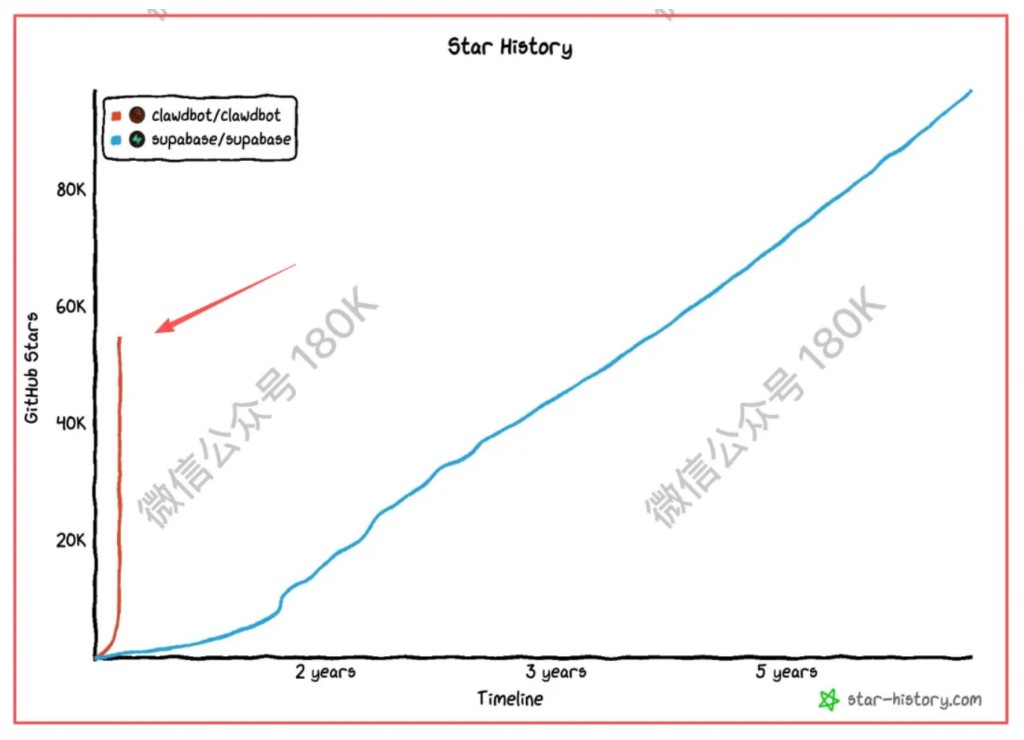
- From the perspective of programmers' GitHub index, this heat is rising vertically, it can't even be called exponential growth...
- The speed of going viral is excessively fast; theoretically, this is a very "geeky" product with a high difficulty level to get started; just the deployment has a significant threshold, it is truly a phenomenal product; many people compare this "lobster moment" to the "ChatGPT moment" of 2026, which is not an exaggeration.
2/ In a few words, what is Clawdbot?
- This thing can be automated; you set it up once, and it can automatically trigger at a set time every day; this is not easily achievable with ChatGPT, Gemini, or Claude.
- This thing can do a lot of tasks; in the words of Qianwen, it is a task-performing AI that can send messages, browse the web, manage files, etc.; the functions are not new, but the imaginative space is large, and the things encapsulated inside have strong extensibility. Coupled with the previous point about "automation," it can run 24 hours a day, serving as an AI worker for you.
- This thing can send you messages and interact with you through WhatsApp, iMessage, and Telegram; previously, you needed to enter a standalone AI application to call it, needing to open a computer, but now it is more "subtle and seamless."
3/ Clawdbot is great, but it is not the complete form of agentic AI;
- It is too geeky, and the configuration is difficult, making it a toy for programmers with low cost-effectiveness for ordinary users.
- There are too many security risks; as a toy, it inevitably has many issues regarding permissions, risks, and cybersecurity.
- It is not a new technology; it encapsulates many existing technologies, but it is not a technological breakthrough. There is nothing wrong with this; for example, when ChatGPT first came out, many people also said, "It's just a chatbot."
This does not prevent the market from surrounding Clawdbot to develop the prototype of agentic AI for the next step of evolution; the above issues are all engineering problems that can be solved.
4/ Clawdbot paints a picture of a future agentic network for us
- Agents controlling your computer/calling tools is inevitable;
- In the future, tools/applications on computers and phones will also be driven through AI interfaces, which is also inevitable;
- There will be people to solve the "coherence" and "security" of the agent network, which is also inevitable;
Should we use a sandbox or a separate Mac Mini? Is it Clawdbot or Xbot? Is it ChatGPT or Anthropic or Gemini? These are the areas that need to be tackled by the product team, using technical capabilities to find a certain path, still evolving, and uncertain.
In this future agentic network, who has a fixed ecological position? It is certain.
In the future agentic network, what is certain + scarce?
Some thoughts,
5/ Who controls the interaction between agents and users?
- clawdbot tells us that the most natural way to interact with agents seems to have returned to the chat box;
- In the chat box, agents report daily on what they have done, and users do not need additional learning costs, making it even more convenient and simpler than the application era;
- Those who control the chat entry points, such as Meta / Tencent, have received a narrative reinforcement. Conversational chat is more convenient than programmatic buttons.
6/ Who controls the interaction between agents and content?
- In the past, Google provided the interaction between "content" and users, and we accessed content through search, with most clicks being effective; you provide content, and Google brings you traffic, which generates advertising revenue;
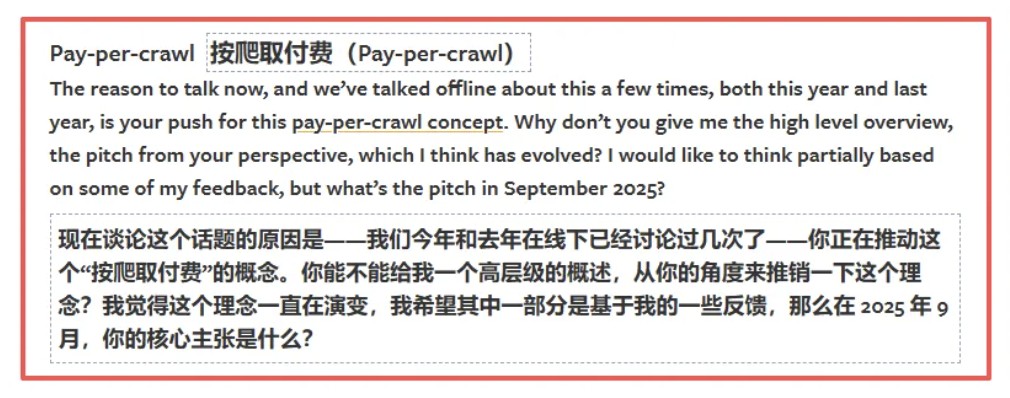
- Now, agents access content, and you may have 10,000 agents browsing, but it generates 0 effective traffic and no advertising revenue; you need a better "referee" to control the "effective interaction" between agent APIs and your content;
- From this perspective, those who control the API infrastructure, like Cloudflare, have subtly become the central nervous system of the agent era.
- The internet has always been adversarial, with some using crawlers and others using anti-crawlers; this adversarial nature in the agent era, where magic counters magic, will only become stronger, and the role of the referee will only become more important.
- In the past, the open internet was built on the social contract of "advertising vs traffic vs content"; now in the AI era, everyone just wants answers and does not need content as much, which may lead to the collapse of content.
Further imagining, in the future, this agentic network will require a new "social contract," which is also what network infrastructures like Cloudflare are striving for.
7/ Who controls the interaction between agents?
We are not at this step yet; we will discuss it later.
8/ Who controls the most scarce resources?
- The entire internet used to be built around "user attention"; whoever has attention can sell ads and engage in e-commerce.
- In the agent era, the value of "user attention" has increased; a core hard logic is that "AI can help you get things done, but cannot entertain you."
- This logic appeared once before with Doubao Phone. Doubao makes AI assistants to save time; companies like Xiaomi also make AI assistants to save time; Qianwen can also make AI assistants to save time.
- But where does the saved time go? The most likely outcome is that it turns into entertainment time for "watching videos" and "reading novels"; Douyin and Tencent, who control core content resources, win without a fight.
- Those who create tools to save time will also find a suitable ecological niche, but they may fall into an "endless war."
9/ Who controls the core infrastructure that empowers all of this?
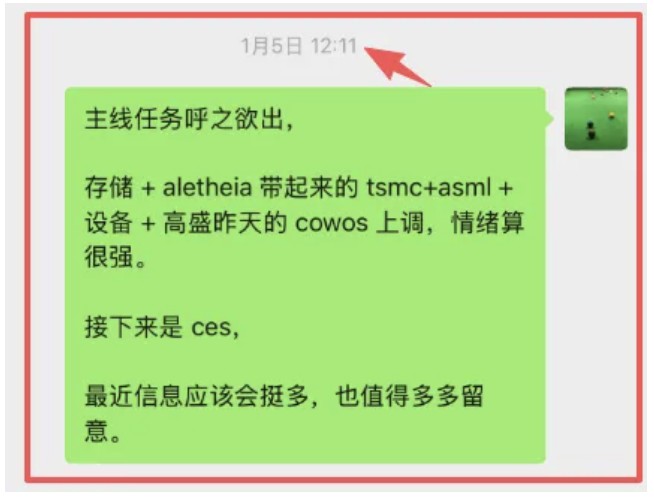
- The logic on the hardware side is old logic, but good logic, hard logic.
- Storage, computing power, CPU, and various other components will all benefit; it is fundamentally not a zero-sum game. However, now the shorter and simpler the logical chain, the more the market likes it. For example, someone like me who does research tries to focus on the market's simple main lines.
Other Points
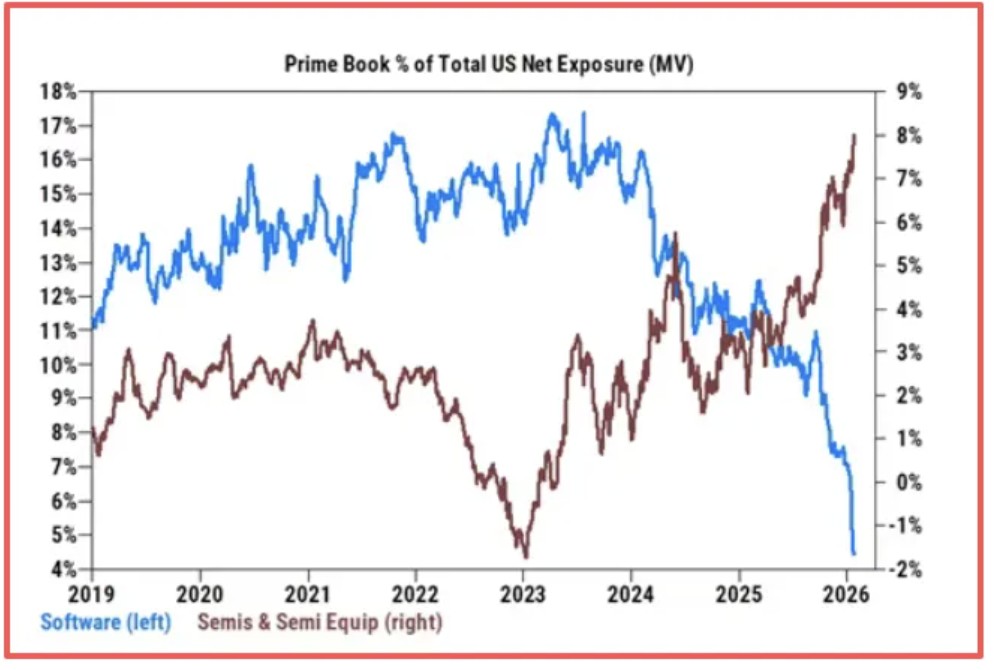
10/ Many people are chasing the weakness of North American AI software, but software is not something that can be dismissed all at once.
- Many software applications are very easy to replace; for example, "code generation" is not valuable right now; AI can generate countless codes every day.
- However, some "infrastructure" and key nodes within the software are different. For example, AI-generated content must have a repository for storage...
- The weakness of software, to some extent, is also a "transfer" of value rather than its disappearance. From some listed companies, value has shifted to a new generation of unlisted companies (like Cursor, Anthropic, OpenAI, etc.), leading to some narrative distortions.
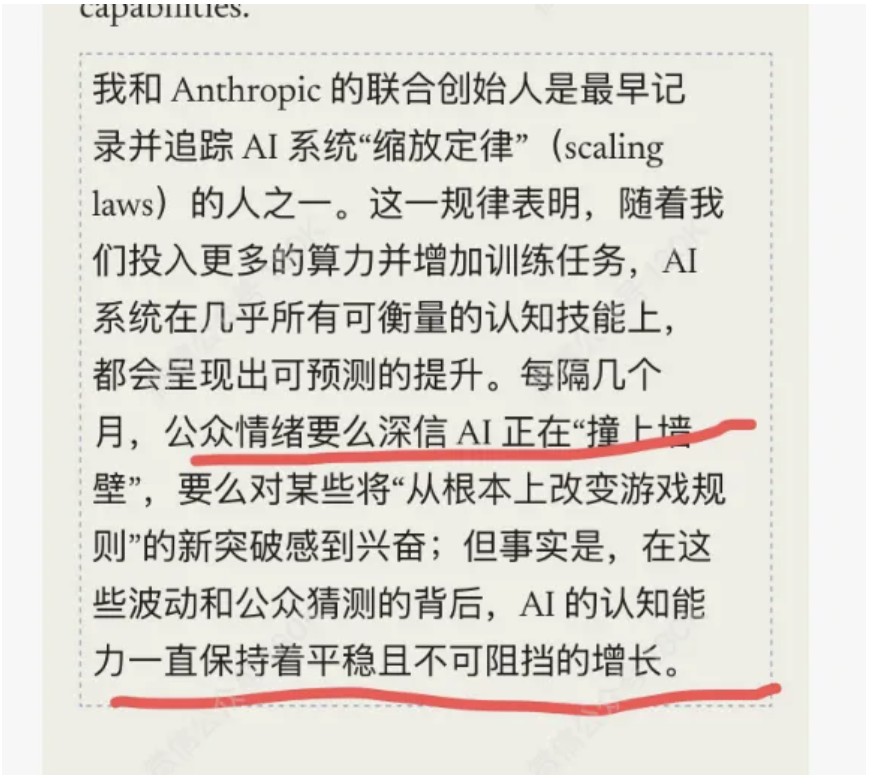
11/ The development of AI is accelerating rapidly, and many people still choose to turn a blind eye.
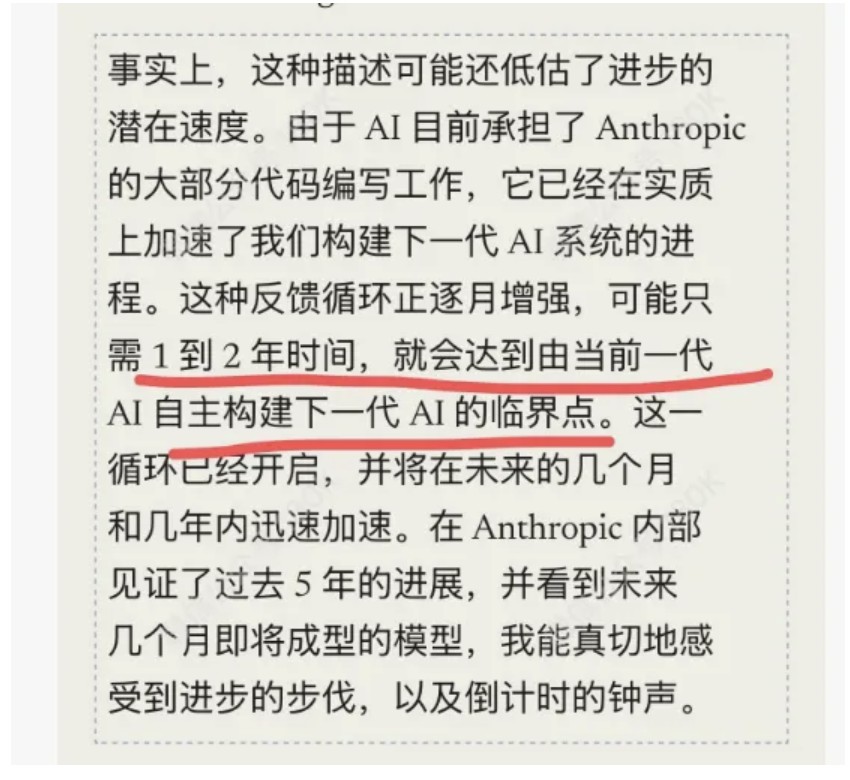
We have reached an accelerating "singularity,"
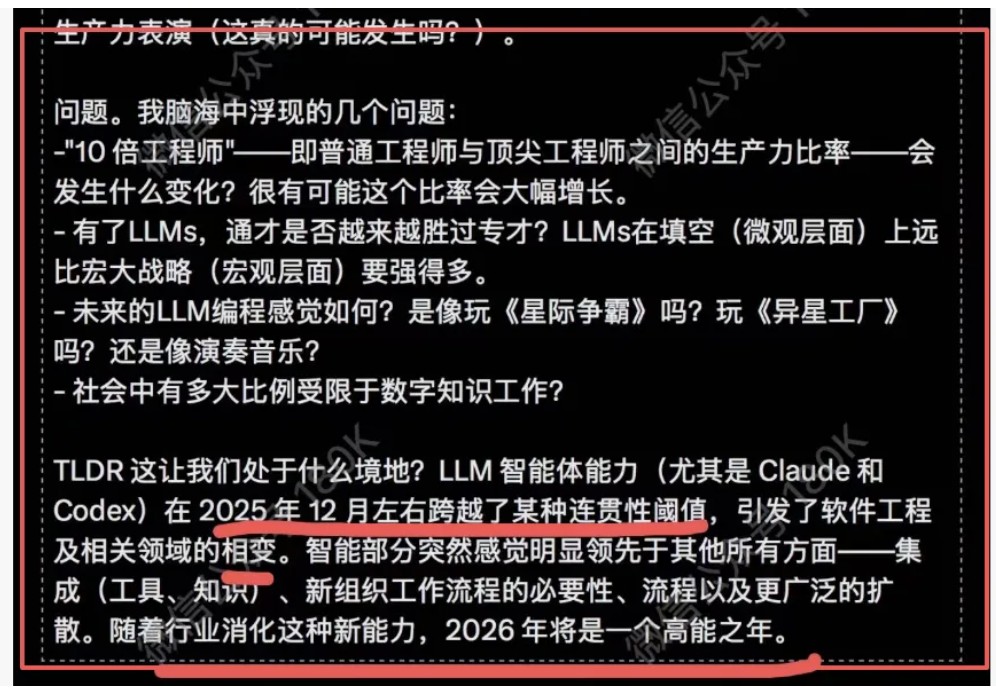
If you don't believe the theory, then take a look at Claude for Excel;
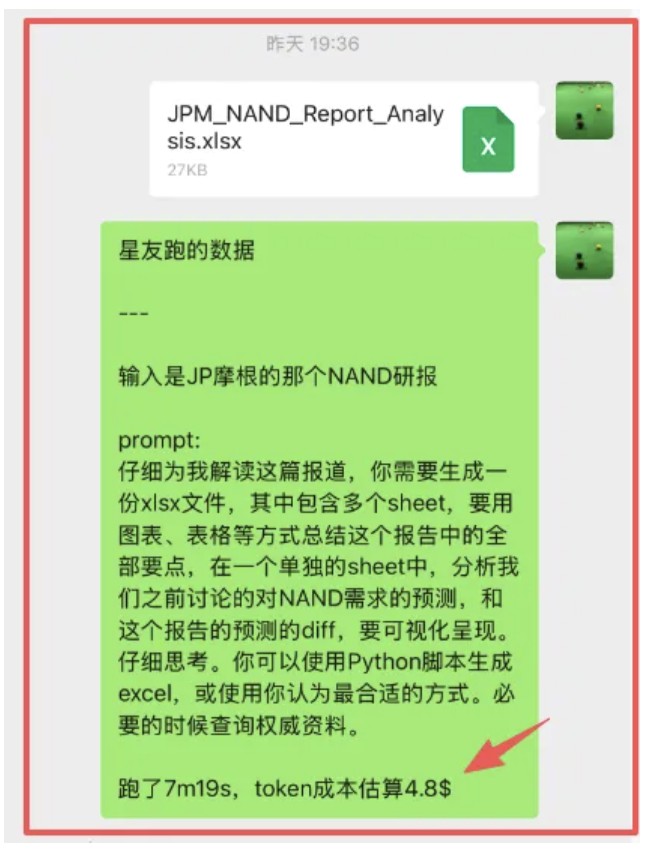
We are approaching second-order acceleration, not a smooth one.
 Whether we believe it or not is not important; financing in the primary market has nothing to do with us, and the industry is progressing rapidly.
12/ The catalyst for clawdbot has arrived; just look at today's market reaction to know.
- The upcoming catalysts will only increase.
- deepseek? kimi? minimax? Domestic acceleration is happening.
- gemini? claude? gpt? Foreign acceleration is happening.
Just look at claude in excel to know that we are still in a situation where tokens are completely insufficient and not cheap enough, more software engineering + hardware iteration is needed to alleviate the supply bottleneck.
Risk warning and disclaimer
The market has risks, and investment requires caution. This article does not constitute personal investment advice and does not take into account the specific investment goals, financial situation, or needs of individual users. Users should consider whether any opinions, views, or conclusions in this article align with their specific circumstances. Investing based on this is at your own risk.
