


Rocket Lab - From the King of Small Rockets to the General Contractor of Space Infrastructure, the Underrated Second Pole of Aerospace

Rocket Lab has broken through the limitations of a single rocket launch provider and, through the dual drive of "launch + manufacturing," has built a space industry chain barrier second only to SpaceX, being regarded as the "second pole" in the aerospace field. Its Electron rocket monopolizes the small launch market, and the high-margin space systems business, such as satellite manufacturing and components, is becoming a new growth engine
Outside of Elon Musk's SpaceX spotlight, a company that started in New Zealand is quietly building a space full industry chain moat, second only to the former.
According to an in-depth research report released by Guojin Securities analyst Chen Yijiao, Rocket Lab is at a critical turning point in its corporate lifecycle. This company is no longer just a "courier" delivering satellites into space, but is becoming a one-stop contractor for space infrastructure.
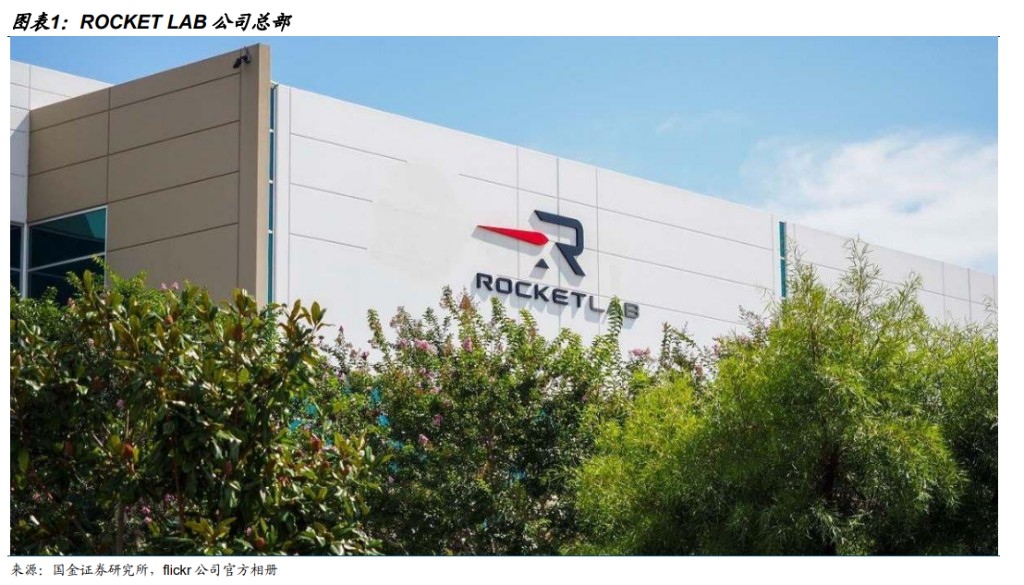
Strategic Reassessment: Not Just a "Mini SpaceX"
Rocket Lab's core vision is no longer limited to delivering payloads into orbit, but is reshaping the way space access and applications are conducted.
The company's current business logic is very clear: Establish trust through launch services and harvest value through systems business.
-
Launch Side (Cash Cow): Utilize the high-frequency launches of the Electron rocket to establish a reliability record, serving as a stepping stone to enter high-profit markets.
-
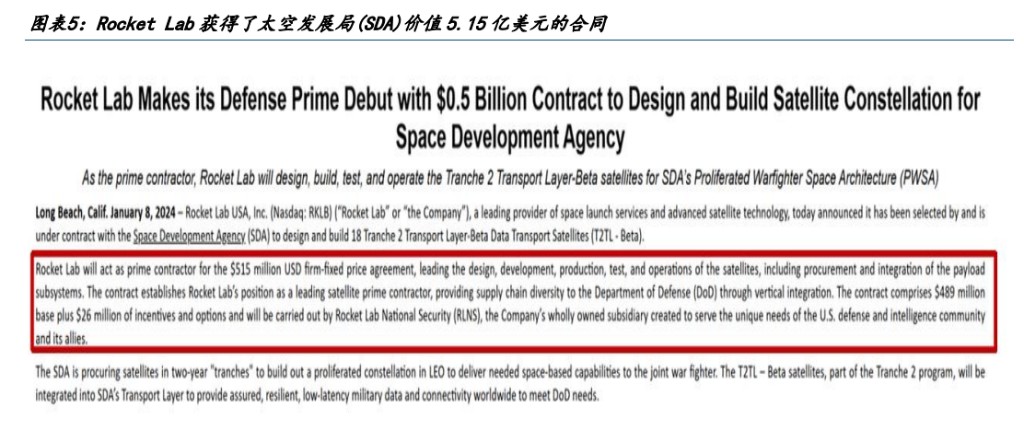
Systems Side (Growth Engine): Leverage the trust established through launches to penetrate satellite manufacturing and component supply. The contract worth $515 million obtained from the U.S. Space Development Agency (SDA) in January 2024 is a milestone of this strategy, marking the company's official certification as a "prime contractor" by the U.S. Department of Defense.
-
Scaling (Future Heavyweight): Developing the medium rocket Neutron, aimed at directly challenging SpaceX's monopoly through large-scale constellation deployment.
Launch Business: Absolute Dominance of Small Rockets and Ambitions for Medium Rockets
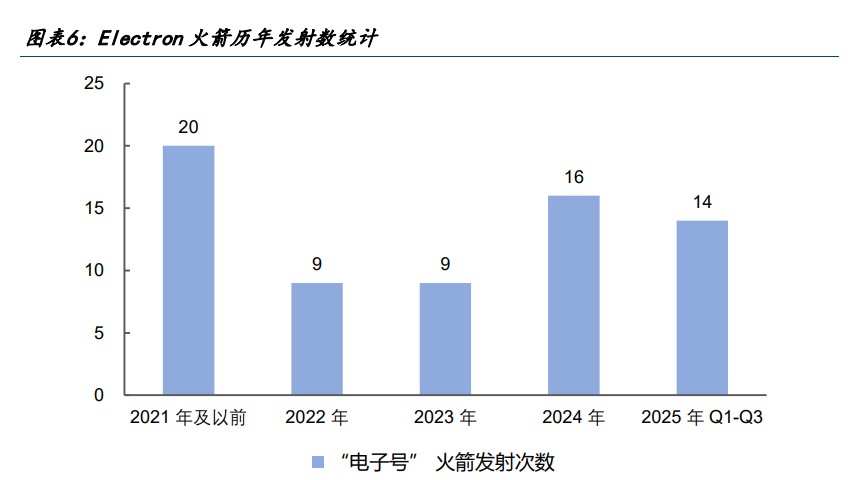
Rocket Lab's initial capital comes from the Electron rocket. As the only small launch vehicle in the world currently achieving high-frequency, reliable commercial operations, Electron has executed 79 launches, deploying 245 satellites.
Although its single launch price is about $7.5 million (with a cost per kilogram higher than SpaceX's "rideshare service"), it offers a customized "taxi" service (customized orbits, customized timing), rather than SpaceX's "bus" service. This flexibility gives it a significant premium in specific orbits and defense missions.
The HASTE project is an invisible high-profit growth point in this business. This is a suborbital testing platform based on modifications to Electron, specifically serving the U.S. Department of Defense's hypersonic weapon testing. It can simulate hypersonic missile trajectories at a cost of millions of dollars, far lower than traditional testing costs, and with profit margins significantly higher than ordinary commercial launches
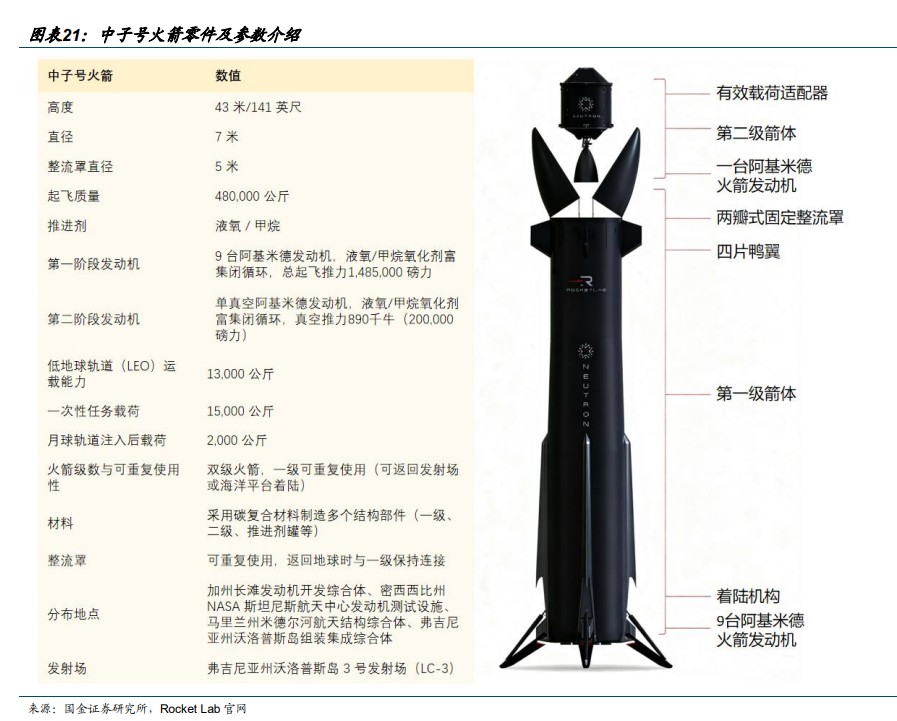
The market's greatest expectation for Rocket Lab lies in the Neutron rocket. This is not a simple enlargement of the Electron, but a brand new medium-sized reusable rocket designed for the constellation networking needs after 2025.
The design philosophy of Neutron is highly differentiated:
-
“Hungry Hippo” fairing: The fairing is integrated with the first stage body, opening to release the second stage during launch, and returning as a whole with the first stage. This eliminates the challenges of sea recovery and seawater corrosion, significantly reducing refurbishment costs.
-
Archimedes engine: It uses liquid oxygen/methane propellant and an oxygen-rich staged combustion cycle (ORSC), focusing on durability and rapid reusability rather than extreme pressure.
-
Carbon fiber body: Manufactured using automated layup machines, it is lighter and stronger than metal.
It is worth noting that the first flight of Neutron has been postponed to the first quarter of 2026. CEO Peter Beck emphasized that this is to ensure "the first flight is in orbit," avoiding the pitfalls of other startups that have destroyed launch pads. Current R&D investment is in a saturation attack phase, and the Archimedes engine has completed hot testing at 102% thrust.
Space Systems: Selling Shovels and Mining Gold
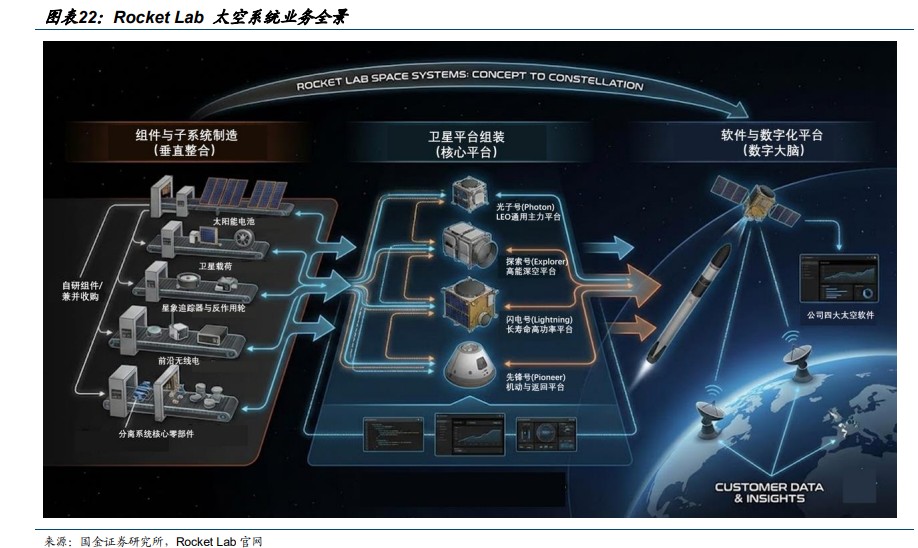
The market often overlooks Rocket Lab's layout beyond launches. By acquiring SolAero (solar energy), ASI (flight software), PSC (separation systems), and others, the company has built extreme vertical integration capabilities.
This strategy is known as the "Intel Inside" strategy:
-
Selling shovels (as a component supplier): As long as there are satellites, there will be a need for solar panels, reaction wheels, and star sensors. Rocket Lab's components have served over 1,100 satellites in orbit, allowing it to earn high-margin component revenue regardless of who is responsible for the launch.
-
Mining gold (as a prime contractor): Relying on its self-developed Photon satellite platform, the company has the capability to undertake large-scale constellation construction. The $515 million contract awarded by the U.S. Space Development Agency (SDA) marks its official leap from a component supplier to a top system integrator.
It is noteworthy that the company recently released the Flatellite concept, which uses a flat, stackable structure similar to Starlink, optimized for the Neutron fairing. This sends a clear signal to the market: Rocket Lab is ready to transition from a "service provider" to an "operator," potentially building its own constellation and directly entering the downstream application market
Financial Perspective: Profit Recovery Under High R&D Investment
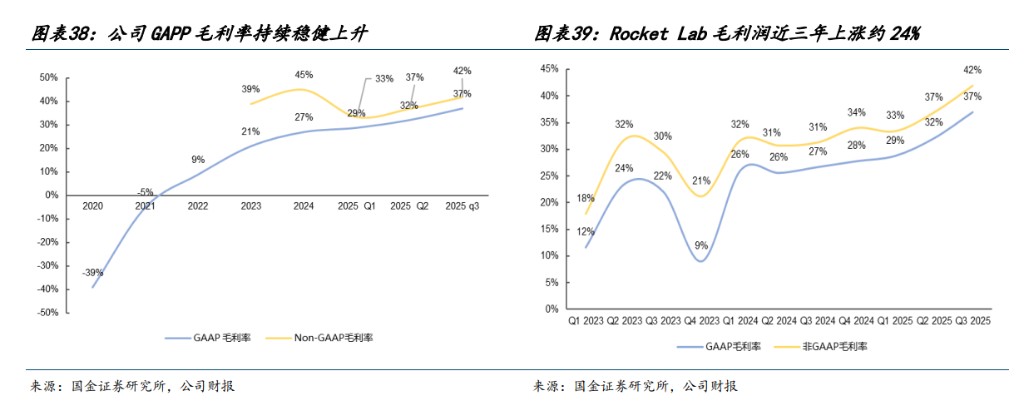
Data validates the success of the strategic transformation. The company's revenue surged from $35.16 million in 2020 to $436 million in 2024, growing more than tenfold in five years. More importantly, the improvement in profit quality is evident, with the GAAP gross margin doubling within two and a half years, recovering from 11.6% to 37.0% by Q3 2025. This is attributed to the maturity of launch reuse technology and the decrease in BOM costs brought about by vertical integration.
The current losses primarily stem from the saturated R&D investment in the Neutron rocket (with R&D expenses reaching $70.7 million by Q3 2025). This is not due to operational inefficiency, but rather a trade-off of short-term losses for long-term entry into the constellation networking market. As of Q3 2025, the company has an order backlog of $1.1 billion, of which 57% will be recognized as revenue within the next 12 months, providing high visibility for performance.
Industry Positioning: The Life-and-Death Speed of 2026
2026 will be a watershed year for global commercial space.
On one hand, the ITU (International Telecommunication Union) orbital resource declaration rules are forcing countries to accelerate launches to secure frequency occupancy; on the other hand, China's commercial space (such as the GW constellation and G60 constellation) will also enter a period of industrial explosion.
In this structural transformation akin to the "Age of Exploration," Rocket Lab, with its cross-hemisphere launch bases (New Zealand + USA) and full industry chain capabilities, has become a key strategic asset for the United States and its allies to maintain space access capabilities
