


Is the wolf really here? Quantum computing poses a threat to Bitcoin that is "no longer theoretical," analysts say: 20-50% of Bitcoin has "security risks."

David Duong, the Global Head of Research at Coinbase, warned that approximately 32.7% of the Bitcoin supply is at risk of potential quantum computing attacks, involving about 6.51 million Bitcoins. Quantum computers operate at speeds far exceeding traditional computers and could ultimately break the encryption algorithms that protect Bitcoin wallets. The most aggressive analyses suggest that the threat could become a reality in about five years
The threat of quantum computing to Bitcoin is moving from theory to reality. Coinbase's chief researcher has warned that approximately 33% of the Bitcoin supply is at quantum risk, while Jefferies' global equity strategy head has completely removed Bitcoin from their portfolio, shifting towards gold allocations. This change is reshaping institutional investors' attitudes towards Bitcoin.
According to the latest media reports, Coinbase's global investment research head David Duong warned that approximately 32.7% of the Bitcoin supply is at potential risk of quantum computing attacks, involving about 6.51 million Bitcoins.
Jefferies' strategy head Christopher Wood also announced in an analysis column on January 16 that he has completely liquidated his 10% Bitcoin position in his portfolio model, reallocating 5% to physical gold and 5% to gold mining stocks. He explained that the emergence of quantum computing could achieve breakthroughs in the coming years rather than in over a decade, which would undermine Bitcoin's foundation as a "reliable store of value."
Quantum computers utilize advanced physical principles, and their computing speed far exceeds that of traditional computers, potentially cracking the cryptographic algorithms that protect Bitcoin wallets. According to data from the cryptocurrency security research organization Project 11, nearly 70% of vulnerable Bitcoins come from address reuse, which exposes security information that could be exploited by quantum computers.
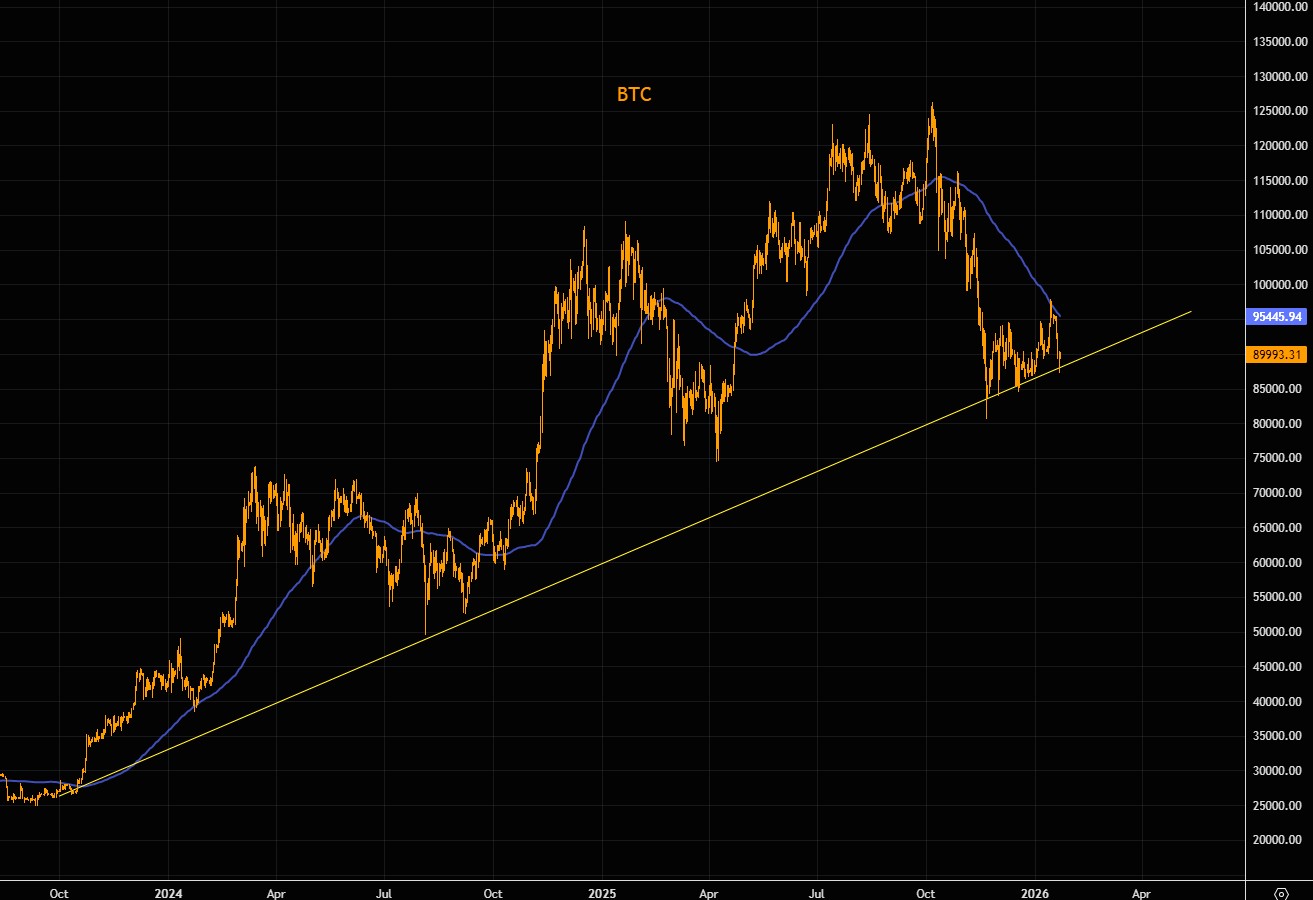
The market has begun to reflect this concern. Bitcoin has fallen 6.5% relative to gold this year, while gold has risen 55% during the same period. The Bitcoin-to-gold ratio dropped to 19.26 in January 2026, indicating that investors are reassessing Bitcoin's status as "digital gold." Recently, Bitcoin encountered a strong pullback near the 100-day moving average, with $85,000 being a key price level to watch closely.
The urgency of this threat is triggering a governance dilemma within the Bitcoin community: whether to destroy quantum-vulnerable coins to protect system integrity or to take no action and risk theft. This choice places protocol security in opposition to property rights protection.
20-50% of Bitcoin Supply at Risk
According to Jefferies' analysis, quantum risk is no longer a theoretical issue. Increasing concerns indicate that quantum computers with cryptographic capabilities may arrive in a few years rather than decades, posing an existential threat to Bitcoin's security model and its "digital gold" narrative.
Estimates suggest that 20-50% of Bitcoin may be in a vulnerable state. Due to address reuse, approximately 4 million to 10 million Bitcoins are at risk, with exchanges and institutional wallets being the most susceptible targets. A study by Chaincode Labs in 2025 estimated that about 6.26 million Bitcoins, valued between $650 billion and $750 billion, could be exposed to future quantum attacks David Duong pointed out in his LinkedIn analysis on January 5 that upgrading the security of Bitcoin is a core challenge. He identified two major threats: quantum computers breaking the elliptic curve digital signature algorithm keys, and attacks on the SHA-256 algorithm that underpins Bitcoin's proof-of-work system. Vulnerable addresses include traditional Pay-to-Public-Key scripts, certain multi-signature wallets, and exposed Taproot setups.
Institutional Investors Lead the Exit
Christopher Wood stated in his analysis column on January 16 that advancements in quantum computing will undermine the logic of Bitcoin as a "reliable store of value," especially for long-term investors like pension funds. He completely liquidated his 10% Bitcoin position in his portfolio, reallocating 5% to physical gold and 5% to gold mining stocks.
Wood was an early institutional supporter of Bitcoin, incorporating it into his portfolio during the pandemic in December 2020 when countries released massive stimulus measures, and increased his holdings to 10% in 2021. He explained that the reason for liquidating was the concern that the advent of quantum computing could shake the foundations of Bitcoin, as this technology might achieve breakthroughs in the coming years rather than in over a decade.
Quantum computers could theoretically break Bitcoin's cryptographic algorithms, reverse-engineering to derive the private keys used for authorizing transfers. Wood stated that this would undermine the concept of Bitcoin as a store of value, thereby jeopardizing its status as a digital alternative to gold.
Accelerating Technological Breakthroughs: Threats May Arrive Sooner
Current quantum computers have a computational capacity of about 105 qubits. According to research by AVS Quantum Science, a 2022 study by Universal Quantum and the University of Sussex estimated that breaking Bitcoin's private keys would require 13 million qubits.
However, there is a divergence of opinion among industry professionals regarding the urgency. Blockstream CEO Adam Back believes this threat may still be 20 to 40 years away. Strategy Chairman Michael Saylor, on the other hand, believes that quantum computing will enhance rather than threaten Bitcoin, asserting that the network will upgrade and strengthen its defense systems.
Pierre-Luc Dallaire-Demers, a quantum computing researcher at the University of Calgary, provided a more aggressive estimate, suggesting that the threat could become a reality in about five years. Jameson Lopp, co-founder of Casa, stated that preparing Bitcoin for quantum resistance may take five to ten years.
Bitcoin developers have proposed an upgrade to enhance quantum-resistant security features. This proposal is still in draft form and undergoing testing. Other blockchain networks are also preparing for quantum threats through privacy upgrades.
Bitcoin Faces Governance Dilemma: Destroy or Retain?
Bitcoin is facing a governance dilemma. The community is debating whether to destroy quantum-vulnerable tokens to protect the integrity of the system or to do nothing and bear the risk of theft. This choice creates a conflict between protocol security and property rights If vulnerable tokens are destroyed, the effective supply of Bitcoin will decrease, theoretically supporting the price, but this requires a highly controversial and precedent-setting decision-making process similar to a fork.
Unlike traditional banks that can enforce quantum-safe upgrades through central authority, Bitcoin must coordinate changes within a distributed network. There are no risk committees, no mandatory regulations, and no single entity that can enforce immediate action.
Charles Hoskinson, founder of Cardano, warns that premature adoption of post-quantum cryptography could severely reduce efficiency. The U.S. Defense Advanced Research Projects Agency's quantum blockchain program believes that meaningful threats may emerge in the 2030s. However, rapid advancements suggest that the timeline may accelerate, especially if AI integration compresses the quantum development process.
Diverging Institutional Attitudes: Caution and Optimism Coexist
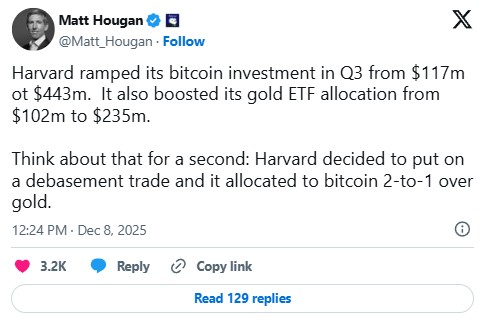
Although Wood has reduced exposure, institutional support has not completely disappeared. Reports indicate that Harvard University has increased its Bitcoin allocation by nearly 240%. Morgan Stanley has begun advising its wealth management clients to allocate up to 4% of their portfolios to digital assets. Similarly, Bank of America allows a 1% to 4% allocation. This indicates that support has not vanished but has become more diversified based on different risk assessments.
Duong points out two major threats: quantum computers breaking ECDSA keys and attacks on the SHA-256 algorithm that underpins Bitcoin's proof-of-work system. Vulnerable addresses include traditional Pay-to-Public-Key scripts, certain multi-signature wallets, and exposed Taproot setups.
Addressing the issue—avoiding address reuse and transferring tokens to quantum-resistant addresses—is considered a key mitigation strategy. However, this threat remains real until Bitcoin's decentralized system can fully coordinate quantum-resistant upgrades.
X platform user batsoupyum wrote: "Financial advisors reading this kind of research will keep client allocations low or at zero because quantum computing is an existential threat. Until this issue is resolved, it will be a shackle around Bitcoin's neck."
The quantum computing issue has shifted from theory to actual impacts on portfolios. Bitcoin's poor performance reflects not only market cycles but also the increasing burden of existential risks, which are shaping how institutions allocate capital and forcing the network to face an unprecedented technological challenge
