


At the "Technology Spring Festival Gala," robots are everywhere pouring coffee and folding clothes, but their speed is "incredibly slow."

At CES 2026, humanoid robots became the focus, showcasing functions such as pouring coffee and folding clothes, but their slow speed raised concerns. LG's CLOiD robot moved sluggishly during the demonstration; nevertheless, LG executives remain confident about its future applications. Other companies like SwitchBot and Qualcomm also showcased their physical AI achievements, while Boston Dynamics tested the next generation of humanoid robot Atlas. Although the technology demonstrated potential, the live demonstrations exposed current limitations
Humanoid robots are becoming the next big bet in the tech industry, but under the spotlight in Las Vegas, there remains an awkward pause of a few seconds between reality and vision.
At CES (Consumer Electronics Show) held in January 2026, humanoid robots took center stage. Scenes of robots pouring coffee, playing ping pong, dealing cards, and folding clothes were everywhere, just a few feet apart from each other. But the pace seemed a bit slow...
During a live demonstration, LG's new robot CLOiD waved to attendees with both hands and then began to perform tasks: "slowly" accepting clothes handed over by staff, then "slowly" turning its body, and finally "slowly" loading the clothes into the washing machine. Although the entire process was successfully completed, it appeared as if it was in "slow motion."
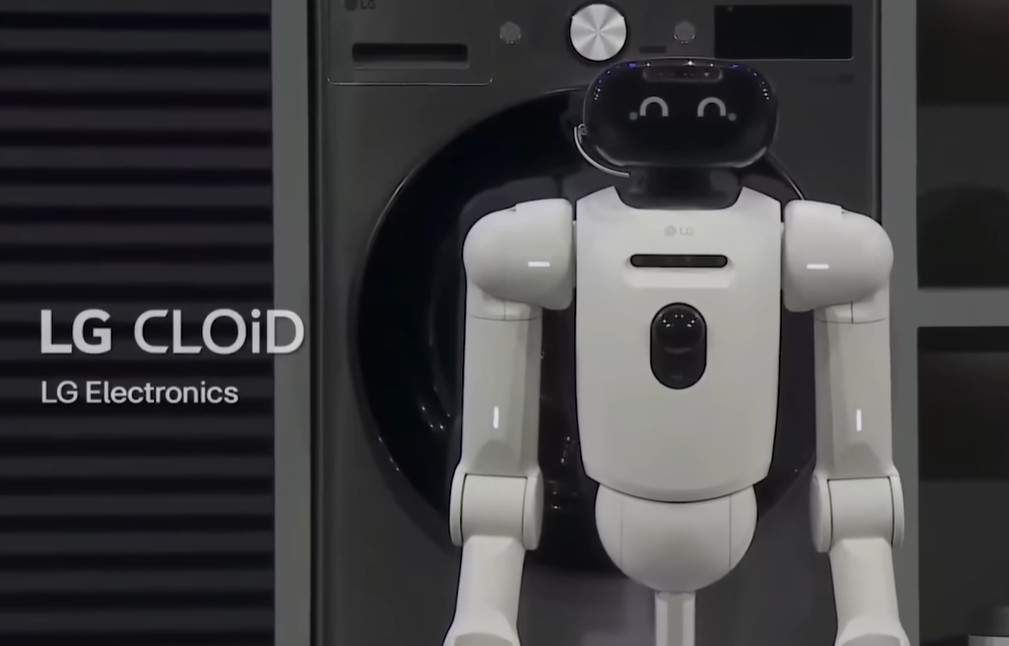
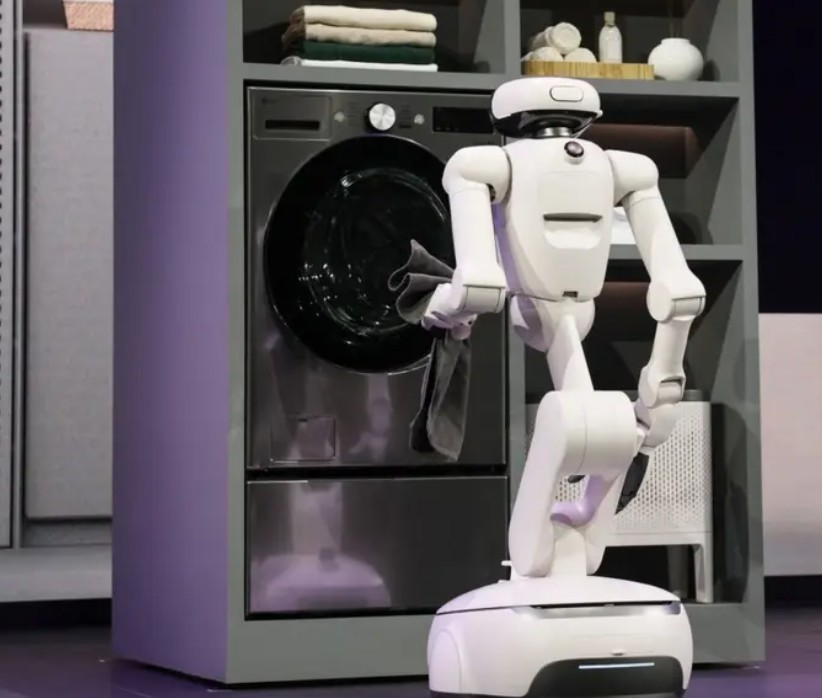
Video screenshot, same below
Nevertheless, LG executive Brandt Varner confidently stated at a press conference on Monday that CLOiD, utilizing artificial intelligence and visual technology, could potentially bake croissants for you before you go to work in the future.
In addition to LG, companies like SwitchBot, IntBot, and chip giant Qualcomm also showcased their latest achievements in the field of "physical artificial intelligence," attempting to paint a future where robots serve as household assistants and companions.
Qualcomm vigorously demonstrated at its booth that its processors and software form the backbone of physical AI, capable of powering home robots and full-sized humanoid robots. Meanwhile, the robot Nylo, manufactured by IntBot, was able to answer questions on-site without human assistance, with the company promising to provide "real-world proof, not just demonstrations."
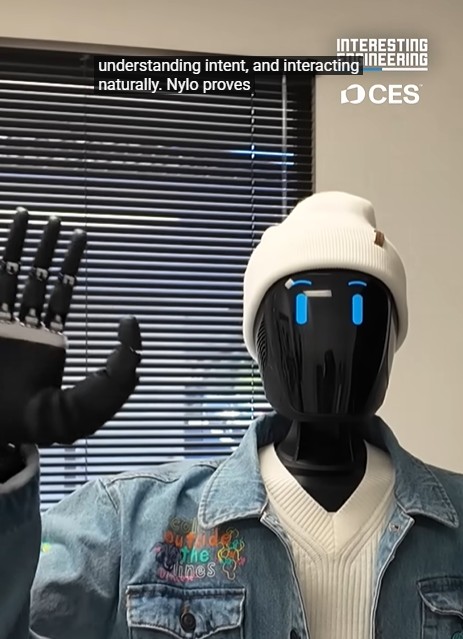
In more specialized fields, Boston Dynamics and its major shareholder Hyundai Motor announced that they are testing the next-generation humanoid robot Atlas used in their Georgia factory. Boston Dynamics, with its robotic dog Spot and mobile robotic arm Stretch, has been regarded as a leader in the advanced robotics field.
Additionally, companies like Artly Coffee and VenHub Global showcased AI-driven robotic cafes and convenience stores, demonstrating the potential of this technology in the commercial services sector.
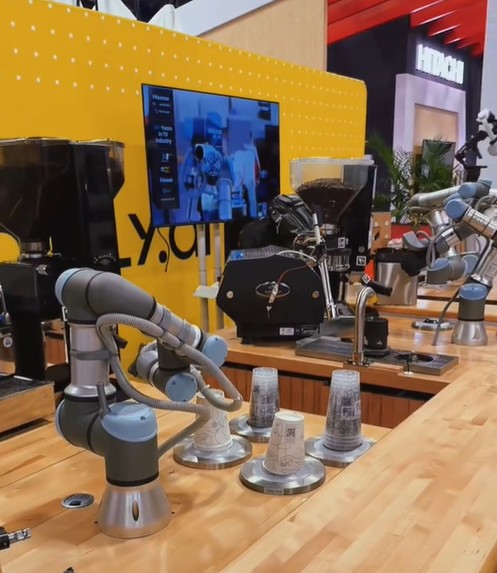 However, the on-site demonstration exposed the current awkward situation of the technology: although robots are already capable of completing household tasks such as loading washing machines, their execution speed is extremely slow, and the costs are high.
Despite the capital pouring into this sector, market observers point out that humanoid robots still have a long way to go before true commercialization. The current demonstrations are more about "showing off" in controlled environments, and there are still significant technical and cost barriers to operate safely and efficiently in the unpredictable environment of ordinary households. In contrast, the B-end application logic in factories and logistics centers is more straightforward, and it is expected to achieve large-scale deployment ahead of C-end household scenarios.
For the market, the short-term speculation risks in this field are worth being cautious about. Gartner's research director bluntly pointed out that the most practical application of humanoid robots in recent years has often been to "artificially inflate stock prices." While industry leaders like Boston Dynamics and Hyundai are advancing the testing of the next generation of robots, these steel bodies still need to overcome multiple thresholds such as safety, mobility, and cost-effectiveness to transition from "performers on stage" to "contributors on financial statements."
Risk Warning and Disclaimer
The market has risks, and investment should be cautious. This article does not constitute personal investment advice and does not take into account the specific investment goals, financial situation, or needs of individual users. Users should consider whether any opinions, views, or conclusions in this article align with their specific circumstances. Investment based on this is at one's own risk
