As the metal market surges, the dollar experiences its largest weekly decline since June

Wallstreetcn
2025.12.27 03:52
portai
I'm PortAI, I can summarize articles.

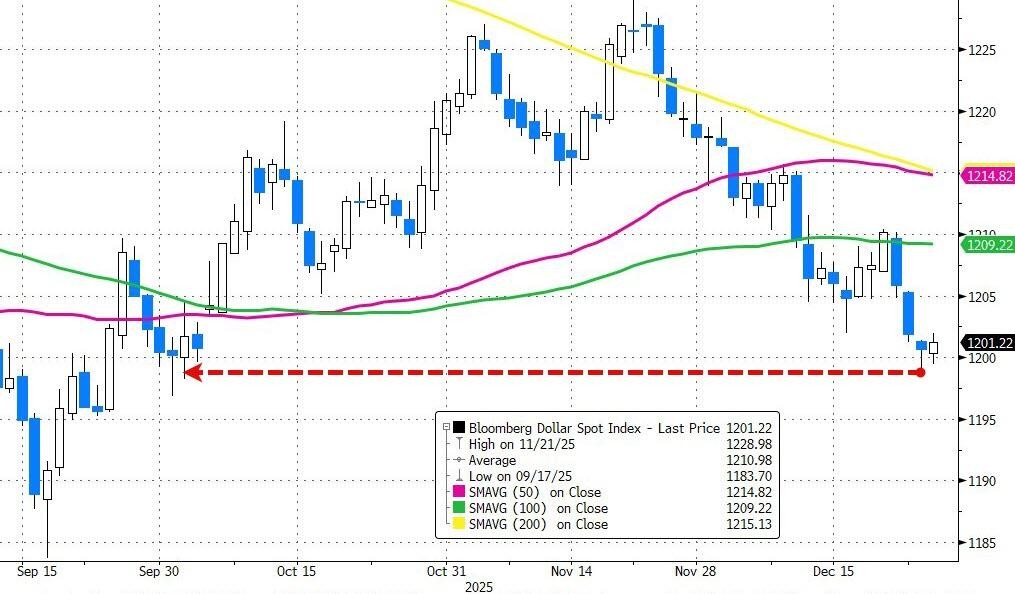
This week, the Bloomberg Dollar Index fell by about 0.8%, closing at its lowest point since early October, with a cumulative decline of about 8% this year, which will mark the largest annual drop since 2017. Analysts believe that the thin liquidity this week has not helped the already relatively weak dollar. Looking ahead, the focus will be on inflation data to assess the timing of the Federal Reserve's next interest rate cut

The US dollar recorded its largest weekly decline since June, providing significant support for the recent surge in precious metals.

This week, the Bloomberg Dollar Index fell by about 0.8%, closing at its lowest point since early October, with a cumulative decline of approximately 8% this year, marking the largest annual drop since 2017.

(The Bloomberg Dollar Index fell to near October lows)

Traders continue to bet that the Federal Reserve will further cut interest rates in 2026. A key options indicator shows that market sentiment towards the dollar has reached its most pessimistic level in over three months, and this expectation has strengthened for five consecutive trading days.

Market focus has now shifted to important US economic data to be released in early January next year, particularly the December employment report and consumer inflation data, which will provide guidance for the Fed's next steps.

Dollar Decline Continues, Market Focus on December Data

This week, trading was thin due to the holiday, and with the UK market closed on Friday, investors' attention has largely turned to the major US economic reports to be released in the first few weeks of January next year.

Among the major currency pairs this week, risk-sensitive currencies performed the strongest, with the Australian dollar and Norwegian krone leading the gains against the US dollar.

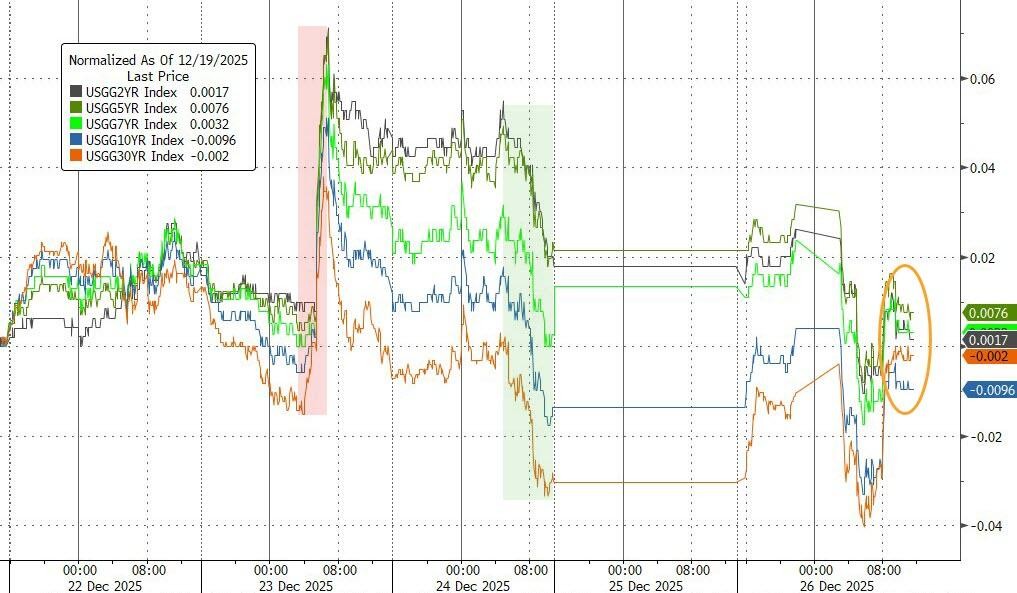
At the same time, US Treasury yields fell slightly this week, with the yield on the 10-year Treasury note dropping about 2 basis points to 4.13%, remaining within the range of recent weeks.

(US Treasury yields across major maturities flattened this week)

Andrew Hazlett, a trader at forex trading company Monex, stated:

This week’s thin liquidity has not helped the already relatively weak dollar. Looking ahead, our focus will be on inflation data to gauge the timing of the Fed's next rate cut.

Analysts believe that the employment report and consumer inflation data in December are particularly important and will help determine the Fed's next policy direction.

This month's US unemployment data showed that the unemployment rate rose to its highest level since 2021, while consumer inflation data came in below expectations. These data reinforced market expectations for the Fed to continue easing monetary policy.

Traders expect about a 90% probability that the Fed will keep interest rates unchanged next month, but are betting on a 25 basis point cut by mid-next year, followed by another cut a few months later.