


Commodity surge, stock and bond logic reversed again! Morgan Stanley warns of three major "changes" in 2026

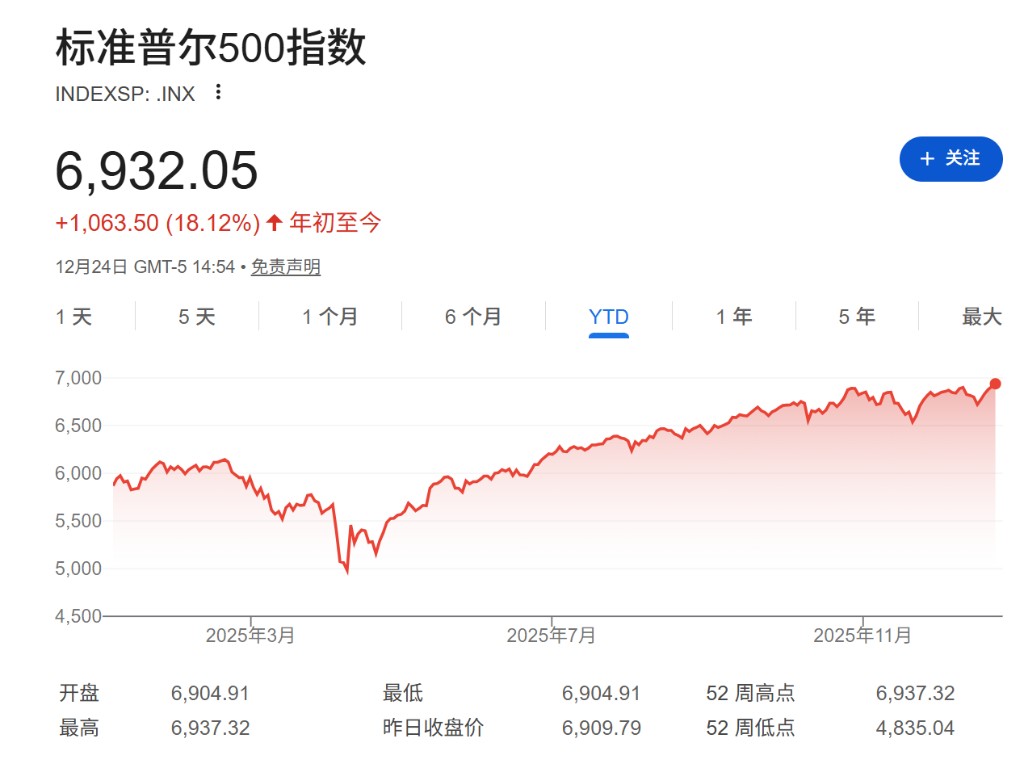
Morgan Stanley warns that although the baseline scenario remains optimistic for a 13% rise in the S&P 500 index by 2026, three major "surprises" could reshape the market: first, the U.S. may experience a "no-job productivity boom," with core inflation falling below 2%, opening up space for significant interest rate cuts by the Federal Reserve; second, the stock-bond relationship may revert to "bad news is bad news," with U.S. Treasuries regaining their safe-haven status; third, a weak dollar and demand recovery could ignite energy and metal markets, driving commodities to new highs
Morgan Stanley's strategist team pointed out in their latest outlook report that although Wall Street generally expects the stock market to experience another robust year of growth in 2026, three potential "unexpected" changes could reshape the market landscape.
In this report, led by Matthew Hornbach, the core warning from the strategists is that the U.S. economy may experience a "no-job productivity boom." In this scenario, a weak labor market would suppress wage growth and inflation, while accelerating productivity would maintain steady economic growth. Morgan Stanley estimates that this trend could lead to core inflation falling below 2%, thereby opening the door for the Federal Reserve to significantly cut interest rates without concerns of an inflation rebound, which resonates with current investors' aggressive pricing of policy easing.
At the same time, the bank noted that the correlation logic between the stock and bond markets may undergo a fundamental change in 2026. While 2025 saw a situation where both stocks and bonds rose, as inflation expectations fall back to target levels, the "bad news is good news" trading pattern may come to an end, replaced by an increased sensitivity of risk assets to negative economic data, which will re-establish U.S. Treasuries' traditional role as a safe-haven tool in investment portfolios.
In the commodities sector, Morgan Stanley predicts that driven by a weaker dollar and a recovery in demand from major consuming countries, energy and metal prices may see a new surge. Previously, gold prices had already broken through $4,400 on Monday, setting a new historical high, while silver and copper prices also reached historical peaks. The bank maintains its baseline forecast that the S&P 500 index will rise by 13% in 2026, but emphasizes that the aforementioned variables could lead to market paths deviating from conventional expectations.
"No-Job" Productivity Boom
According to the Morgan Stanley report, the first potential change is that the U.S. economy may experience an upgraded version of a "no-job recovery," namely a "no-job productivity increase." Matthew Hornbach pointed out that in this scenario, the weakness in the U.S. job market would effectively limit wage growth, thereby reducing inflationary pressures; at the same time, the acceleration in productivity would ensure stable economic growth.
Strategists estimate that in this scenario, core inflation could fall below 2%. Hornbach stated that this supply-side driven anti-inflation trend would give the Federal Reserve room to lower policy rates into the easing zone without causing investors to worry about a resurgence of inflation. Additionally, this situation would help alleviate market anxiety over the growing U.S. deficit.
Early data from the labor market seems to support this trend. According to the U.S. Department of Labor, the hourly output of non-farm business employees grew by 3.3% year-on-year in the second quarter, compared to a decline of 1.8% in the previous quarter, indicating an upward trend in productivity growth. Currently, investors' expectations for the pace of interest rate cuts are more aggressive than those of the Federal Reserve officials. According to the CME FedWatch tool, although Federal Reserve officials expect only one rate cut in 2026, market pricing shows a 72% probability of rates declining further that year
Restructuring the Stock-Bond Relationship Paradigm
The second potential surprise involves a reversal in the correlation between stock and bond prices. Traditionally, stock prices and bond prices have moved inversely; when risk assets decline, investors often flock to bonds for safety. However, this dynamic relationship was broken in 2025, with both stock and bond prices steadily rising throughout the year. Morgan Stanley pointed out that this is partly attributed to the market being in a "bad news is good news" mechanism, where weak economic data boosts the stock market due to optimism about Federal Reserve rate cuts.
However, strategists warn that if inflation falls back to the Federal Reserve's target level next year, this dynamic may reverse again. Once inflation expectations stabilize or face downside risks, risk assets will revert to the "bad news is bad news" logic. At that time, U.S. Treasuries will regain their properties as safe-haven assets and inflation hedges, restoring their role as a portfolio "ballast" during the low-inflation period of the two decades before the pandemic.
Commodity Price Surge
The third major shift is the potential surge in commodity and energy prices. Following a strong performance in 2025, Morgan Stanley speculates that a series of macro events could lead to a "surge" in commodity prices in 2026. The bank's analysis suggests that if the Federal Reserve continues to cut rates while other central banks raise rates, it will reduce the dollar's attractiveness relative to other global currencies, thereby lowering the dollar's value.
A weaker dollar combined with stimulus policies is expected to drive a recovery in the Chinese economy, which is one of the world's largest producers of rare earths and precious metals, as well as a major energy consumer. Morgan Stanley noted:
"A weak dollar and a strong consumption story in China will drive energy prices, including gasoline, to new highs, while current gasoline prices are below a five-year low."
In fact, the commodity market has already shown signs of strength. Driven by supply constraints, demand growth from artificial intelligence (AI) trading, and rising risk aversion, gold prices broke through $4,400 for the first time on Monday, setting a new historical high, with an increase of nearly 70% this year, likely to achieve the best annual performance since 1979. Additionally, silver and copper, which are core metals for AI trading, also reached historical highs this week. The market generally expects that supported by the aforementioned factors, the energy and overall commodity markets will continue to perform positively in 2026
