


Dan Bin: Artificial intelligence is an opportunity of over 10 years. Instead of worrying too early about a bubble, it is better to worry about missing an era. This is our last chance, Old Deng

Dan Bin, Chairman of Dongfang Hongwan, stated at the 2025 Xueqiu Carnival that artificial intelligence is a long-term investment opportunity lasting over ten years, and that worrying about bubbles is less important than fearing missing out on the era. He believes that next year will be the "year of application explosion," with the foundational layer and application layer developing together. Great companies can break through valuation limits over long cycles, where value and growth are integrated, and the margin of safety in investment lies in the company's growth capability
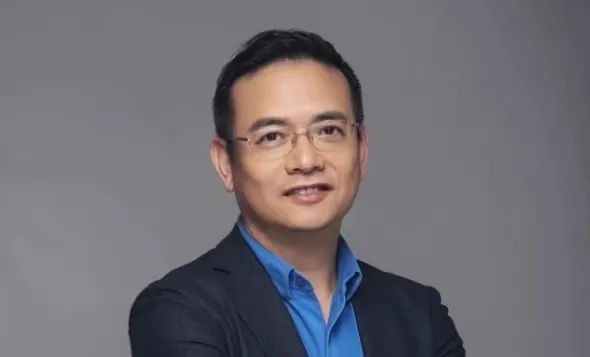
On December 20th, Dan Bin, Chairman of Dongfang Hongyuan, analyzed the investment opportunities and directions of the new era for investors at the 2025 Xueqiu Carnival.
The investment workbook summarized the key points as follows:
-
Artificial intelligence is far from a "theme" that will end in two to three years; it is likely to be a grand cycle lasting over ten years.
-
If we must discuss the (AI) bubble, it may only be a serious topic to evaluate ten years later, around 2032.
-
For all of us investors, the risk of missing an era is far greater than the risk of worrying about a bubble too early.
-
Looking back at this year's fluctuations in the U.S. stock market, its trajectory seems closer to 1998—in the wake of a phase of deep adjustment, the market ultimately demonstrated strong resilience and reached new highs. This is supported by solid industrial trends rather than purely bubble-driven factors.
-
For our generation of Chinese "old investors," this is likely the last great era that we should not and cannot miss.
-
I judge that next year is likely to become the "year of application explosion." It will be an era where both the foundational layer and application layer make rapid progress and drive each other.
-
I have a profound realization that truly great companies often become "cheaper as they rise" and can maintain that height for a long time after reaching new highs.
-
Value and growth are inherently one. The true margin of safety in investing does not lie in static valuation numbers but in the company's ability to continuously create value through growth.
What we are looking for are those great companies that can continuously break through valuation limits through growth over long cycles.
Dan Bin is the Chairman of Shenzhen Dongfang Hongyuan Investment Management Co., Ltd., one of China's best private equity investment managers. He began his career in securities and futures research and investment in 1992, gaining fame by investing in stocks like Moutai and Tencent. He founded Dongfang Hongyuan in 2004 and later published "The Rose of Time." He emphasizes value investing as the core and long-term holding of great companies.
The class representative has previously compiled several highlights of Dan Bin's views. In the latest issue, he proposed: "The realization of AI Agents may lead to the world being controlled by a few companies..."
The following content is edited and organized based on the transcript of Dan Bin's speech provided by Xueqiu:
2026 is the "Year of Application Explosion," with foundational and application layers making rapid progress together
Zhou Yuan: You mentioned that the current AI revolution is an era opportunity comparable to the Industrial Revolution. At this stage, when choosing related AI targets, what considerations do you have? For example, do you base it on more certain targets, business models, or industry development, and from which perspective do you choose relevant landing targets?
Dan Bin: In my past investment practice, I have always preferred to seek companies with long-term certainty, focusing on those that can define the future and have a wide economic moat, especially global leaders that are leading technological change Our layout will still revolve around high-quality companies that have a clear development trajectory in the coming years and even longer cycles.
Zhou Yuan: At this stage, do you think the certainty of the foundational layer is higher than that of the application layer? When is it more appropriate to start focusing more on the application layer?
Dan Bin: Looking ahead to the development of artificial intelligence from the current point in time, we believe that the real wave is transitioning from the technological foundation to the application level.
The practices of domestic and foreign companies such as Palantir and Ant Group have already demonstrated the enormous potential of applications. Therefore, I judge that next year is likely to become the "year of application explosion."
The core driving force behind this trend lies in the almost "intense" competition among top tech giants—OpenAI and Google are driving each other, iterating at full speed.
The emergence of OpenAI has even prompted Google's founders to return to the front lines; the release of Gemini has also immediately triggered a heightened alert and rapid response from OpenAI.
This all-out "arms race" among top competitors is precisely the catalyst for the rapid evolution of technology.
It is foreseeable that the iteration of large models will become increasingly rapid. Intense competition will ultimately translate into universal benefits.
By 2026, we are likely to witness a series of truly exciting applications landing, profoundly changing various industries and benefiting billions of ordinary people. This is not only a technological advancement but also the beginning of a great era that is truly entering our lives.
Zhou Yuan: According to your statement, next year may be a big year for AI applications. Can we understand that in the past, everyone invested in AI by looking at which giant's capital expenditure was high, and that might attract more attention to their stock prices? However, next year, perhaps the foundational layer or computing power will have to look at the "face" of the application layer. If the application layer lands smoothly, the foundational layer may also rise; but if the application layer encounters some difficulties, could it be possible that the foundational layer also faces some bubbles?
Dan Bin: Actually, I don't think so. In my view, next year will be an era where both the foundational layer and the application layer make rapid progress and drive each other.
What we currently see is far from reaching a level of oversupply or creating bubbles.
From my understanding of the industry, whether it is core hardware or high-end production capacity, the scheduling has already extended to 2027, which fully indicates that the overall demand remains solid and urgent.
Therefore, this is a virtuous cycle where hardware provides the foundation for applications, and applications create demand for hardware. The two complement each other and are jointly pushing this technological revolution to a climax. Without a doubt, we are in a very great era.
If we must discuss bubbles, it may be ten years later
Zhou Yuan: Based on historical experience, humanity has always experienced some bubbles during significant transformations driven by technological advancements, such as the internet bubble in 2000, when 90% of companies saw their stock prices drop by 90%, and companies like NVIDIA also saw their stock prices drop by 70% in the past two years.
Therefore, while it may be too early to talk about bubbles today, will we see such scenarios again in the future? How does Dongfang Hongyuan generally handle such events, and are there any risk control measures in place? Dan Bin: Let's look at it from a few points.
First of all, I think it is inappropriate to simply compare the current wave of artificial intelligence to the internet bubble of 2000. Although history has cycles, the core and background of each era are completely different.
Looking back at the market fluctuations in the U.S. stock market this year, I believe its trajectory is closer to 1998—after a phase of deep adjustment, the market ultimately demonstrated strong resilience and reached new highs. This is supported by solid industrial trends, rather than purely driven by bubbles.
Secondly, and more importantly, artificial intelligence is far from a "theme" that will end in two to three years; it is likely to be a grand cycle lasting over ten years.
Think about it: the mobile internet, the internet, and even the earlier era of electronic hardware each lasted for over a decade.
In contrast, the technological disruption brought by artificial intelligence is much more profound. Why would it come to an end in just three years? That doesn't make sense; I don't believe it will happen.
So, if we must discuss bubbles, it may be a topic that needs serious evaluation ten years later, perhaps in 2032. By then, we will naturally respond cautiously based on the reality.
But at the starting point of this era, for all of us investors, the risk of missing out on an era far outweighs the risk of worrying about bubbles too early.
We have just personally experienced and witnessed several previous technological eras; how many people truly seized the enormous opportunities within them? Faced with a more disruptive new era, should we hesitate just as it is beginning? This is worth our deep reflection.
Investment is an industry that relies on the accumulation of experience. I am 59 years old and will soon be 60. For our generation of Chinese "old investors," this may very well be the last great era that we should not, and cannot, miss.
We should embrace this profound transformation that is happening with a longer-term perspective and a broader vision.
Layout of Assets That Can Cross Cycles
Zhou Yuan: Some describe you as having "nine lives" in the capital market. Why do you think there are such comments? What has allowed you to remain standing in the capital market?
Dan Bin: The core foundation that has supported Dongfang Hongyuan to this day has always been the underlying assets we hold. The capital market is constantly fluctuating, and the companies you believe in may also experience storms.
The real key is: is your vision correct enough, and can your judgment withstand the test of time? In the end, investment is a competition of foresight in thinking, about who can see further, see accurately, and dare to invest heavily. As long as the foundation of the underlying assets is solid, even if the process is bumpy, value will ultimately return.
The greatest risk of financial assets is not market fluctuations, but whether the assets you hold can continuously create value over a long cycle.
Looking back at my thirty-three-year career and the twenty-one years of Dongfang Hongyuan, whether it is the layout of leading liquor brands, internet giants, or investments in leading chip and technology companies in the U.S. stock market, these assets themselves possess strong vitality to cross cycles.
This is precisely the fundamental reason we have been able to face challenges time and again and reach today
Truly Great Companies Often Become "Cheaper as They Rise"
Zhou Yuan: Artificial intelligence is a major era, but when it comes to investing, the biggest problem is that it's too expensive. Often, we see growth stocks, and any decent company faces this question. However, value investors talk about one point, which is the margin of safety. When investing in growth stocks, where is its margin of safety, and what is it?
Dan Bin: In my personal investment framework, I do not strictly differentiate between "growth" and "value."
Taking our early investment in leading liquor companies as an example, their core driving force is also growth. When growth enters a steady state, it manifests more as pure value attributes.
Therefore, investing in any enterprise is essentially a combination of "value" and "growth," a process that seeks a double Davis effect.
I have a profound realization that truly great companies often become "cheaper as they rise" and can maintain that height for a long time after reaching new highs.
For example, Apple's shares held by Buffett, along with Microsoft and Google over decades, have all digested their valuations through sustained growth after significant long-term increases, achieving value accumulation.
The most representative companies in the era of artificial intelligence are similar. Taking leading chip companies in the U.S. stock market as an example, if our judgment about their future development is correct, then based on next year's expectations, their valuations may be less than 20 times. Can we simply say they are "expensive" at this point?
Thus, value and growth are inherently one.
The true margin of safety in investing does not lie in static valuation numbers but in the company's ability to continuously create value through growth.
What we seek are those great enterprises that can continuously break through valuation limits through growth over long cycles.
Different Focus on Opportunities for Chinese and American Companies
Zhou Yuan: Comparing the two markets in China and the U.S., what do you think are the biggest differences in the quality of companies, valuation levels, and industry stages provided by the two markets?
Dan Bin: A significant characteristic of the U.S. market is that it continues to nurture original business models with global influence. Once these companies succeed, they can establish a wide moat with strong first-mover advantages, with their markets and profit sources aimed at the global stage.
Of course, both Chinese and American companies harbor enormous opportunities, but the comparative advantages focus on different aspects.
Chinese companies demonstrate unparalleled depth in the industrial chain and manufacturing efficiency, playing an indispensable role in the global supply chains of core industries such as technology and automobiles.
Recently outstanding Chinese companies often benefit from both the vast market of "internal circulation" and the global demand of "external circulation," forming unique competitiveness in the international market.
Dongfang Hongyuan's recent "going overseas" layout essentially aligns with and participates in this trend—seeking excellent enterprises that can integrate China's advantages and win a place on the world stage in the context of globalization.
The two are not opposing but constitute a complete economic picture of this era.
No Financing, No Borrowing, Buy the Best Companies or ETFs
Zhou Yuan: Can ordinary people enter the stock market? Please give some advice.
Dan Bin: I have always believed that investing itself is a shared endeavor. If you find truly great companies, the market can become a win-win platform. The advantage of ordinary investors is that once they find the right direction, they can go all in and hold large positions.
Finding such companies is not as difficult as it seems—whether it’s the well-known leading liquor brands and internet platforms in the domestic market or the top companies overseas that symbolize the crown of technology, their excellence is often evident and does not always require extremely professional thresholds.
The simplest logic is often the most effective: look for companies that are like "pearls on a crown."
If you find it difficult to judge specific companies, participating through ETFs (Exchange-Traded Funds) is a very practical choice.
For example, if you are optimistic about global technology trends, you might consider S&P or Nasdaq ETFs; if you focus on specific directions like artificial intelligence, there are corresponding industry ETFs available.
However, it is important to remind you to never borrow money to invest and to stay away from margin trading. This is a major taboo in investing.
Dongfang Hongyuan has been able to navigate multiple cycles, and one fundamental principle is that we never use leverage. As long as you do not use margin, do not borrow money, and buy the best companies or ETFs, it is quite difficult to incur losses.
For more insights from industry leaders, please follow↓↓↓
Risk Warning and Disclaimer
The market has risks, and investment requires caution. This article does not constitute personal investment advice and does not take into account the specific investment goals, financial situation, or needs of individual users. Users should consider whether any opinions, views, or conclusions in this article are suitable for their specific circumstances. Investing based on this is at your own risk
