


Precious metals are soaring! Gold at 4500, platinum at 2300, silver at 72, all reaching historical highs

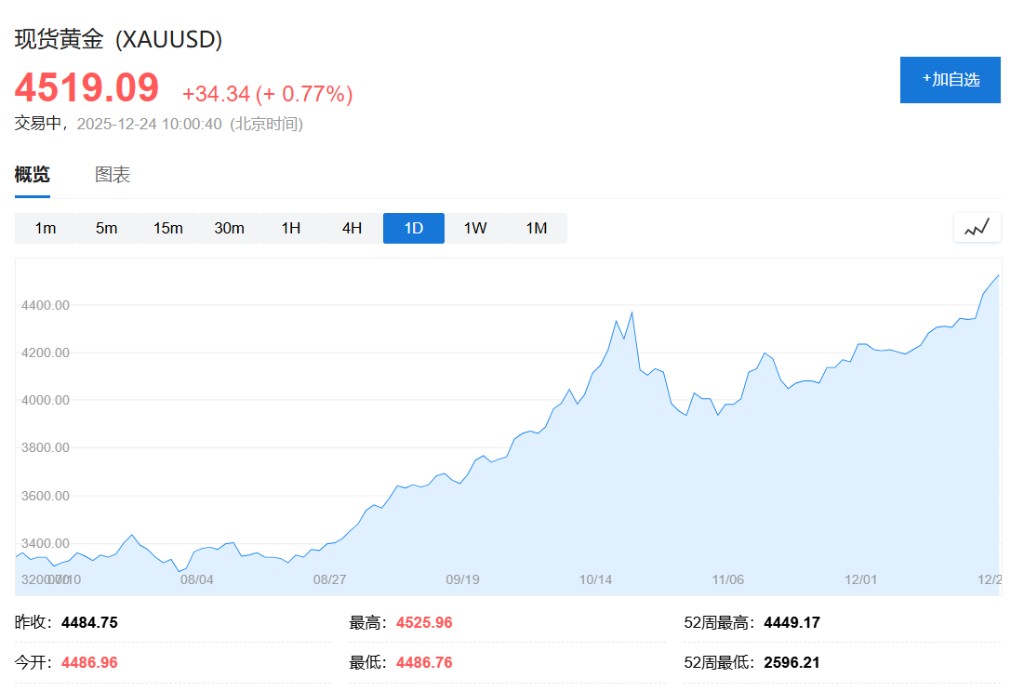
Under the influence of geopolitical risks and the push of global supply shortages, the precious metals market has ushered in a historic moment. Gold prices have first broken through $4,500 per ounce, while platinum has also reached a historic high of over $2,300, with an increase of more than 150% this year. Silver has surged past $70 and continues to soar, with domestic platinum futures hitting the limit up, and Shanghai silver and palladium futures rising sharply. This round of bull market has been ignited by multiple factors including risk aversion, central bank purchases, and "currency devaluation trades."
Precious metals are still accelerating rapidly.
Driven by geopolitical risks, ongoing global supply shortages, and strong investment demand, the prices of gold, silver, and platinum have once again surged to historical highs.
The spot gold price has for the first time ever surpassed $4,500 per ounce, having accumulated an increase of more than two-thirds this year, and is expected to achieve its best annual performance since 1979.
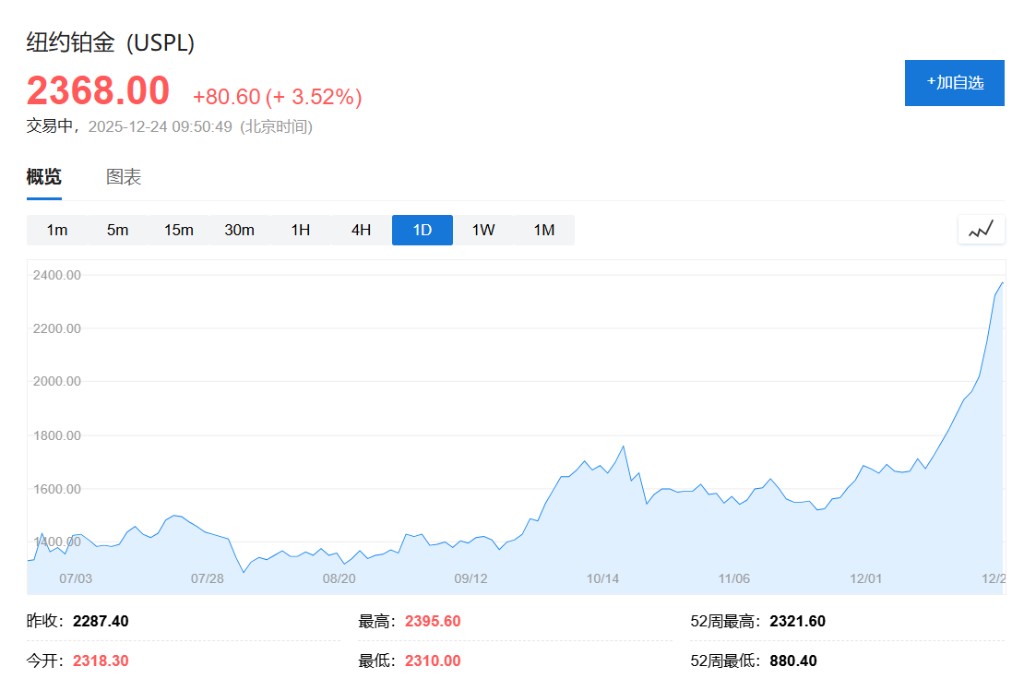
Platinum prices have also soared to historical highs above $2,300 per ounce. This metal's price has risen for 10 consecutive trading days, setting the longest streak since 2017, with a cumulative increase of over 150% this year, likely to achieve the best annual performance recorded by Bloomberg since 1987.
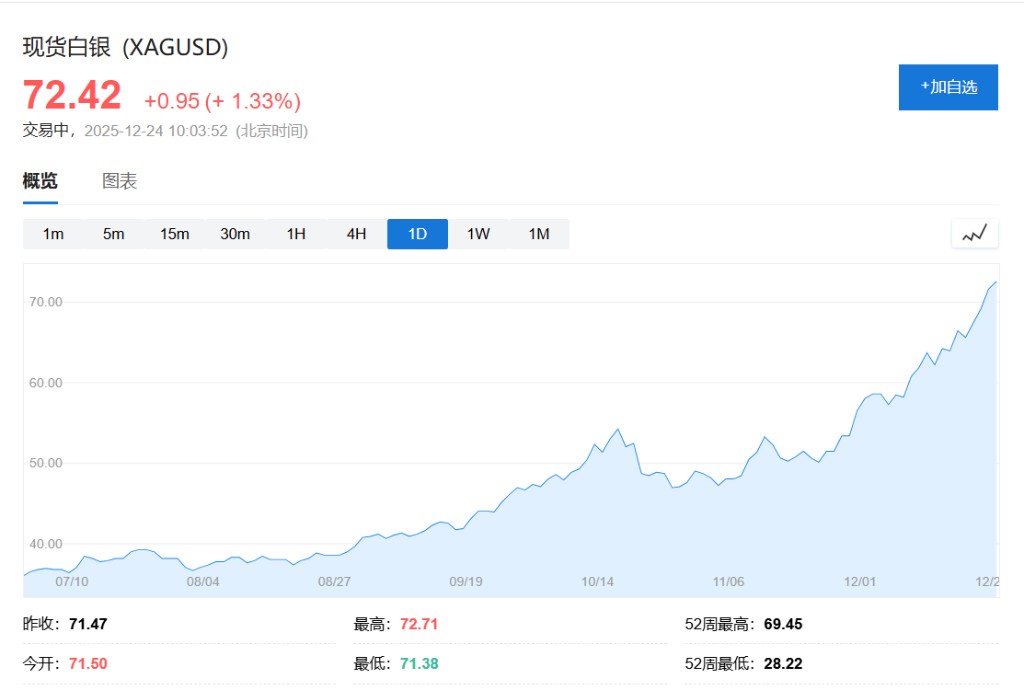
Spot silver is also experiencing a strong upward trend, breaking through the $70 mark, with the momentum continuing robustly.
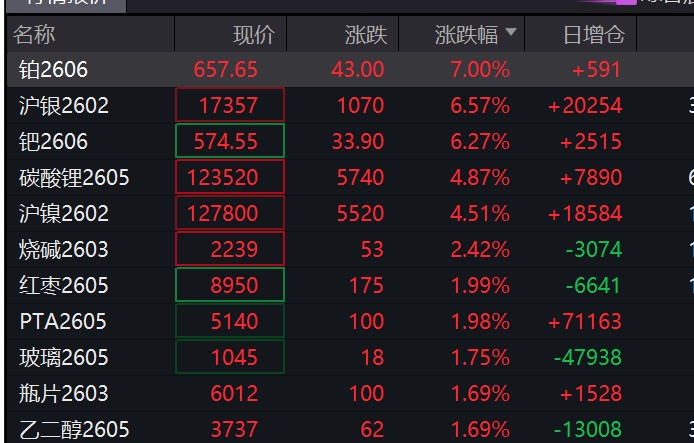
This wave of dramatic price increases is rapidly transmitting to global markets. After the domestic commodity futures market opened, the main contract for platinum futures hit the daily limit, while silver and palladium futures both rose by more than 6%.
Gold: Resonance of Safe-Haven Demand and "Currency Devaluation Trade"
Gold's strong performance this year is the result of multiple factors working together. In addition to geopolitical risks as a direct catalyst, deeper driving forces stem from changes in the macroeconomic and policy landscape.
According to data from the World Gold Council, the continued large-scale purchases by central banks around the world have provided a solid foundation for this bull market. At the same time, funds are continuously flowing into gold ETFs, with total holdings of global gold ETFs rising every month this year except for May. Among them, the world's largest precious metals ETF, SPDR Gold Trust under State Street, has seen its holdings grow by more than one-fifth this year.
Analysts state that U.S. President Trump's radical measures earlier this year aimed at reshaping the global trade system, along with his challenges to the independence of the Federal Reserve, have also fueled the rise in gold prices. Additionally, investors are actively engaging in what is known as "currency devaluation trades," shifting towards hard assets like gold due to concerns that the ever-expanding global debt will erode the long-term value of sovereign bonds and their denominated currencies.
It is noteworthy that the chief economist of Muthoot Fincorp has indicated that the funds flowing into gold ETFs in recent months have primarily come from retail investors, who tend to have lower capital stickiness, which may imply that the volatility of gold prices will remain at a high levelNevertheless, several institutions remain optimistic about the outlook for gold prices. Goldman Sachs predicts that gold prices will reach $4,900 per ounce in its baseline scenario for 2026 and believes there is a greater upside risk.
Platinum: Price Surge Amid Supply Bottlenecks and Trade Risks
Unlike gold's safe-haven properties, the recent surge in platinum prices is more attributed to its own tight supply-demand fundamentals and potential trade policy risks.
According to Bloomberg, the platinum market is heading towards a third consecutive year of supply shortages due to supply disruptions in South Africa, the main producing country. Meanwhile, high borrowing costs have led industrial users to prefer leasing rather than directly purchasing platinum, further exacerbating the tightness in the spot market. Platinum is widely used in the automotive and jewelry industries and is also used in the production of chemicals, glass, and laboratory equipment.
Trade risks are another key variable. The market is closely monitoring the results of Washington's Section 232 investigation, which could lead to tariffs or trade restrictions on platinum. To hedge against this risk, traders have stored over 600,000 ounces of platinum in U.S. warehouses, a quantity far above normal levels.
On the demand side, shipments of platinum to China have remained strong this year. Recently launched platinum contracts on the Guangzhou Futures Exchange have seen prices significantly higher than other international benchmarks, further boosting market demand optimism.
Silver: Structural Shortage Driven by Industrial and Investment Demand
In this round of precious metal rallies, silver's performance is also noteworthy, with its price increase logic combining both investment and industrial demand drivers.
From an investment perspective, global silver ETF holdings continue to rise. In major consuming countries like India, buyers have imported large quantities of silver driven by the Hindu festival Diwali. This wave of demand has led to supply pressures in the London benchmark market.
From an industrial perspective, silver is deeply embedded in global supply chains, widely used in electronics, solar panels, and medical device coatings. According to the Silver Institute, global demand for silver has exceeded mine production for five consecutive years, showing a structural shortage pattern.
Similar to platinum, silver also faces potential trade barrier risks. Traders are awaiting the U.S. Department of Commerce's investigation results on whether imports of critical minerals threaten national security, which could trigger tariffs on silver
