a16z "Three Predictions for AI Agents in 2026": The Disappearance of Input Boxes, Priority for Agent Use, and the Rise of Voice Agents

a16z predicts that AI is evolving from a passive tool to an active agent. In terms of interaction, input boxes will disappear, and AI will actively execute tasks; in design, "machine readability" will replace visual optimization as the new standard; in application, voice agents have been scaled in fields such as healthcare and finance. This fundamental shift from "chatting" to "action" heralds the arrival of a new era in the software and labor market, deeply reshaped by AI agents
At the recent online seminar "Big Ideas for 2026" hosted by the renowned venture capital firm Andreessen Horowitz (A16z), its partner team outlined a clear blueprint for the evolution of AI technology: Artificial intelligence is evolving from a chat tool waiting for commands to an "agent" capable of proactively executing tasks.
At the same time, they proposed three major predictions for reshaping the industry: the interaction of user interfaces will shift from "prompts" to "execution," product design will transition from "human-centered" to "agent-first," and voice agents will move from technical demonstrations to large-scale deployment.
Prediction One: The Disappearance of Input Boxes.
Marc Andrusko, a partner in the A16z AI application investment team, boldly predicted, "By 2026, input boxes, which serve as the primary user interface for AI applications, will disappear." He believes that the next generation of AI applications will no longer require users to input commands painstakingly; instead, they will proactively intervene and provide action plans for review by observing user behavior.
Behind this shift is a significant leap in the commercial value of AI. Andrusko pointed out, "In the past, we focused on the global software spending of three to four hundred billion dollars annually, but now we are excited about the $13 trillion labor expenditure that exists in the United States alone. This expands the market opportunity for software by about 30 times."
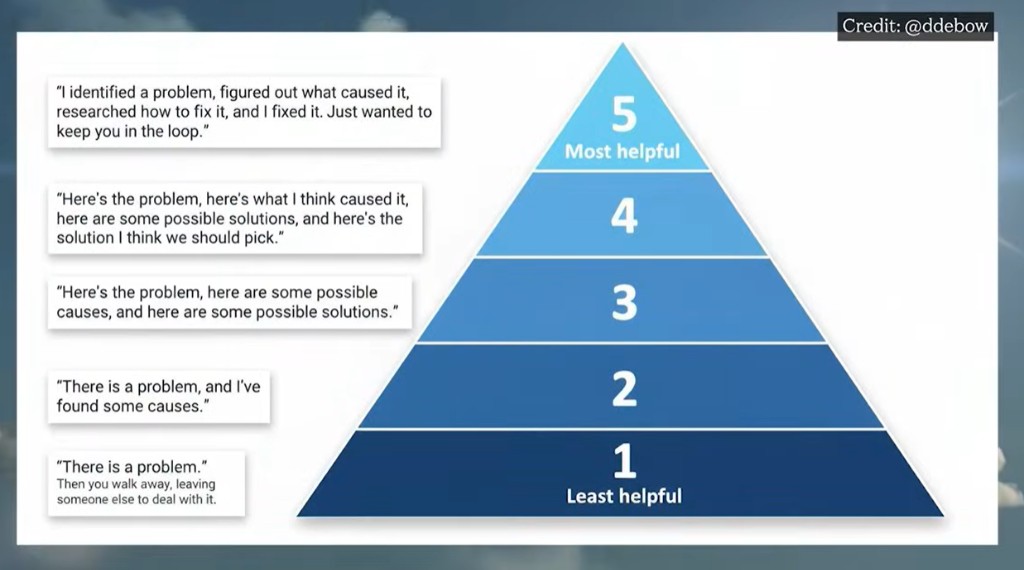
He likened future AI agents to the top-tier "S-level employees": "The most proactive employees identify problems, diagnose the root causes, implement solutions, and only then come to tell you: 'Please approve the solution I found.' This is the future of AI applications."


Prediction Two: "Agent-First" and Machine Legibility.
Stephanie Zhang, a partner in A16z's growth investment team, proposed a disruptive design logic: software will no longer be designed for human eyes. She pointed out, "What is important for human consumption may no longer be important for agent consumption. The new optimization direction is not visual hierarchy but machine legibility."
In Stephanie's view, the "5W1H" principle or beautifully designed UI that we previously optimized for human attention will face reconstruction in the agent era. She predicted, "We may see a large amount of hyper-personalized, high-frequency content generated for agent interests, akin to keyword stuffing in the agent era."
This shift will profoundly impact all aspects from content creation to software design

Guess Three: The Rise of Voice Agents.
Meanwhile, Olivia Moore, a partner at a16z's AI application investment team, observed that "AI voice agents are starting to carve out a niche." She stated that voice agents have evolved from a science fiction-like concept to systems that real businesses are procuring and deploying on a large scale. Especially in fields such as healthcare, banking, finance, and recruitment, voice agents are favored for their high reliability, strong compliance, and ability to address labor shortages.
She shared an interesting finding: "In the banking and financial services sector, voice AI actually performs better because humans are very good at violating compliance regulations, while voice AI executes accurately every time."
Moore emphasized, "AI will not take your job, but a person using AI will." This suggests that traditional call centers and BPO industries will face profound changes, and service providers that can leverage AI technology to offer lower prices or greater processing capacity will gain a competitive advantage.

Key Points from the Online Seminar:
The End of UI: The era of the prompt box as the primary interaction interface is coming to an end, with AI shifting from "passive response" to "active observation and intervention."
30x Market Increment: The target market for AI is shifting from $400 billion in software spending to $13 trillion in labor spending, marking a fundamental leap in business logic.
S-Level Employee Model: The ideal AI should function like a highly proactive employee: identifying problems, diagnosing causes, providing solutions, and executing, leaving only the final step for human confirmation.
Machine Legibility: The design goal of software is shifting from "human-first" to "agent-first," with visual hierarchy UI no longer being central.
Alienation of Content Creation: Brand competition will shift from attracting human attention to "Generation Engine Optimization" (GEO), potentially leading to a large amount of "high-frequency content" generated specifically for AI scraping.
Compliance Advantages of Voice AI: In high-barrier industries like finance, voice AI outperforms humans because it can comply with regulations 100% of the time and its actions are traceable.
Entry into Healthcare and Government Services: Voice agents are addressing the high turnover problem in the healthcare industry and are expected to tackle public service pain points such as 911 calls and DMV (Department of Motor Vehicles) in the future
Voice AI Industrialization: Voice AI is developing into a complete industry rather than a single market, with winners emerging at every level of the value chain, presenting huge opportunities from underlying models to platform-level applications.
From Tools to "AI Employees": AI is no longer just a simple auxiliary tool but a digital employee capable of independently handling complete business loops.
Full Transcript of a16z AI Team Seminar (translated by AI tools):
Host 00:00 Welcome to "The Grand Vision for 2026." We will hear from Marc Andrusko discussing the evolution of AI user interfaces and the fundamental changes in how we interact with intelligent systems. Stephanie Zhang will discuss the significance of designing for agents rather than humans, a shift that is reshaping product development. Olivia Moore will share her views on the rise of AI voice agents and their increasingly important role in our daily lives. These are not just predictions; they are insights from those who work directly with the founders and companies building the future world.
Marc Andrusko 00:31 I am Marc Andrusko, a partner in our AI application investment team. My grand vision for 2026 is the disappearance of the input box as the primary user interface for AI applications. The next wave of applications will require far fewer prompts. They will observe what you are doing and proactively intervene, providing action plans for your review.
Marc Andrusko 00:49 The opportunity we are attacking used to be global software spending of three to four hundred billion dollars annually. What excites us now is that there is a $13 trillion labor expenditure in the United States alone. This expands the market opportunity or total addressable market (TAM) for software by about 30 times. If you start from here and then think, well, if we all want this software to work for us, ideally, its capabilities should be at least on par with humans, if not stronger, right? So I like to think, hmm, how do the best employees do it? How do the best human employees do it? I have recently been discussing a chart that has been circulating on Twitter. It is a pyramid of five types of employees and why the most proactive employees are the best. If you start from the bottom of the pyramid, those people are discovering a problem and coming to you for help, asking what to do. This is the least proactive employee.
But if you go to the S-level, which is the most proactive employees you can have, they will discover a problem, conduct the necessary research to diagnose the source of the problem, explore multiple possible solutions, implement one of them, and keep you updated, or come to you at the last minute saying, "Please approve the solution I found." I think this is what future AI applications will look like. And I believe this is what everyone wants. This is the direction we are all striving for. So I am very confident that we are almost there. I believe large language models (LLMs) are continuously getting better, faster, and cheaper, and I think to some extent, user behavior still requires human involvement at the final stage to approve things, especially in high-risk scenarios But I believe the model is fully capable of reaching a level that can represent the very smart suggestions you propose, and you basically just need to click confirm.
Marc Andrusko 02:27 As you all know, I am very fascinated by the concept of AI-native CRM. I think this is a perfect example of what these proactive applications might look like. In today's world, a salesperson might open their CRM, browse all open opportunities, check their calendar for the day, and then think, well, what action can I take right now to have the greatest impact on my sales funnel and closing ability? And for future CRMs, your AI agent or AI CRM should be able to continuously do all these things for you, not only identifying the most obvious opportunities in your pipeline but also sifting through your emails from the past two years to unearth, you know, this was a potential lead that you let go cold. Maybe we should send them this email to pull them back into your process, right? So I think the opportunities are endless in drafting emails, organizing calendars, reviewing old call logs, and so on.
Marc Andrusko 03:22 Regular users will still want that last mile of approval. In almost 100% of cases, they will want the human part of the “person in the loop” to be the final decision-maker. That's fine.
Marc Andrusko 03:33 I think that's the way it naturally evolves. I can imagine a world where power users will invest a lot of extra effort into training any AI application they use to understand their behaviors and ways of working as much as possible. These applications will leverage larger context windows and the memory capabilities that have been integrated into many large language models, allowing power users to truly trust the application to do 99.9% or even 100% of the work. They will take pride in the number of tasks that can be completed without human approval.
Stephanie Zhang 04:09 Hi, I’m Stephanie Zhang, an investment partner on the growth investment team at a16z. My big vision for 2026 is: to create for agents, not for humans. One thing I’m very excited about for 2026 is that people will have to start changing the way they create. This encompasses everything from content creation to application design. People are starting to interact with systems like the web or applications through agents as intermediaries. What is important for human consumption will have a different significance for agent consumption.
Stephanie Zhang 04:41 When I was in high school, I took a journalism class. In journalism class, we learned the importance of starting the lead of a news article with the 5Ws and 1H (Who, When, Where, What, Why, How), as well as starting a feature story with a hook. Why? To capture human attention; humans might miss the deep, insightful statements buried in an H5 page, but agents won’t
Stephanie Zhang 05:02 For years, we have optimized for predictable human behavior. Do you want to be one of the top search results returned by Google? Do you want to be one of the first products listed on Amazon? This optimization applies not only to the web but also to the software we design. Applications are designed for human eyes and clicks. Designers optimize for good user interfaces (UI) and intuitive processes. But as the use of agents increases, the importance of visual design for overall understanding will decrease. In the past, when an incident occurred, engineers would enter their Grafana dashboards, trying to piece together what happened. Now, AI Site Reliability Engineers (SREs) receive telemetry data. They analyze this data and report hypotheses and insights directly in Slack for human reading.
Previously, sales teams had to click through and browse CRMs like Salesforce to gather information. Now, agents fetch this data and summarize insights for them. We are no longer designing for humans but for agents. The new optimization standard is not visual hierarchy but machine readability. This will change the way we create and the tools we use. What agents are looking for is a question we do not know the answer to. But what we do know is that agents perform much better than humans in reading all the text of an article, while humans may only read the first few paragraphs. There are many tools on the market that different organizations use to ensure that when consumers prompt ChatGPT, asking for the best company credit card or the best shoes, they can appear. So there are many tools we refer to as SEO (note: should be SEO or similar concepts, this is a transliteration) that people are using, but everyone is asking one question: What do AI agents want to see?
Stephanie Zhang 06:43 I love this question about when humans might completely exit the loop. We have seen this happening in some cases. Our portfolio company Dekagon has been autonomously answering questions for many of their clients. But in other cases, such as security operations or incident resolution, we often see more humans in the loop, where AI agents first try to figure out what the problem is, analyze it, and provide different potential scenarios to humans. These are often cases with greater responsibility and more complex analysis, and we see humans staying in the loop. Moreover, they may stay in the loop longer before the models and technologies reach extremely high accuracy.
Stephanie Zhang 07:33 I don't know if agents will look at Instagram Reels. This is really interesting; at least from a technical perspective, optimizing for machine readability, optimizing for insights, and optimizing for relevance is really important, especially compared to the past, which focused more on attracting people in a flashy way and grabbing attention. What we have seen are cases of massive, hyper-personalized content; perhaps you are not creating an extremely relevant and insightful article, but rather creating a large amount of low-quality content targeting different things you think agents might want to see. This is almost equivalent to keywords in the agent era, where the cost of content creation approaches zero, making it very easy to produce a large amount of content This is the potential risk of generating a large amount of content in an attempt to attract the attention of agents.
Olivia Moore 08:48 I am Olivia Moore, a partner in our AI application investment team. My big vision for 2026 is that AI voice agents will begin to take a seat at the table. In 2025, we saw voice agents break through from something that seemed like science fiction to systems that real businesses are procuring and deploying at scale. I am excited to see voice agent platforms expand, working across platforms and modes to handle complete tasks, bringing us closer to the vision of true AI employees. We have seen enterprise customers testing voice agents in almost every vertical, if not already deploying them at quite a large scale.
Olivia Moore 09:25 Healthcare may be the biggest one here. We see voice agents appearing in almost every part of the healthcare stack, including calls to insurance companies, pharmacies, and providers, as well as perhaps more surprisingly, patient-facing calls. This could be basic functions like scheduling and reminders, but also more sensitive calls, such as post-operative follow-up calls and even initial psychiatric intake calls, all handled by voice AI. Honestly, I think one of the main drivers here is the current high turnover and recruitment difficulties in the healthcare industry, which makes voice agents that can perform tasks with a certain level of reliability a pretty good solution. Another similar category is banking and financial services. You might think there are too many compliance and regulatory issues for voice AI to operate there. But it turns out this is an area where voice AI actually performs better, as humans are very good at violating compliance and regulations, while voice AI can do it correctly every time. Importantly, you can track the performance of voice AI over time. Finally, I want to mention another area where voice technology is making breakthroughs is recruitment. This covers everything from frontline retail jobs to entry-level engineering positions, and even mid-level consulting roles. With voice AI, you can create an experience for candidates where they can interview immediately at any time that suits them, and then they will be sent into the rest of the human recruitment process.
Olivia Moore 10:46 As the underlying models get better, we have seen significant improvements in accuracy and latency this year. In fact, in some cases, I have heard of voice agent companies deliberately slowing down their agents or introducing background noise to make them sound more human. When it comes to BPO (business process outsourcing) and call centers, I think some of them will experience a smoother transition, while others may face a steeper cliff when confronted with the threat from AI, especially voice AI. It's a bit like what people say, AI won't take your job, a person using AI will.
Olivia Moore 11:16 What we see is that many end customers may still just want to buy solutions rather than the technology they have to implement themselves. Therefore, in the near to mid-term, they may still use call centers or BPO But they may choose one that can offer lower prices or handle more volume because it leverages AI. Interestingly, in some areas, humans are actually still cheaper than top voice AI when calculated per permanent employee. So, as the models get better, it will be interesting to see if costs will decrease there and whether call centers in those markets will face greater threats than they do now.
Olivia Moore 11:50 AI is actually very good at multilingual conversations and heavy accents. Many times, I might miss a word or phrase during a meeting, and then I check my (Granola) meeting notes, which are recorded perfectly. So I think this is a great example of what most ASR or speech-to-text providers can do.
Olivia Moore 12:08 There are several use cases I hope to see more of next year, any that are government-related. We are investors in Prepared 911, and if you can handle 911 calls — they handle non-emergency calls — but if you can handle that with voice AI, you should also be able to handle DMV (Department of Motor Vehicles) calls and any other government-related calls, which are currently very frustrating for consumers and equally frustrating for the employees on the other end of the line.
Olivia Moore 12:32 I would also like to see more consumer-grade voice AI. So far, it has mainly been B2B (business-to-business) because it is so obvious to replace or supplement humans on the phone with AI at a much lower cost. One category I am excited about in the consumer voice space is around broader health and wellness. We have already seen voice companions rise in assisted living facilities and nursing homes, serving both as companions for residents and tracking different health metrics over time. We see voice AI as an industry rather than a market, which means there will be winners at every layer of the technology stack. If you are interested in voice AI or want to start a business in the voice AI space, I recommend checking out those models. There are many great platforms like 11 Labs where you can test creating your own voice and building your own voice agents. You will get a good understanding of what is possible and what will happen in the future.
Note: This translation cannot guarantee 100% accuracy