Tesla submits new patent: embedding Starlink receiver into sunroof to bypass network operators

Tesla is developing a technology to embed Starlink antennas directly into vehicle sunroofs, aiming to reduce reliance on carriers like AT&T. The significant breakthrough of this technology lies in the fact that future vehicle connectivity costs can shift from paying service fees to third parties to being accounted for as internal costs within the Starlink system, which is expected to lower Tesla's long-term operating expenses
A recently submitted patent application by Tesla indicates that the company is developing a technology to embed Starlink antennas directly into the car roof, which is expected to fundamentally change the way electric vehicles connect to the internet and achieve significant cost optimization.
According to the patent description, Tesla has developed a roof component that is highly transparent to radio frequencies, ensuring effective penetration of satellite signals. This design will allow Tesla vehicles to obtain high-speed internet connectivity directly through the Starlink system, thereby eliminating reliance on third-party cellular network operators like AT&T.
This technological breakthrough may reshape Tesla's in-car service business model. Currently, Tesla has to pay basic connection fees to mobile network operators, and users must subscribe to the "Premium Connectivity Package" to access internet features. If the Starlink direct connection solution is adopted, the related costs are expected to shift to SpaceX's Starlink service system, thereby enhancing overall service profitability.
Patent Technology Details Exposed
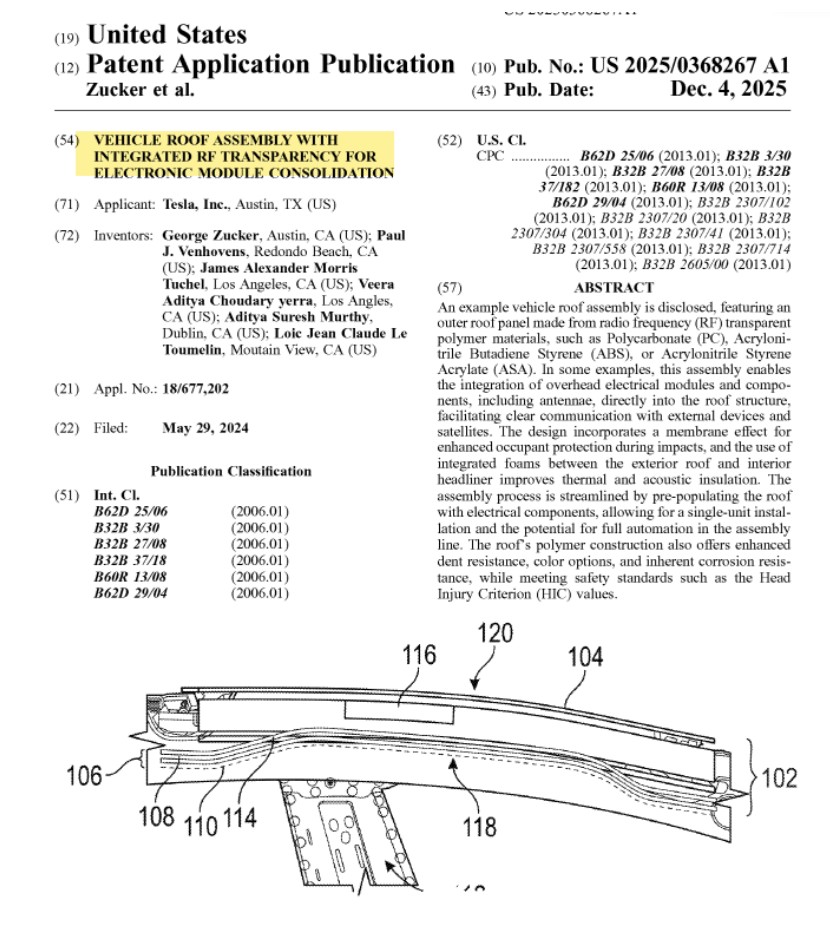
Tesla's latest patent filing elaborates on its in-car satellite communication integration technology. The patent abstract states that the roof component "can directly embed antennas and other top electrical modules into the roof structure, thereby achieving efficient communication with satellites and external devices."
Although the patent content does not directly mention the Starlink system, its technical specifications clearly point to satellite communication applications. The design avoids the complexity and aesthetic impact of external device installations by fully embedding the antenna system within the roof structure.
Patent illustrations further showcase the integrated technology architecture, specifically presenting a complete built-in solution for satellite communication functionality while maintaining the vehicle's streamlined appearance.

Cost Structure Optimization Strategy
According to analysis from electric vehicle media Electrek, the core driving force behind Tesla's push for satellite communication integration technology is cost control. Currently, Tesla has to pay fees to third-party mobile operators for Premium Connectivity services, while the new solution is expected to convert such ongoing expenses into internal system costs.
Analysts point out that while the cost savings per vehicle may seem limited, for Tesla's large-scale deployment of subscription services, every reduction in recurring expenses will have a cumulative positive impact on the company's profit margins. This move also aligns with Musk's long-standing vertical integration strategy, reducing reliance on external suppliers by controlling more value chain segments.
Users Have Started Early Practices
There are already early application cases of this technology in the market. Some Tesla owners have temporarily installed Starlink Mini devices on their glass sunroofs using suction cup mounts, providing high-speed satellite internet connectivity for the vehicle and its occupants.
This application is mainly concentrated in areas with weak cellular network coverage or signal blind spots. User feedback indicates that in remote areas, the performance of satellite connections significantly outperforms traditional mobile networks