


JD.com is also buying properties in Hong Kong, as giants accelerate their acquisition of the Hong Kong market

Spent HKD 3.498 billion
 Author | Wang Xiaojun
Editor | Huang Yu
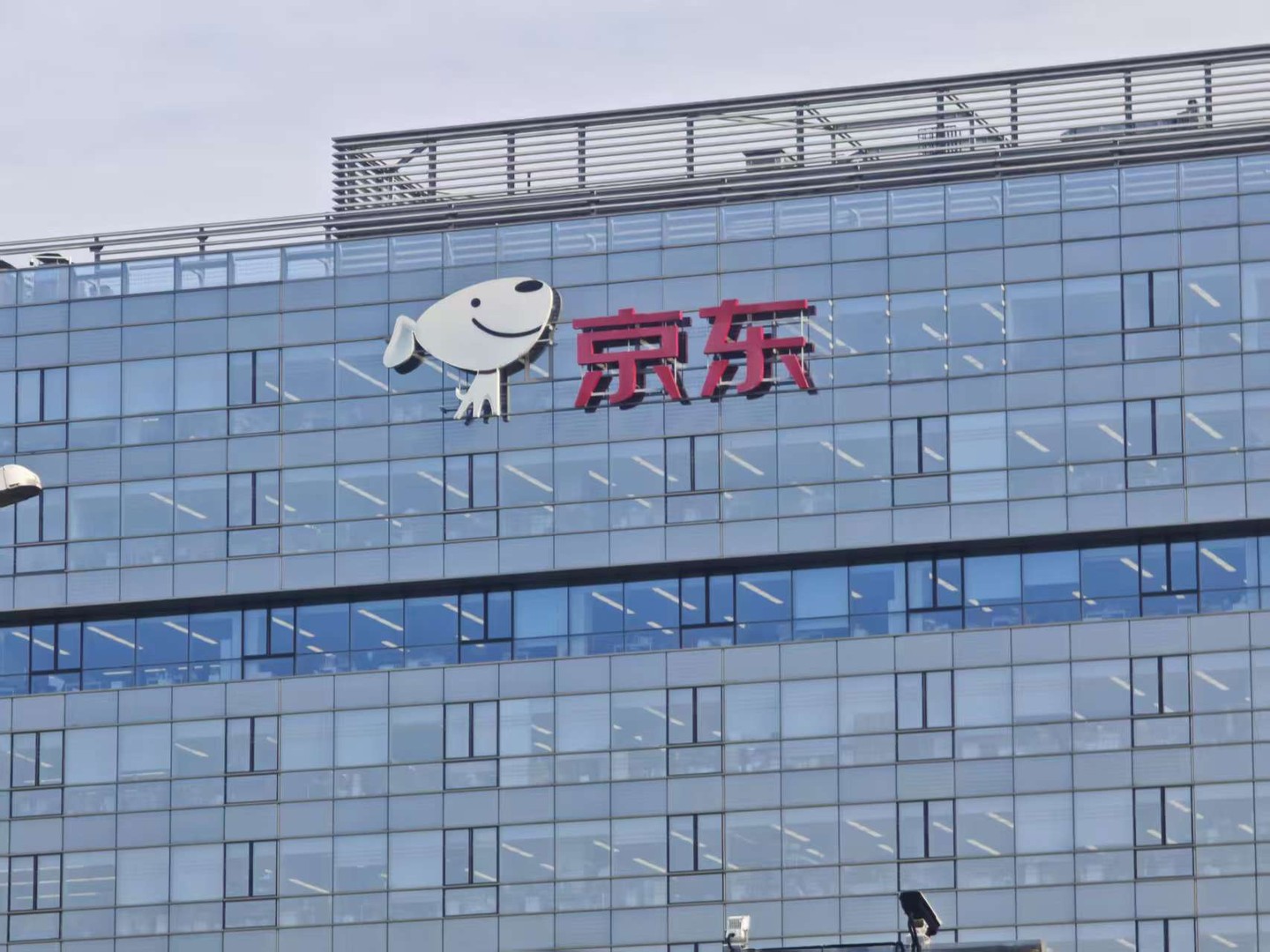
This year, internet giants have been popular in acquiring properties in Hong Kong. Following Alibaba, JD.com has also purchased real estate in Hong Kong.
On December 9, Lihsin International announced that the transaction agreement for the sale of all shares of Surearn Profits Limited has a property value of HKD 3.498 billion. The transaction is expected to be completed as early as January 2026.
The underlying asset of this transaction is part of the office floors of the China Construction Bank Tower located in Central, Hong Kong. This tower is a Grade A commercial skyscraper jointly developed by Lihsin Group and China Construction Bank. It is understood that the acquirer is an investment entity controlled by JD.com.
JD.com also stated that it remains optimistic about its development in Hong Kong and will continue to invest around the supply chain to integrate retail, logistics, and technology research and development into Hong Kong, serving the region.
JD.com's purchase of property is not an isolated action but the latest move in its systematic layout in Hong Kong. JD.com's investment in the Hong Kong market can be traced back to 2015 when it had already established logistics and e-commerce-related businesses in the region.
During the two years of service upgrades in Hong Kong and Macau in 2023, JD Express's daily collection volume in Hong Kong increased by more than 50 times, forming differentiated capabilities such as "delivery in Hong Kong within 4 hours," "pickup and delivery until 10 PM," and "next-day delivery to Hong Kong and Macau," with the volume of cross-border express deliveries between the mainland and Hong Kong increasing by more than 130 times.
Since the beginning of this year, JD.com has significantly accelerated its layout in Hong Kong.
In March, JD Express's Hong Kong Island operation center officially commenced operations, adding over 100 couriers; in August, it completed the acquisition of Hong Kong's Jiabao Food Supermarket, gaining its network of over 90 physical stores; in September, it reached a strategic cooperation with China Resources Longdi, announcing that JD MALL's first store in Hong Kong will be located in the core area of Wan Chai, expected to open in 2026; in November, it established a joint laboratory with the Hong Kong University of Science and Technology to jointly create a new benchmark for artificial intelligence applications under the super supply chain.
This year, JD Group's founder and chairman Liu Qiangdong also visited the Hong Kong University of Science and Technology in March to observe AI projects.
JD.com is also actively expanding its business boundaries. In October, a subsidiary of JD.com obtained a Hong Kong insurance brokerage license, valid until October 2028, officially entering the Hong Kong insurance market.
JD.com's significant investment in core properties in Hong Kong is backed by profound strategic considerations.
Hong Kong is the preferred destination for most internet companies going overseas. For JD.com, after going overseas, it needs to build a supply chain system connecting domestic and international markets, and Hong Kong can effectively shorten the distance to the Southeast Asian markets it focuses on.
The purpose of JD.com's acquisition is for "self-use," but the deeper significance lies in using Hong Kong as a testing ground for "supply chain output + local resource integration." Hong Kong has an international business environment and can radiate to a consumer population of 60 million in the Greater Bay Area, making it an excellent location for testing cross-border supply chains.
This also means that for JD.com, Hong Kong is an important support point in its globalization strategy. In July of this year, JD.com announced plans to acquire and privatize the German retail group Ceconomy, which owns the European electronics chains MediaMarkt and Saturn Interestingly, accelerating the layout in Hong Kong is not just JD.com's choice. In October this year, Alibaba and Ant Group jointly announced plans to invest approximately HKD 7.2 billion to acquire the top 13 floors of One Island East in Causeway Bay as the Hong Kong headquarters for both companies.
In addition to Alibaba and JD.com, other internet companies are also accelerating their "beachhead" in the Hong Kong market. Tencent and ByteDance have already established a presence in Hong Kong, Xiaohongshu set up its first office outside mainland China in Hong Kong in June this year, and Meituan's international delivery brand Keeta launched in Hong Kong has achieved profitability by October this year.
The collective southward movement of internet giants is quietly changing Hong Kong's economic ecology. Traditionally, Hong Kong has played more of a role as a transit hub for international brands entering the mainland. However, as mainland companies strengthen and supply chains mature, this role is undergoing subtle changes, with Hong Kong transitioning from a transit hub for international brands to an experimental base for mainland supply chains going overseas.
For Hong Kong, the entry of mainland enterprises brings new business models, technological applications, and job opportunities. For companies, Hong Kong has become an important outpost for testing overseas market reactions and optimizing international business models.
The internet giants' bets on Hong Kong also signify that the e-commerce industry will face new changes.
The future competition will not only be about products and prices but also a comprehensive contest of cross-border supply chain efficiency, localized service ecosystems, and the ability to adapt to diverse market compliance. As a "super connector," Hong Kong provides a rare pressure testing ground and model incubator for these giants.
This action, which began with property acquisition, may accelerate the formation of a new global e-commerce and digital services landscape centered around Hong Kong
