


PepsiCo compromises with activist shareholders for "self-rescue": closing factories, laying off employees, and reducing its product line in the U.S. market by 20%

Faced with performance and shareholder pressure, PepsiCo has reached a strategic reform agreement with activist investor Elliott. Key measures include: reducing the U.S. product line by 20% before 2026, closing three factories, promoting layoffs and production line optimization, and shifting resources towards affordable products and health-oriented innovations. The company has raised its performance guidance, aiming to increase core profit margins by at least 100 basis points within three years
Faced with declining performance and shareholder pressure, PepsiCo has reached a strategic reform agreement with activist investment firm Elliott Investment Management, aimed at addressing the current growth challenges through business streamlining, cost restructuring, and product line focus.
According to the plan announced on December 9, PepsiCo will implement the following structural adjustments by 2026: reducing nearly 20% of its product lines (SKUs) in the U.S. market, closing three factories, and promoting layoffs and production line optimization, while shifting resources towards affordable products and health-focused innovations. This plan directly responds to Elliott's previous criticisms of its "bloated brand and loss of market share."
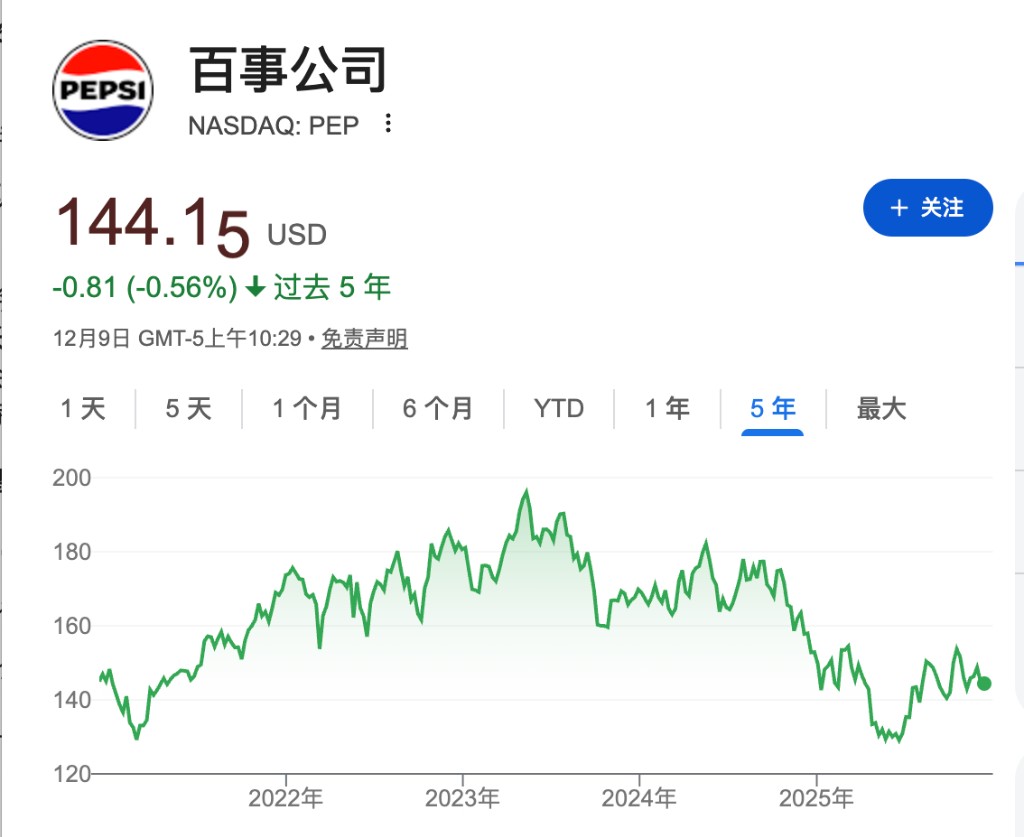
This collaboration stems from Elliott's approximately $4 billion stake in PepsiCo established in 2024. With PepsiCo's stock price down about 25% from its 2023 peak and facing dual competitive pressures from carbonated beverages and snacks, this agreement is seen as a defensive measure by management to proactively advance reforms and avoid potential proxy battles. The company also updated its performance guidance, expecting organic revenue growth of 2%-4% for fiscal year 2026, and aims to increase core operating profit margins by at least 100 basis points within three years through supply chain and operational optimization.
Elliott partner Marc Steinberg praised the results of the "constructive engagement" between the two parties in a statement, noting that the plan "will create significant value for shareholders during execution." Market attention is focused on whether this contraction and focus strategy driven by activist investors can truly help PepsiCo rebuild pricing power and sustainable growth momentum while controlling operational risks in the fierce fast-moving consumer goods competition.
Core of the Restructuring Plan
According to the agreement, PepsiCo will undertake systematic reforms around products, costs, and marketing . On the product side, a dual-track strategy of "affordability" and "health" will be implemented: on one hand, expanding the supply of low-priced everyday products across all channels, and on the other hand, planning to launch a "clean label" innovative series characterized by high protein, whole grains, and no additives by 2026, including Simply NKD snacks and Doritos protein products.
In terms of costs and operations, the company will take aggressive contraction measures, including closing three factories, halting production on multiple production lines, and streamlining nearly 20% of its product lines (SKUs) in the U.S. market by early 2026. The saved funds will be focused on marketing and enhancing consumer value to strengthen market presentation.
Elliott partner Marc Steinberg stated: "We commend PepsiCo's management for demonstrating a willingness to collaborate and a sense of urgency. We believe this plan, centered around enhancing affordability, accelerating innovation, and reshaping costs, will drive the company into a stronger trajectory of revenue and profit growth."
Financial Outlook and Market Reaction
PepsiCo has recently raised its performance guidance for fiscal year 2026, expecting organic revenue growth of 2%-4%, higher than Wall Street's general expectation of about 2.7%. The company also announced a three-year plan, aiming to push organic revenue growth to the upper limit of the range in the second half of 2026, with net revenue growth, including currency and acquisition impacts, expected to reach 4%-6% To achieve this goal, PepsiCo is committed to achieving record cost savings through automation, digitization, and operational simplification, with plans to drive core operating margin improvement of at least 100 basis points within three years. In terms of profitability, the company expects core earnings per share to grow by 5%-7%, and if the impact of the global minimum tax is excluded, the growth rate could reach 7%-9%.
Goldman Sachs analyst Bonnie Herzog maintains a "Buy" rating, believing that this multi-year plan focuses on accelerating growth, improving profits, streamlining product lines, and enhancing consumer value, establishing a structural advantage for PepsiCo in the competitive landscape of 2026. She noted that although some measures are already underway, the transparency and clear execution path demonstrated by management have enhanced the credibility of this strategy's implementation.
Personnel Adjustments and Operational Optimization
According to Bloomberg, Jennifer Wells, Chief Human Resources Officer of PepsiCo North America, stated in an internal notice earlier this week that the company will undergo a "structural business adjustment," which will affect certain positions. Meanwhile, the company has requested employees at headquarters and multiple offices to work remotely this week, a move typically seen as a precursor to impending layoffs.
As part of an agreement with activist investor Elliott, PepsiCo has also committed to conducting a comprehensive review of its North American supply chain and market system, as well as advancing board member updates to address the operational efficiency and market responsiveness issues previously highlighted by Elliott.
Elliott expressed confidence in PepsiCo's execution of this plan and the creation of substantial shareholder value, looking forward to continued collaboration. Market analysts believe that given PepsiCo's current valuation level is more attractive compared to peers like Coca-Cola and Procter & Gamble, it is demonstrating an industry-leading risk-return outlook in the essential consumer goods sector
