


Bullish on the prospects of the drug development pipeline, Bank of America significantly raises the target price for Eli Lilly

Bank of America is optimistic about Eli Lilly for several core reasons: the oral GLP-1 drug orforglipron is expected to be launched earlier, in early 2026, with new drug development progress exceeding expectations; the weight loss and diabetes drugs Zepbound and Mounjaro maintain their market leadership. The bank has significantly raised its target price for Eli Lilly to $1,286, believing there is still a 22% upside potential, and has reiterated its buy rating
Based on Eli Lilly's strong drug development pipeline prospects and its leading position in the market for weight loss and diabetes medications, Bank of America has significantly raised its target price for Eli Lilly from $950 to $1,286, implying a 22% upside, and reiterated its buy rating.
On December 2, Bank of America analyst Tim Anderson stated in a research report that Eli Lilly, with its leading position in the market for weight loss and diabetes medications and the faster-than-expected progress of new drug advancements, will continue to achieve extraordinary growth for many years to come.
The core reason Bank of America is optimistic about Eli Lilly is its GLP-1 drugs Zepbound and Mounjaro maintaining a "number one" position in the large obesity and diabetes market. Anderson noted that despite the complex competition in this field, Eli Lilly remains firmly in the lead.
The firm also pointed out that Eli Lilly's new drug development is progressing faster than expected. Analysts anticipate that the oral drug orforglipron will be launched in early 2026 instead of the previously expected late 2026, which has boosted their revenue and profit forecasts for the company in the coming year.
Additionally, the overall valuation increase in the large-cap biopharmaceutical sector is also a positive factor. Anderson believes that as the healthcare policy focus of the Trump administration gradually becomes clearer, the market is regaining favor with this sector. Eli Lilly's stock price has risen 36% year-to-date.
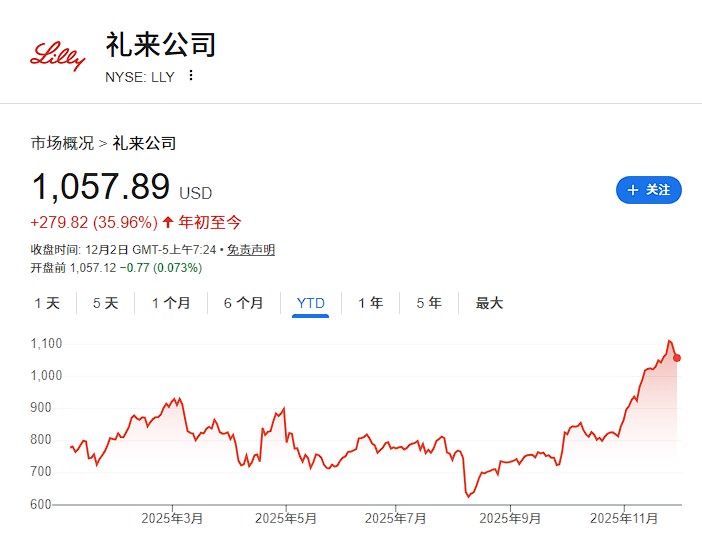
New Drug Advancement Speed Exceeds Expectations
The key catalyst for Bank of America raising its target price is the progress of Eli Lilly's new drug development pipeline exceeding expectations.
Anderson expects the oral GLP-1 drug orforglipron to be launched in early 2026, ahead of the previously expected late 2026. This adjustment in the timeline has prompted analysts to raise their revenue and profit forecasts for Eli Lilly in the coming year.
Anderson noted:
"The company is about to accelerate the launch of the highly anticipated new oral GLP-1 drug orforglipron, as it has received one of the first national priority review vouchers granted by the FDA, with the company guiding for a launch date of March 2026."
At the same time, Eli Lilly is advancing its highly effective product retatrutide (also known as "triple G") through a broad Phase III development plan, with initial results expected to be announced by the end of the year. The simultaneous advancement of multiple pipelines enhances market confidence in Eli Lilly's long-term growth potential.
GLP-1 Drugs Consolidate Market Leadership
Eli Lilly's weight loss and diabetes treatment drugs Zepbound and Mounjaro maintain a leading advantage in the competitive GLP-1 drug market.
Anderson wrote in the research report:
"Although the obesity category is complex with many variables, we continue to believe that Eli Lilly will firmly maintain its leading position, which will drive extraordinary growth for many years to come. Given this context, its valuation is reasonable." The GLP-1 drug market is large and growing rapidly. Eli Lilly has consolidated its competitive position in the pharmaceutical industry with its market share from two products, which is an important reason why Bank of America maintains a bullish stance.
Industry Valuation Regains Support
The overall increase in the valuation of the large-cap biopharmaceutical sector provides additional support for Eli Lilly's stock price.
Anderson stated that as the healthcare policy priorities of the Trump administration become clearer, the market is re-embracing the sector, which has, to some extent, driven the recovery of industry valuations.
This clarification of the policy environment has reduced investors' concerns about regulatory uncertainties in the pharmaceutical industry, creating more favorable valuation conditions for large biopharmaceutical companies, including Eli Lilly. Eli Lilly's stock price has risen 37% year-to-date, outperforming the market
